

Skamaniacs on the Ropes
The Skamania County Search and Rescue team is available to the Skamania County community year-round. They train for all types of situations as they may be needed in any weather and at any time. Their mission is to respond to every call effectively and with urgency.Written by Gabriella Sgro | Photos by Maia Rosenthal | Web design by Ainsley McCarthy
Deep in the Columbia River Gorge, The Skamania County Search and Rescue team is tasked with saving the lives of strangers. The group is among the smallest of its kind in the state — and one that’s highly relied-on. Volunteers answer calls that pull them out of their day jobs and into the wilderness at a moment’s notice. Their work is demanding, often uncomfortable, and shaped by the unpredictable terrain of Southern Washington. What keeps them going is a mix of instinct, training and the quiet understanding that someone out there may be depending on them.
-
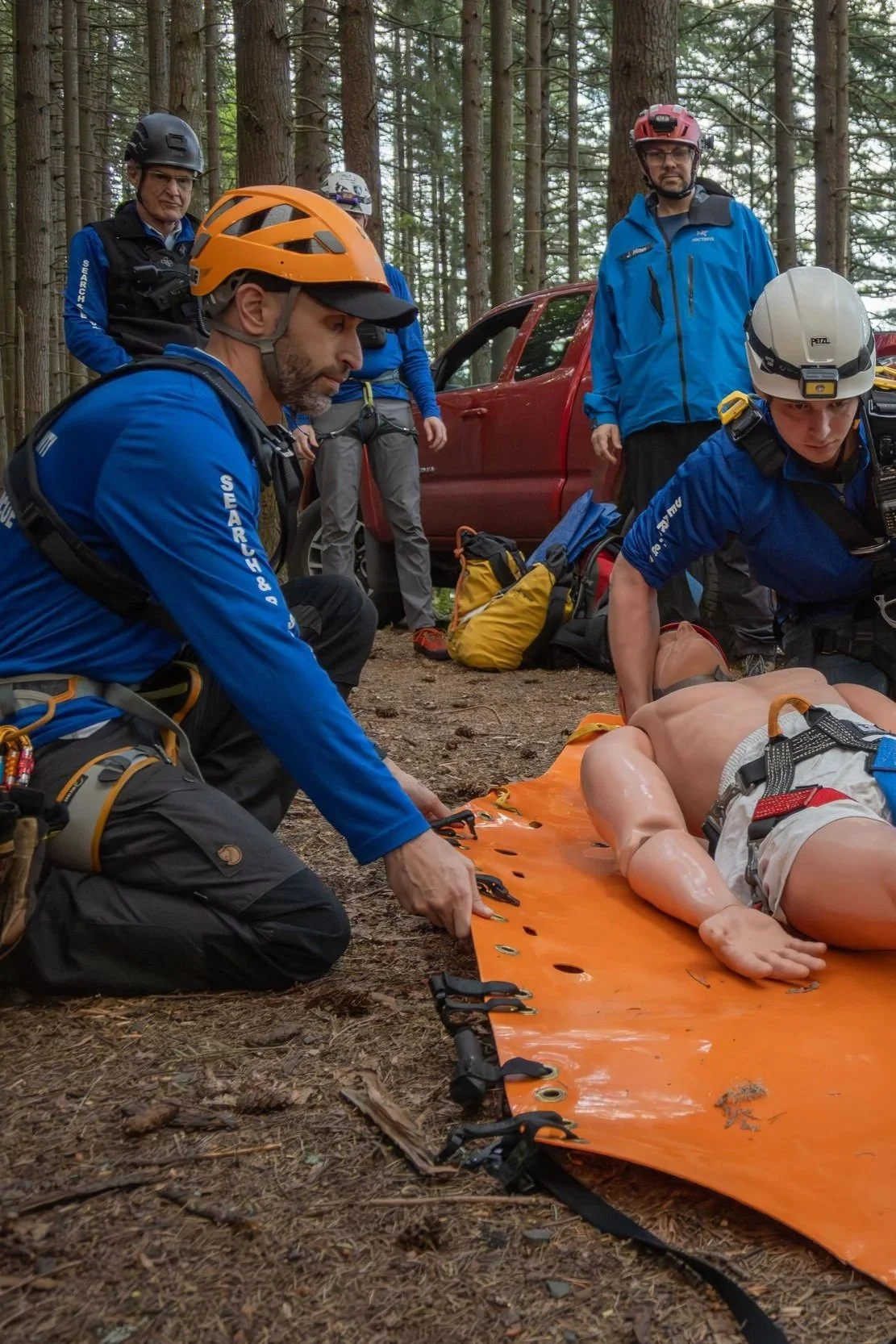
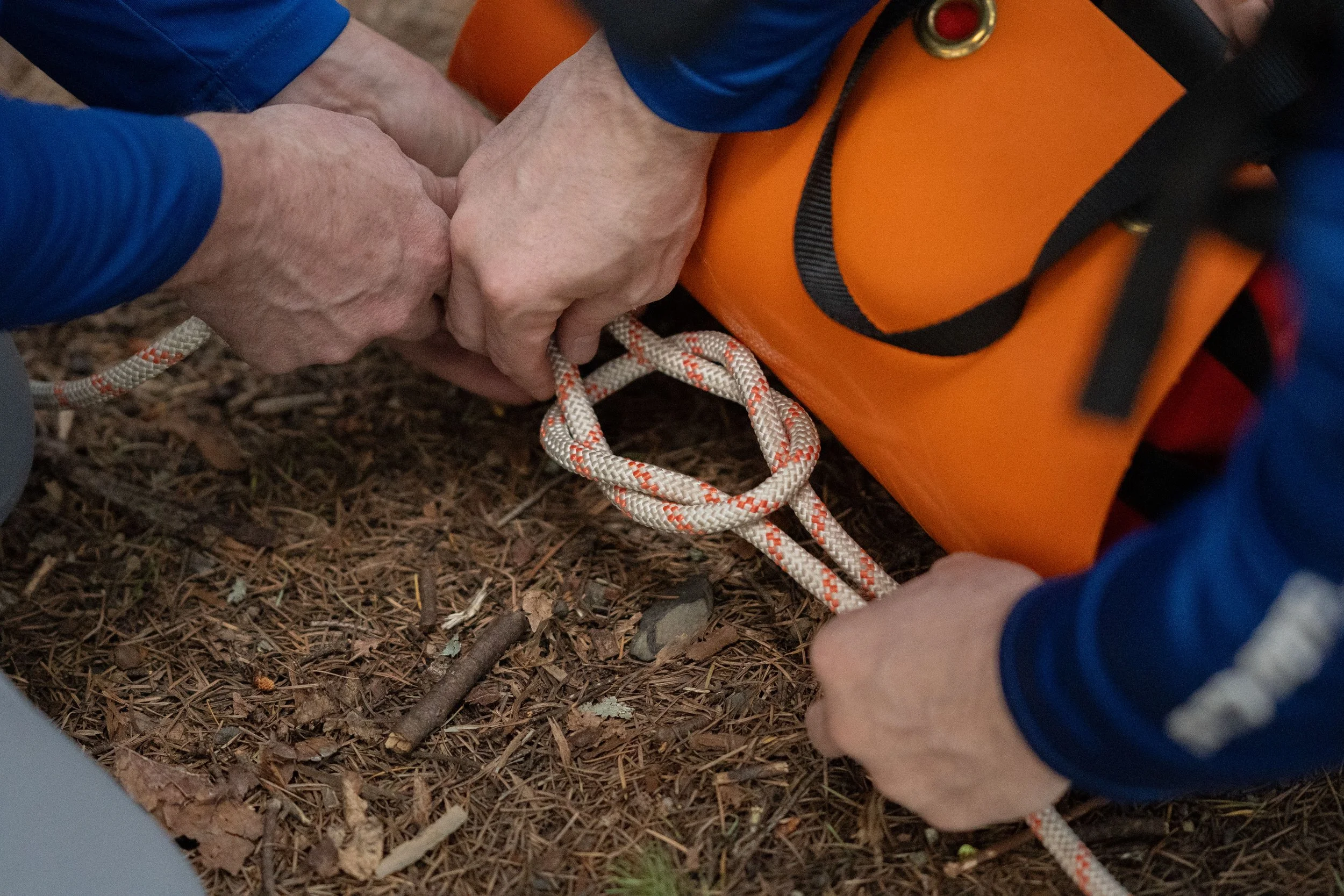
At the North Bonneville Firehouse in Skamania County, Washington, Jon Himes tosses Randy’s limp body in the bed of a red pickup truck. Then come waterproof bags, cords, carabiners, and pulleys.
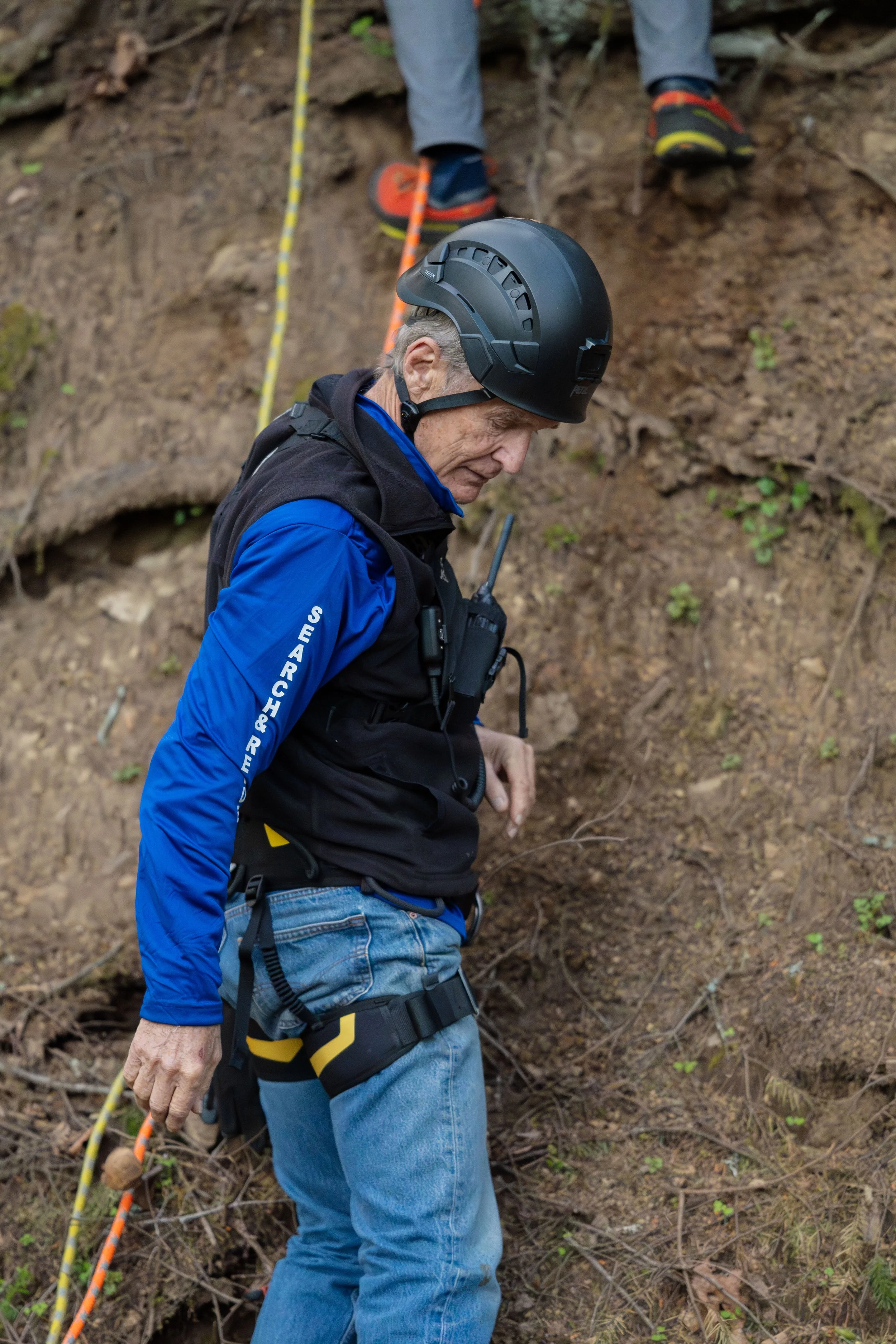
A group of 8 volunteers load into two cars and go offroading near the Bonneville Hot Springs. Once they are all strapped into harnesses, they get ready to throw Randy off the side of a cliff.
Jon Himes: “So, that’s Rescue Randy, that’s our subject that we’re gonna use…[How many practice sessions has Rescue Randy been the victim on?] Probably at least 100. [So he’s pretty tough] He’s pretty tough. And we’ll drop him off things. We’ll throw him. Many legs broken. Many hypothermia incidents over the years.”
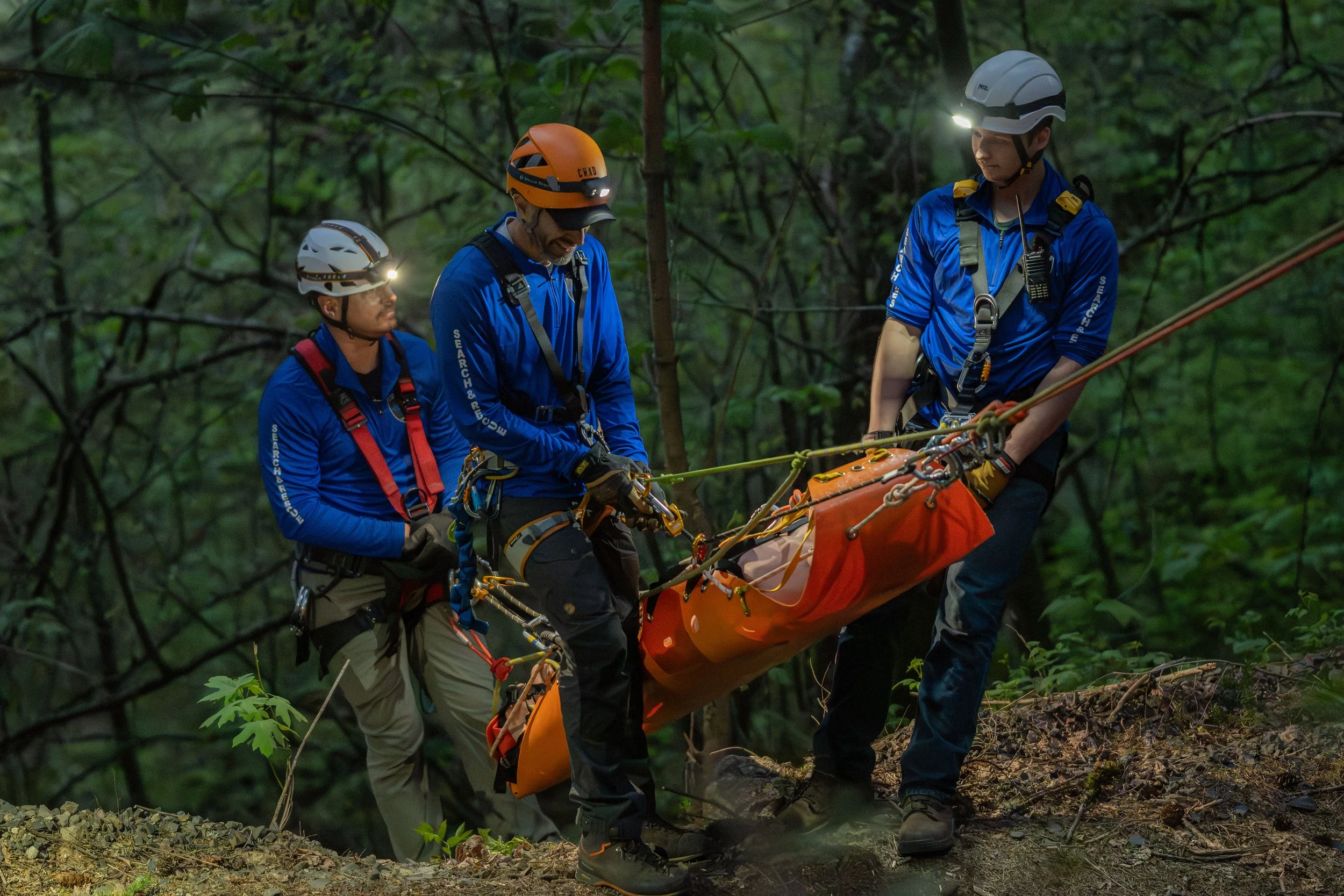
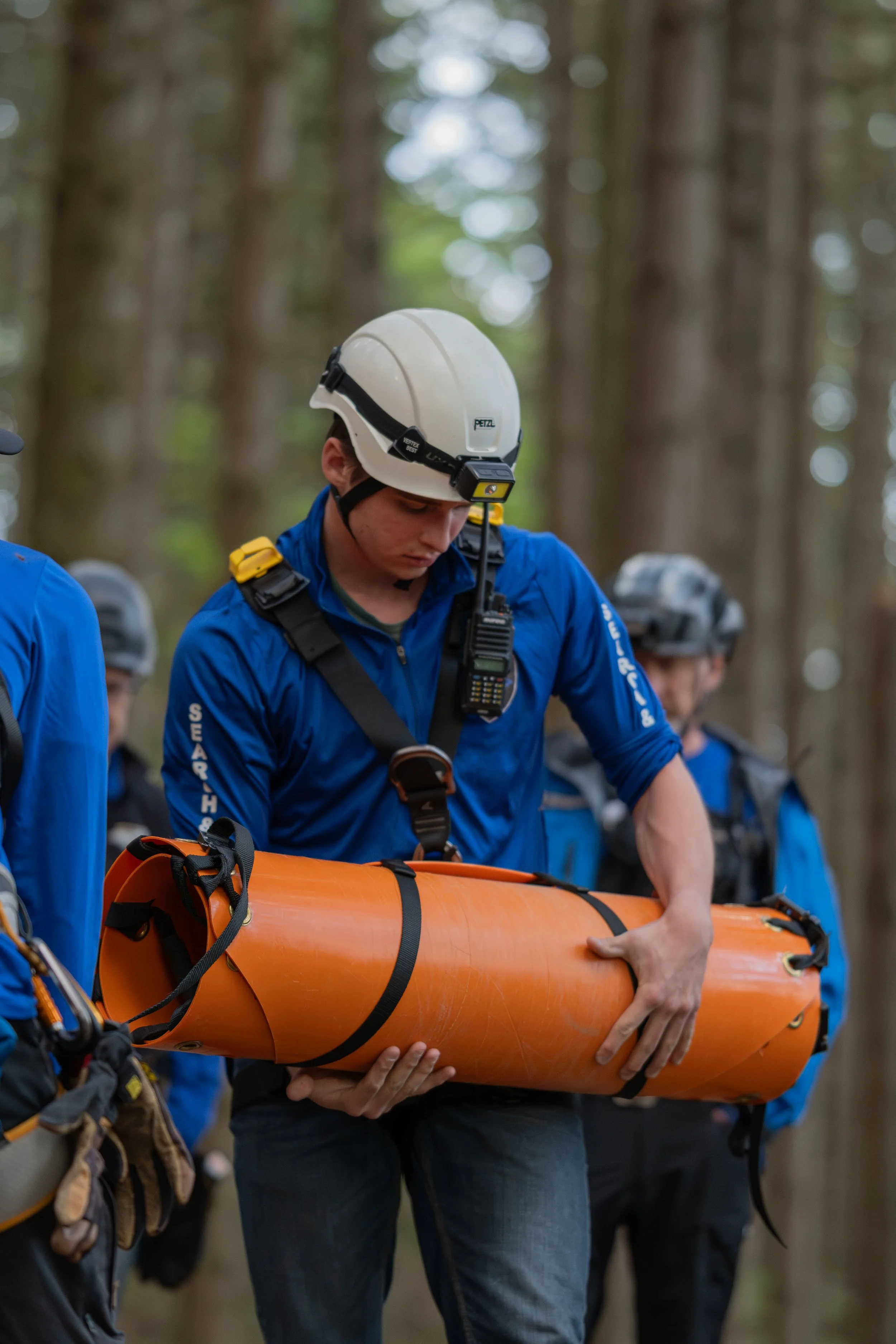
Rescue Randy is a training dummy used by the Skamania County Search and Rescue Team. Randy plays a crucial role in practicing emergency situations. Today, he’s the victim of a spinal injury being wrapped up in ropes and hoisted to safety on an orange plastic board.
Skamania is nestled in the Columbia River Gorge, home to Mount Saint Helens and Dog Mountain. The Search and Rescue Team is one of the most active in the state of Washington, despite being in one of the least populated counties.
In 2025, the team had 43 calls, up almost double from the previous year. That’s at least 43 life or death situations – people lost in the woods, cases of hypothermia, flesh wounds and broken bones from going up the mountain in flip flops.
Kent Krumpschmidt: “We’re close to the Portland Metro Area, and it’s the first trees they can see. So we get all the residents from those areas coming out here”
That’s Kent Krumpschmidt, Commander of the team. He’s been volunteering with them for 23 years.
Kent Krumpschmidt: “People seem to challenge Darwin on a daily basis.”
Krumpschmidt started his foray into public safety with a gig as a lifeguard as a teen. He worked his way up through volunteer firefighting and law enforcement, before ending up on the team.
Every mission begins the same way: Krumpschmidt sends out an alarm on the volunteers cellphones. And within a minute, they have to decide if they’re able to take the call.
With the rise in outdoor emergencies, it’s never been more important to have a team of able-bodied rescuers who can drop it all, venture out into the wilderness, and be prepared for anything.
Even though all 46 members on the team are professionally trained through workshops, none of them currently have jobs in public safety.
Kent Krumpschmidt: “We have a computer scientist, salesmen. Another computer programmer, three of them are computer programmers, another one is a planner…”
Krumpschmidt says there’s one similarity between all the volunteers:
Kent Krumpschmidt: “Being comfortable being uncomfortable, essentially.”
Sharing discomfort with each other means they have a bond that's not easily replicated.
Kent Krumpschmidt: “You’ve been through tough times together. You’ve struggled. You’ve been out in the rain, you’ve been miserable. It really brings you together.”
Even though the team works in tandem with the Sheriff's Department, they don’t receive any of the same tax dollars. Everyone buys their own equipment and pays for their own gas.
Jeremy McClain has been volunteering on the team for six years.
Jeremy McClain: “I'm sure folks that I've rescued, if we hadn't been there, probably would not have lived. It doesn't actually take going on many rescues or searches before you either love it or hate it, I guess. And I love it.”
He still thinks about the first call he went on in 2020.
Someone hadn’t come home after a hike. After not hearing back for a few hours, the family was worried and called 9-1-1. When deputies saw the car still parked out at the trailhead, they brought in Search and Rescue. At ten PM, Jeremy went out with the team.
Jeremy McClain: “We got there at like midnight, and we searched the trails. We split up, and I happened to be one of the people on that search that heard them…it was two-o-clock in the morning when we found them.”
Something like wearing the wrong layers can quickly turn from a simple mistake into a life-threatening scenario.
Krumpschmidt says that staying clearheaded while on a mission is something that takes a lot of practice… like, a lot. For him, it’s taken over two decades of experience to master the art of keeping his composure.
Kent Krumpschmidt: “It’s one foot in front of the other… So when the stress is high, all you’ve got to do is muscle memory of, right foot, left foot. I mean, if you get down there and the person’s leg is facing backwards, and they’re bleeding from all this stuff, You could get bogged down in the ‘oh my god’ or you can be like ‘OK, I'm going to have to get him in the SKED, I’m gonna have to do this.’”
Jennifer Leal has been volunteering on Search and Rescue for about a year. So far, she’s been on five missions.
Jennifer Leal: “My first mission was a gal who was five miles in and had broken her ankle with her ten year old daughter. I’ve been on three broken ankles, and I’ve broken my own ankle. That one really hits home to me, like, breaking your ankle and getting yourself out is not fun.”
Because she’s relatively new to the team, Leal still has moments of doubt.
Jennifer Leal: “Emotionally, I'm like ‘oh, I don’t know if I’m cut out for this.”
Like how Krumpschmidt leans on muscle memory, Leal is finding her way to stay calm and regulate her nerves.
Jennifer Leal: “They say box breathing. Breathe in for four, out for four. And, knowing the people that you’re with is really helpful. This group of people are pretty amazing.”
Leal is driven by helping others, and being able to provide a service for the community. She says it’s reassuring to know there are people out there willing to sacrifice their lives to help strangers in need.
It might only be her first year, but Leal is in for the long haul. She’s already made an impact as one person on the team.
46 volunteers isn’t a lot in the grand scheme of rescue operations, but the impact of the lives saved in this vulnerable county is greater than any of them.
For FLUX Magazine, I’m Gabriella Sgro.
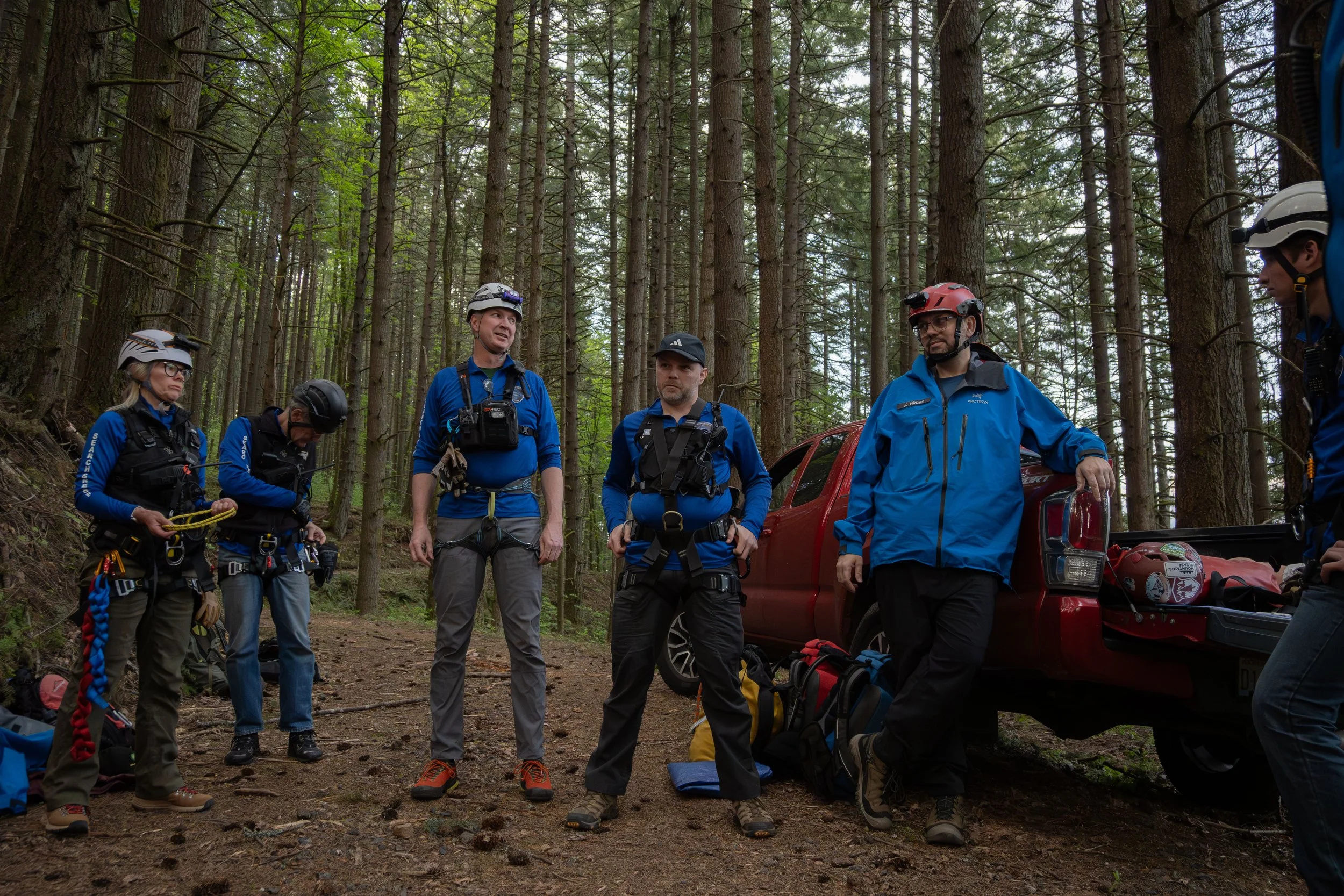
The advanced ropes training helps Skamania Search and Rescue members prepare for rescues with challenging terrain. This group of eight includes experienced team members as well as people who are newer to the ropes team, gaining hands-on experience in the field.
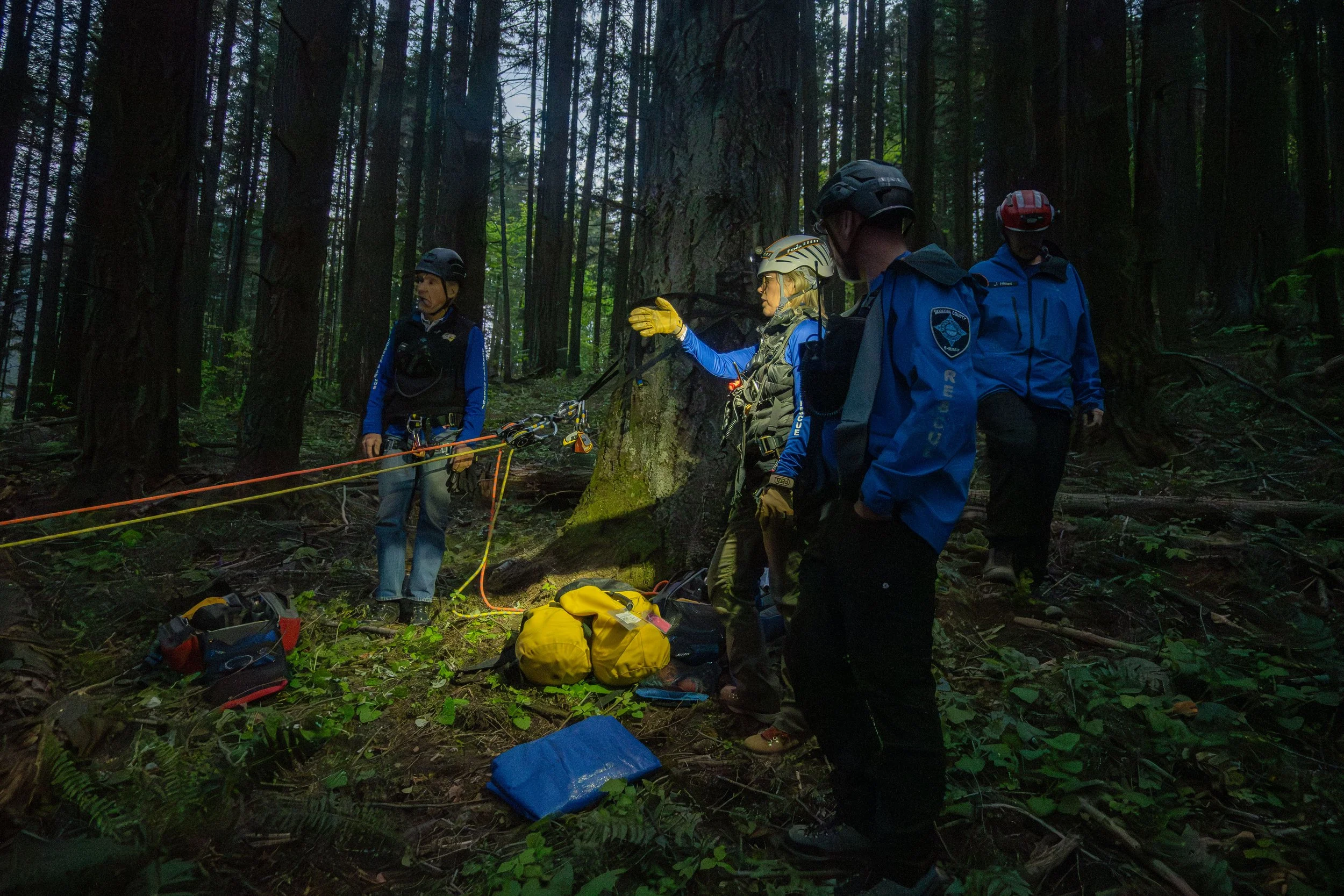
Jenifer Leal is a new member of the team and says she is in the “honeymoon stage” of her membership, still getting to know the ins and outs of being a volunteer for Skamania County Search and Rescue. These advanced rope trainings help immerse and prepare the volunteers.