

Writer Gabriella Sgro Photographer Rachel Peterson Web Designer Alexandra Bondurant
Internal conflict leaves Oregon ghost town at crossroads
Shaniko Standoff
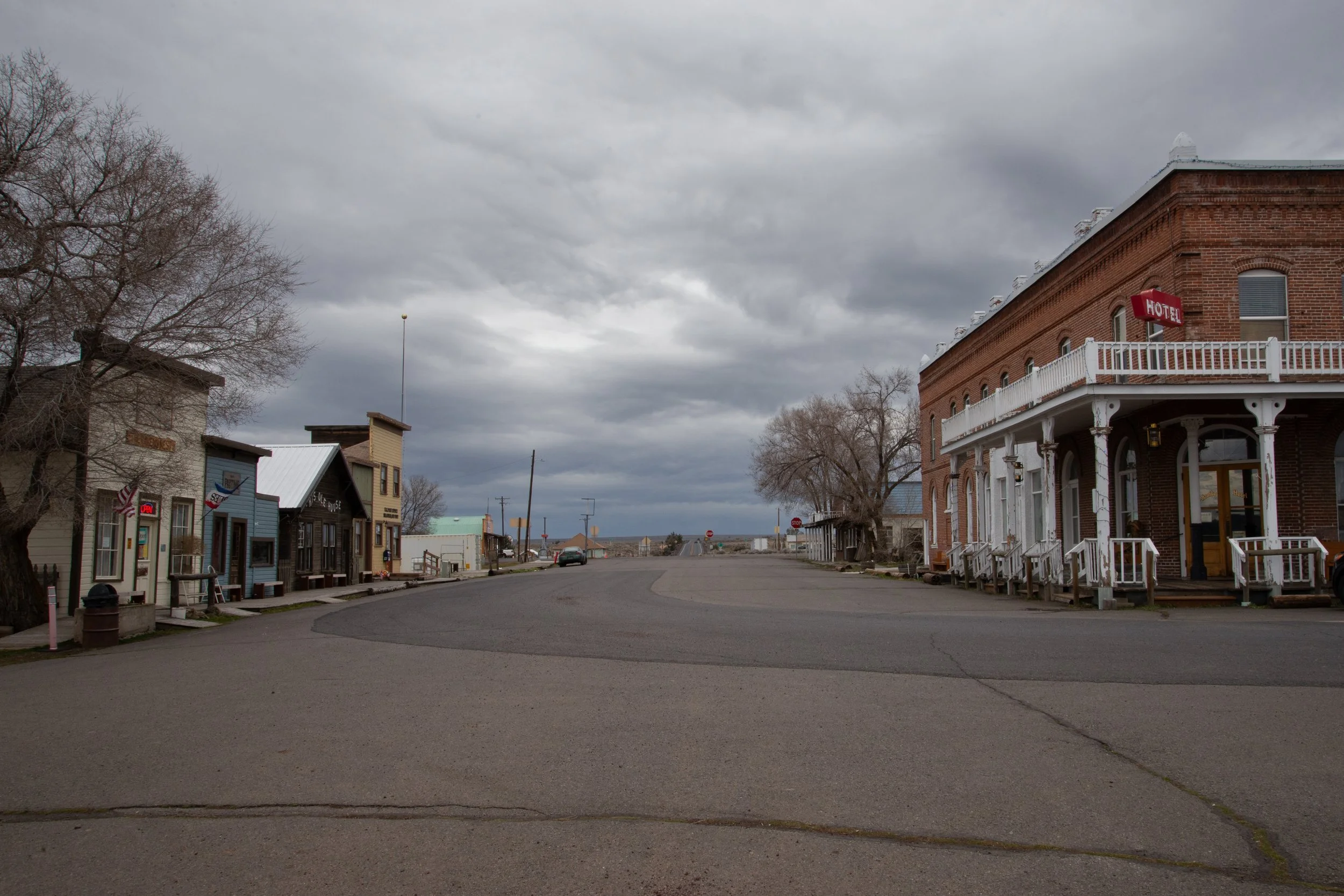
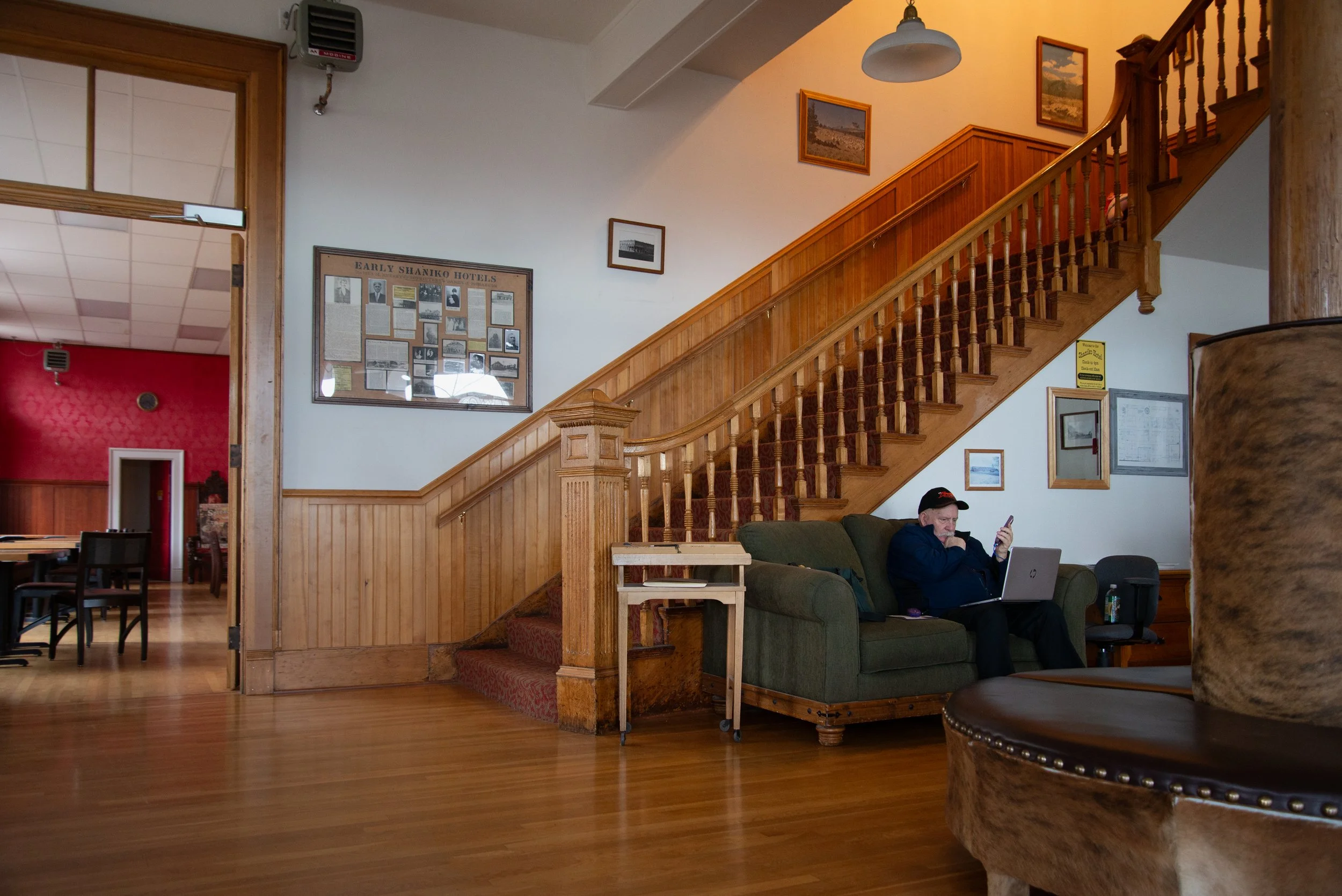
On Valentine’s Day evening, the lobby of the Shaniko Hotel opened its doors for a small-town potluck. Glittering red garland was wrapped around oak pillars, and heart-shaped doilies were laid out on tables in the large dining room. The 120-year-old building was restored to maintain its authenticity and decorated with historical memorabilia and old photographs.
Some of Shaniko’s 32 residents gathered to celebrate the holiday, bringing food and drinks to share with whomever showed up.
The town’s potluck traditionally happened on the second Saturday of every month, and used to serve as a space for community bonding.
One month later, the event moved across town to the schoolhouse. Its green paint is chipping, but there is a large stage and more room for dancing.
Some residents rejected this location change. In protest, a Third-Saturday potluck started, back in the hotel lobby.
In February 2026, 20 of the residents filed a group lawsuit against the City Council of Shaniko, asking for $190,000 to be split among the plaintiffs.
The city doesn’t have the funds to satisfy the claim, but to the residents who signed on, that’s not the point. The legal action is a manifestation of their displeasure with local government officials. Which, prior to the filing, was mere neighborly gossip.
Now, discussions regarding the future of Shaniko are beginning to favor disincorporation. Some residents believe the solution to fixing a disjointed town is to stop being a town entirely.
The new potluck represented more than just a venue preference. In a town so small, splitting up into two monthly gatherings means that not everyone is going to be on both guest lists.
Shaniko, Oregon, is a town divided.
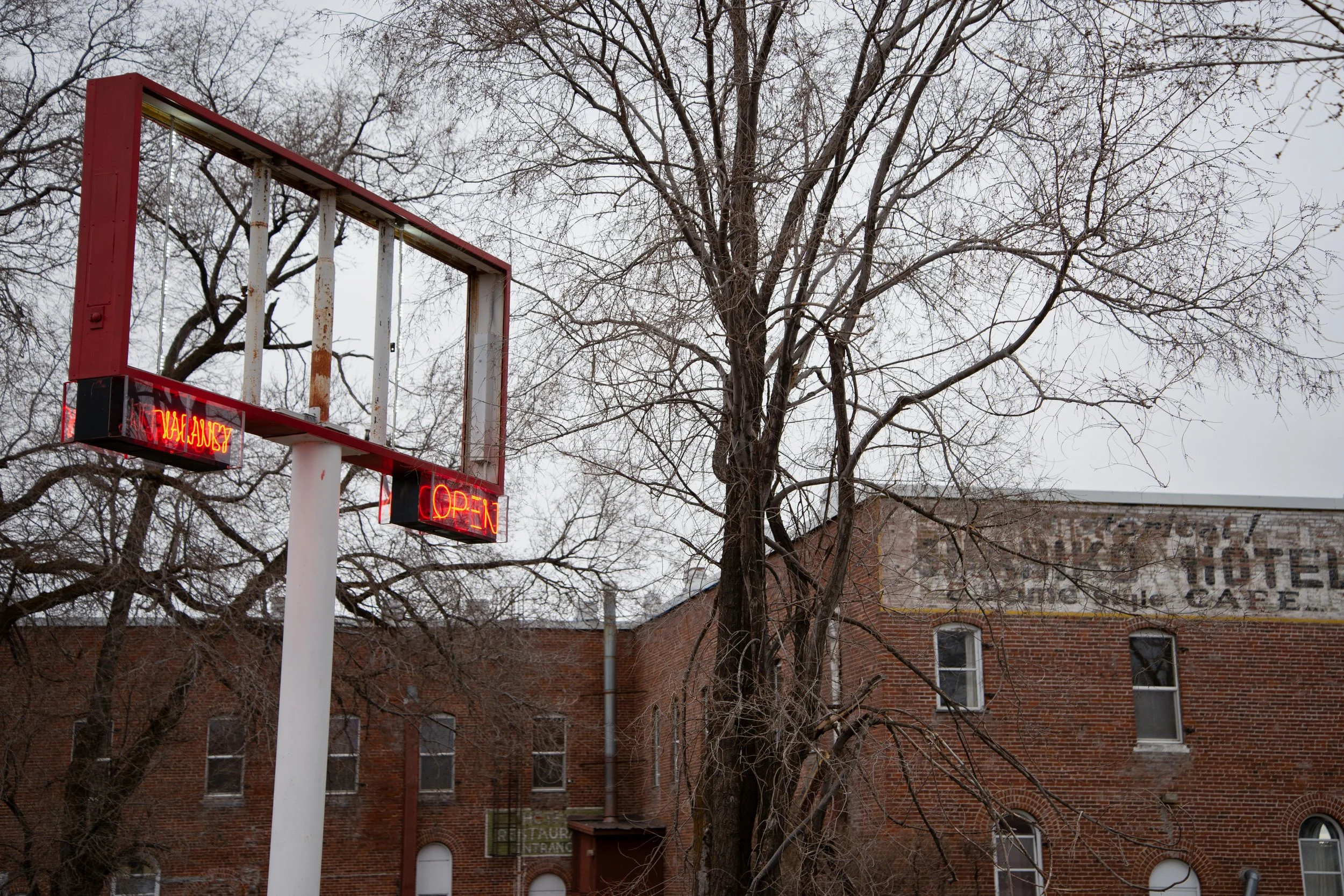
The Shaniko Hotel sits along Route 97. Vacant rooms are advertised by its barren sign. The hotel is busiest in the summer season, when tourists come to experience the many ghost stories attached to Shaniko.
THE OLD GUARD
There’s only one place to eat on the single stretch of weathered storefronts in downtown Shaniko, a cafe and ice cream shop called The Seven Directions. The owner, Sandi Thomas, moved to Shaniko in 2021. When she was 80 years old, she bought a little yellow house on the edge of town for herself and her adopted children.
“I always felt like I should have been on the wagon trail,” Thomas said.
Once a week, she drives an hour and a half to The Dalles in her pickup truck to restock on food supplies. She puts two big coolers full of ice in the bed of the truck and loads up on quarts of Tillamook ice cream, individually packaged yogurts, candy bars, hot dogs and any other sandwich ingredients that make up the limited menu of The Seven Directions. Once she’s done shopping, she makes the drive back to Shaniko and re-opens the store.

Route 216 sits empty leading towards Shaniko, Ore., serving as a connector between Route 27 and Route 97 in Wasco County. Towns are periodically scattered across the roadside, slowly decreasing in size and population as you near Shaniko.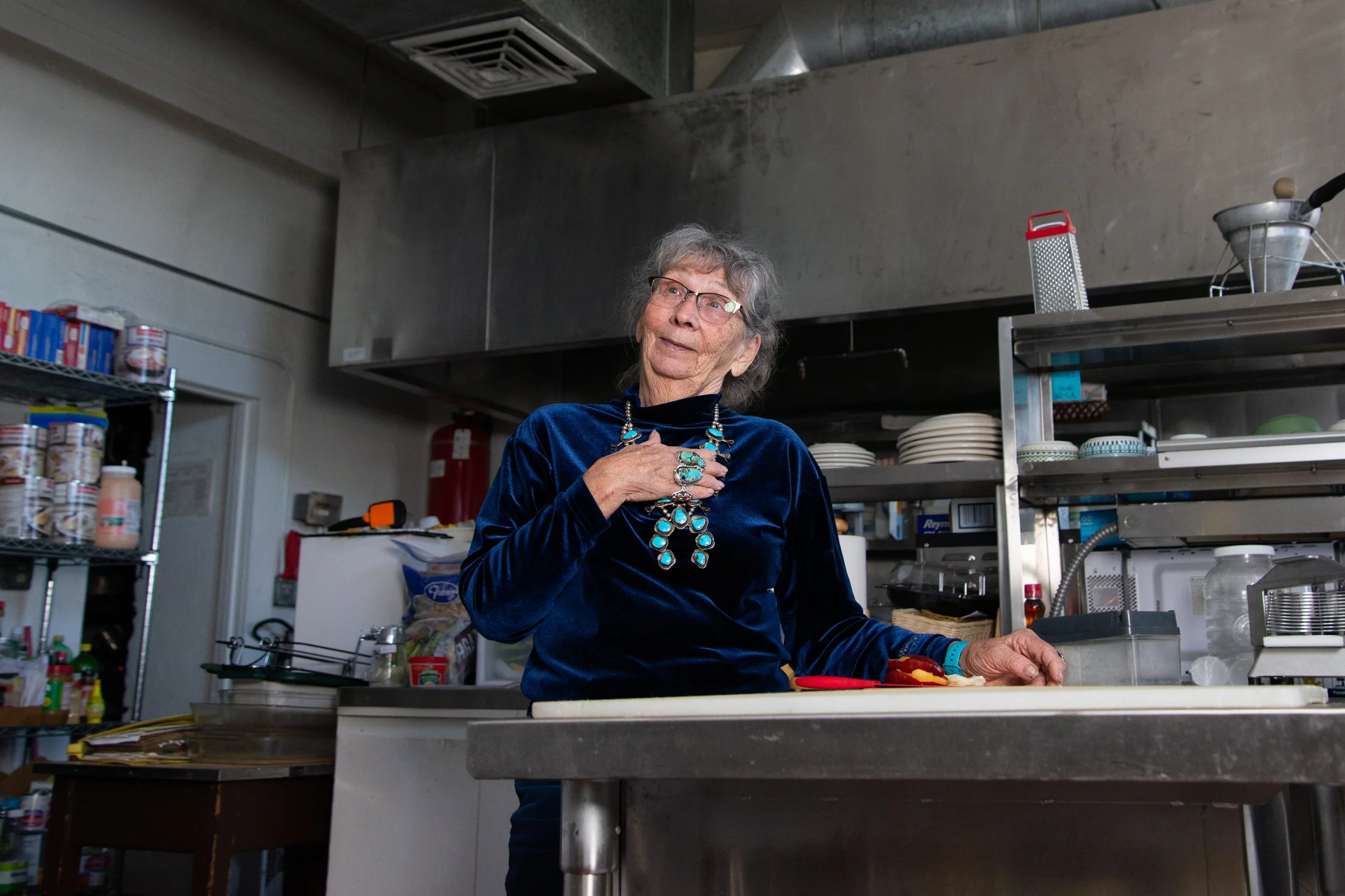
Sandi Thomas, the 84-year-old owner of the Seven Directions Cafe in Shaniko, Ore., explains the origin of her shop’s name, standing in the cafe’s kitchen. The seven directions are North, South, East, West, Up, Down and Within.
In the summer of 2025, Thomas’s routine had to change.
On July 1, Pamela Brown, the newly elected city council president, stepped into the role of water master. Shortly after she took on the role of monitoring and maintaining Shaniko’s water, the Oregon Health Authority issued an advisory due to a system-wide E. coli contamination.
“I had to serve bottled water with bagged ice. I had to have disposable dishes. I couldn’t use the dishwasher. Even the sanitary rinse did not qualify [by EPA standards],” Thomas said.
Brown’s response to this contamination sparked the lawsuit.
For 18 days that August, residents had to boil all water from taps in order to avoid consuming the harmful bacteria, which can cause diarrhea, stomach cramps and vomiting. During this time, there were inconsistent efforts to notify the community, which resulted in several residents falling ill.
According to tests administered by two residents, the levels of chlorine Brown administered in the water were irregular, and, at times, unsafe to drink or bathe with.
Thomas is the guardian of Rochelle Tom, a 42-year-old woman with Down syndrome. Tom has had two open-heart surgeries in the past, leaving her at greater risk of infection. She was hospitalized in The Dalles with E. coli symptoms.
Thomas said signing on to the lawsuit and writing a personal testimony wasn’t a difficult decision.
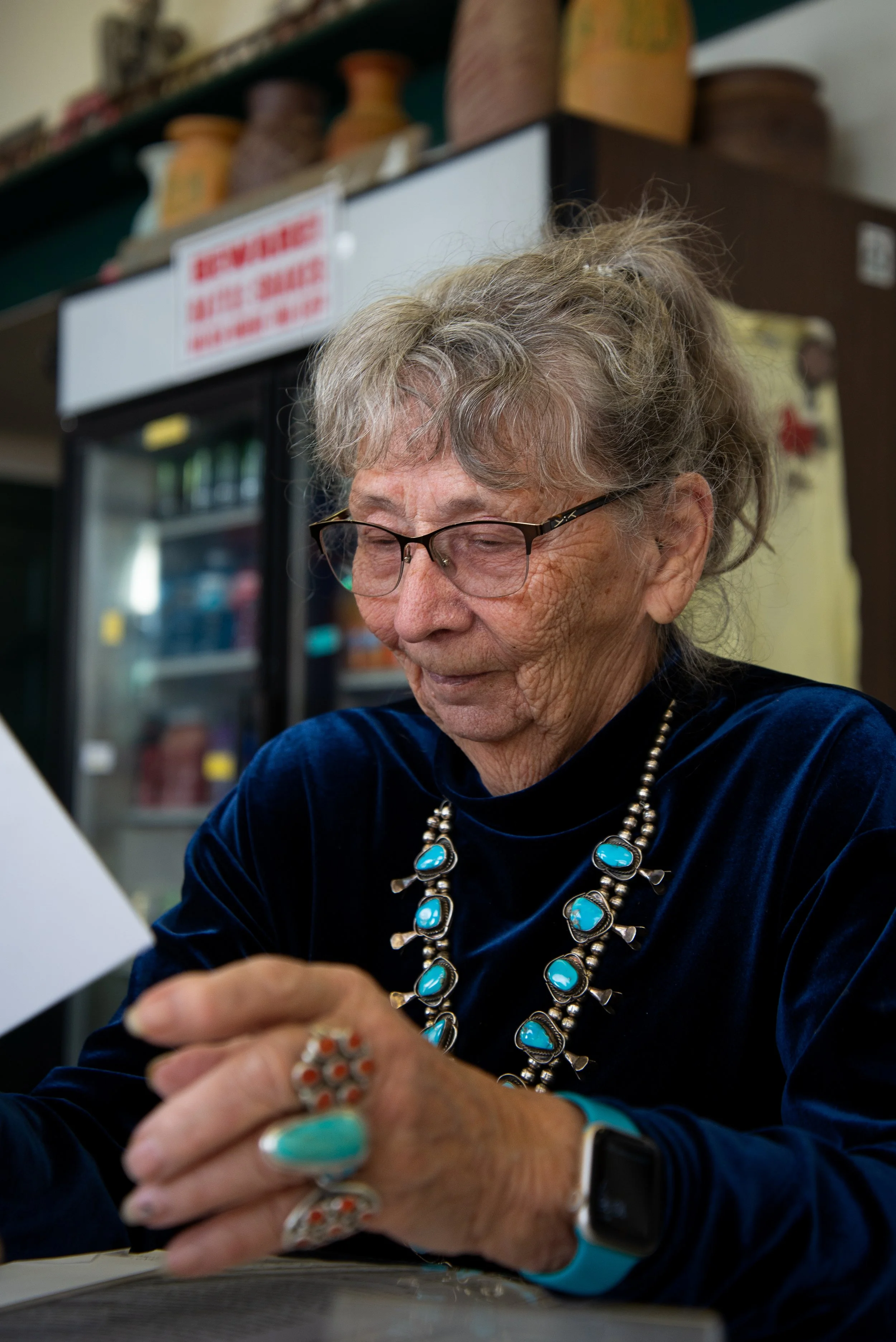
Sandi Thomas, the 84-year-old owner and operator of the Seven Directions Cafe, files through water records she’s kept since August of 2025. From burgers to affogatos, Seven Directions is the only restaurant in Shaniko.
“I just had too much responsibility to not be concerned,” she said.

After being repaired by Pam Brown, 41, and Mark Haskett, 56, the schoolhouse serves as the meeting place for a new Third-Saturday potluck, the second of two monthly town gatherings. A point of contention has emerged over the addition of a second potluck, with some claiming it was an intentional move to further divide the town.
Brown has since begun to chlorinate the water properly, a safety precaution recommended by the EPA.
For Thomas, the lawsuit's endgame is to hold the council accountable. She’s heard discussions of disincorporating the town altogether, but is disheartened by the idea.
“You want to lose Shaniko as a city?” she said. “To me, it’s a little hard to think about.”
Unincorporated communities in the state of Oregon exist outside the jurisdiction of any city. They instead receive resources and regulation from the county.
Scott Marrs is another local business owner who signed onto the lawsuit. Unlike Thomas, he sees disincorporation as a viable remedy to town tensions.
“The city may not be salvageable as far as an incorporated city,” he said.
Marrs is the owner, manager, and one of four employees at the Shaniko Hotel.

Scott Marrs, 70, stands in front of the abandoned Shaniko Volunteer Fire Department, where he once served as fire chief for the smaller communities of Wasco County. It currently houses an old-fashioned Japanese fire truck with a broken engine.
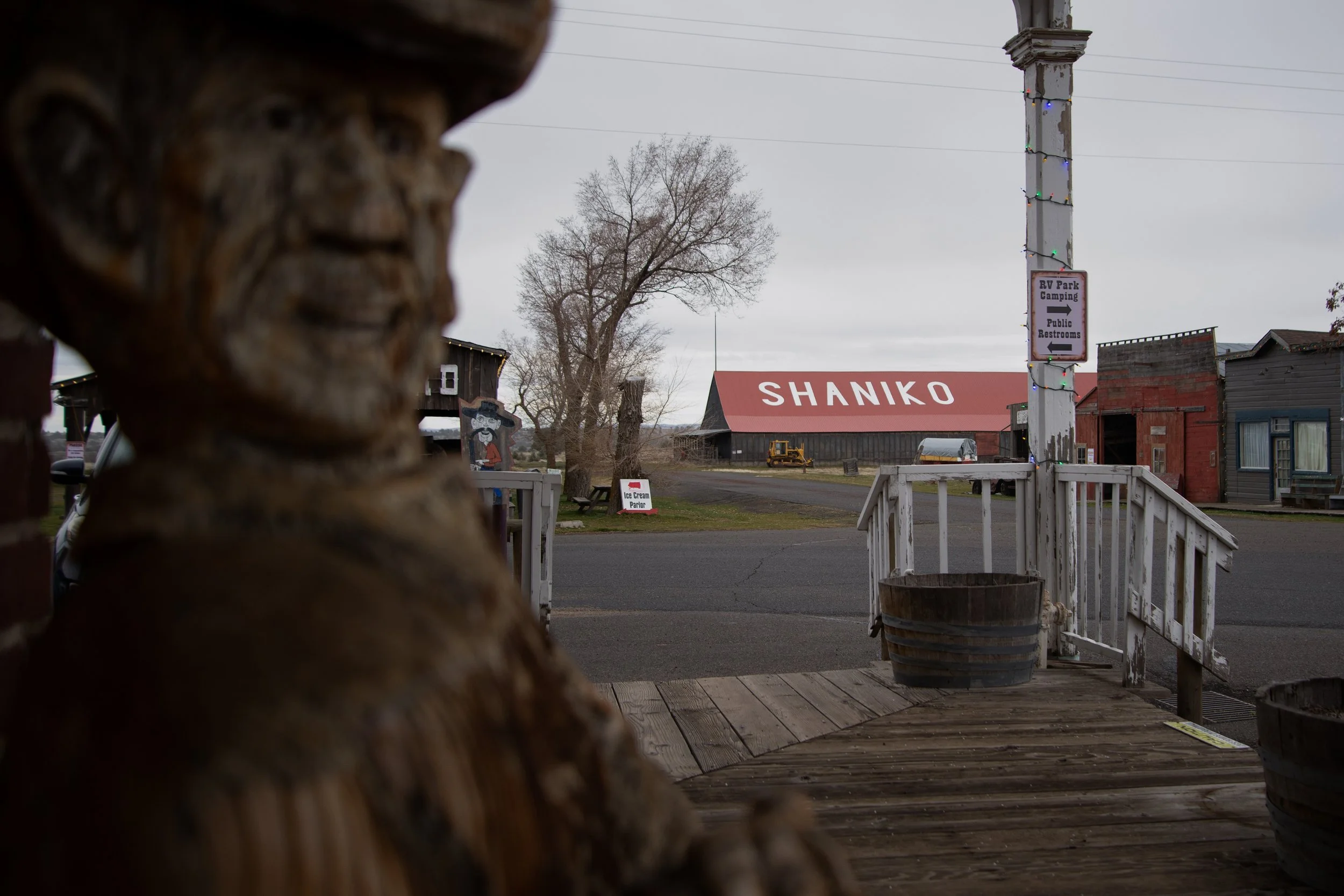
The Shaniko Barn sits in view of the Shaniko Hotel porch. Currently, the barn rests empty and dust-filled. Hotel owner Scott Marrs plans to fix up the barn and turn it into an event center for weddings.
-
![]()
A group of semi-trucks pass by on Route 97 in the middle of the night. The majority of Shaniko’s traffic — haulers, tourists and passersby — stumble on the town by accident.
-
![]()
Scott Marrs looks out on Fourth Street in Shaniko, Ore. The Shaniko Barn paints the background. Marrs and a few other community members intend to turn the barn into an event venue, with a wedding already planned for this September.
-
![]()
Scott Marrs, 70, makes a call from his “office” in the lobby of the Shaniko Hotel. Marrs owns and manages the hotel, commuting daily from his house at Shaniko Junction — the Southwestern terminus of Route 97.



He and his wife, Diana, moved to Shaniko in 2007. They live 12 miles outside of town, tucked in the corner of what’s labeled on historic maps as “Shaniko Junction.” Every day, he makes the commute into town and opens up the hotel, where he handles repairs, cleaning and customer service.
The summer months are the hotel’s busy season. When groups rent out the historic hotel, Marrs is tasked with retelling the classic ghost stories about spirits that haunt the building. Murdered guests from the early 1900s pique the interest of tourists looking to spend the night in rooms where things mysteriously move around and lights flicker on and off.
Marrs has been involved in the Shaniko community since he moved there. He served as the town’s water master and fire chief from 2021 until 2025. He said that his level of involvement changed drastically after Brown was elected to the city council.
“The new administration booted me out, and then, basically, my department shut down,” Marrs said.
When Brown appointed herself the town’s new water master, Marrs was removed from the volunteer fire department.
As Marrs sees it, the crux of the council’s issues come from an inflated sense of power over the community. He thinks disincorporation would reduce friction in Shaniko by equalizing power dynamics among residents.

Scott Marrs, 70, rests on the porch of the Shaniko Hotel. When the hotel has guests, Marrs, the owner, gets to the hotel around 9 a.m. On days the hotel is empty, he takes his time, sometimes not coming in at all.
Marrs said that he wouldn’t feel any personal loss if the town were to disincorporate, and that it wouldn’t hinder tourist traffic or his business practices.
“It’s the best thing to do,” he said.
THE NEW GUARD
Brown and her partner, Mark Haskett, stumbled into Shaniko in 2018 on their way back to San Francisco from a bluegrass festival in Tygh Valley. Brown said they noticed how many tourists were stopping along the road to get gas. In the following months, they bought the town's only gas station. It's small and retro, with two self-service pumps and a bold “24-hour” sign.
The couple moved to Shaniko in 2020. Between trips to the East Coast to visit family, they live in a periwinkle building behind the gas station.
In 2024, Brown was elected president of the Shaniko City Council. She won the race with 22 votes.
“I’m definitely passionate about Shaniko, and I want to honor the roots and the traditions of the town,” Brown said.
Brown has no experience in government or politics. But shortly after moving to Shaniko, she worked with Travel Oregon and their Destination Management Studio. The Studio taught her how to support tourism and resources in rural towns in Wasco County — efforts she aims to pursue as city council president, despite persistent whispered criticism among community members.
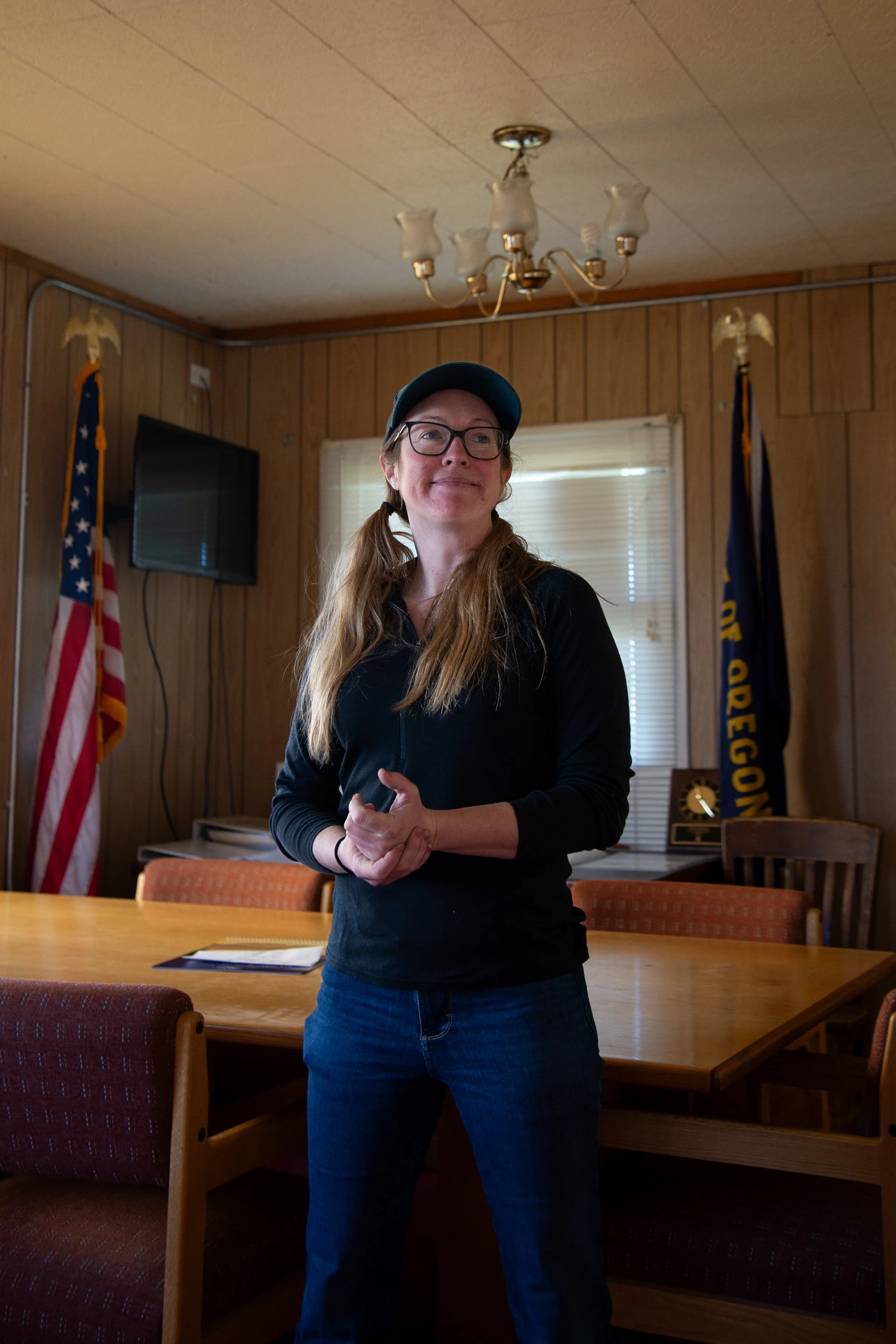
Pam Brown, 41, Shaniko City Council President, visits Shaniko City Hall. Following the state of financial emergency declared on March 7, City Hall was sold to Ernie Martin, 51, an established resident of Shaniko, for $50,000 to recover funding for outstanding bills. “Everyone wants the best for Shaniko, but there’s disagreement on how to do it,” she said.

Mayor Mark Hasket, 56, fills up his ATV at The Outpost — the gas station which he owns, operates and resides behind. The gas station serves as the only refueling service within 40 miles of Shaniko.
-
![]()
The Shaniko Barn sits east of a field filled with vintage cars. The ground in town holds pieces of early Shaniko, from broken glass to run-down railroad tracks.
-
![]()
Mayor Mark Hasket, 56, sits on the porch adjacent to one of two souvenir shops in Shaniko, Ore. The porch has a wide view of the town, providing Hasket with a vantage point of the happenings and new arrivals in the town.
-
![]()
Sandi Thomas’s house sits along Route 97. Thomas moved to Shaniko in 2021 and took on the role of owner and operator of The Seven Directions Cafe.
-
![]()
Mayor Mark Hasket, 56, takes in the view of Fourth Street in Shaniko, Ore. He spends his days working on various projects across town, often visiting Martin’s Pastime, the revamped saloon, in the evenings for a round of darts or pool.




In the town, the line between members of local government and regular citizens is blurred. “Everybody has either been on council, is on council, or is gonna be on council,” Brown said.
Haskett is the Mayor of Shaniko. He was appointed to the position by the city council in January 2026, and has been trying to ignore the discourse regarding his involvement in the local government.
“We don’t all have to like each other to engage in good governance,” he said. “If you sat down and went over everything that would happen if we disincorporated, it would not be good for any member of Shaniko.”
Assimilating with Wasco County would mean that historic buildings would become county property, and therefore would be eligible for public auction. It would also eliminate Shaniko from receiving any grant funding.
Haskett believes that those who want to disincorporate are motivated by personal disputes with council members.
“There’s an old adage about taking your ball and going home,” Haskett said. “In a community so small, if you feel slighted by someone that you see every day, and that person likes the community, maybe you now hate the community,” he said.
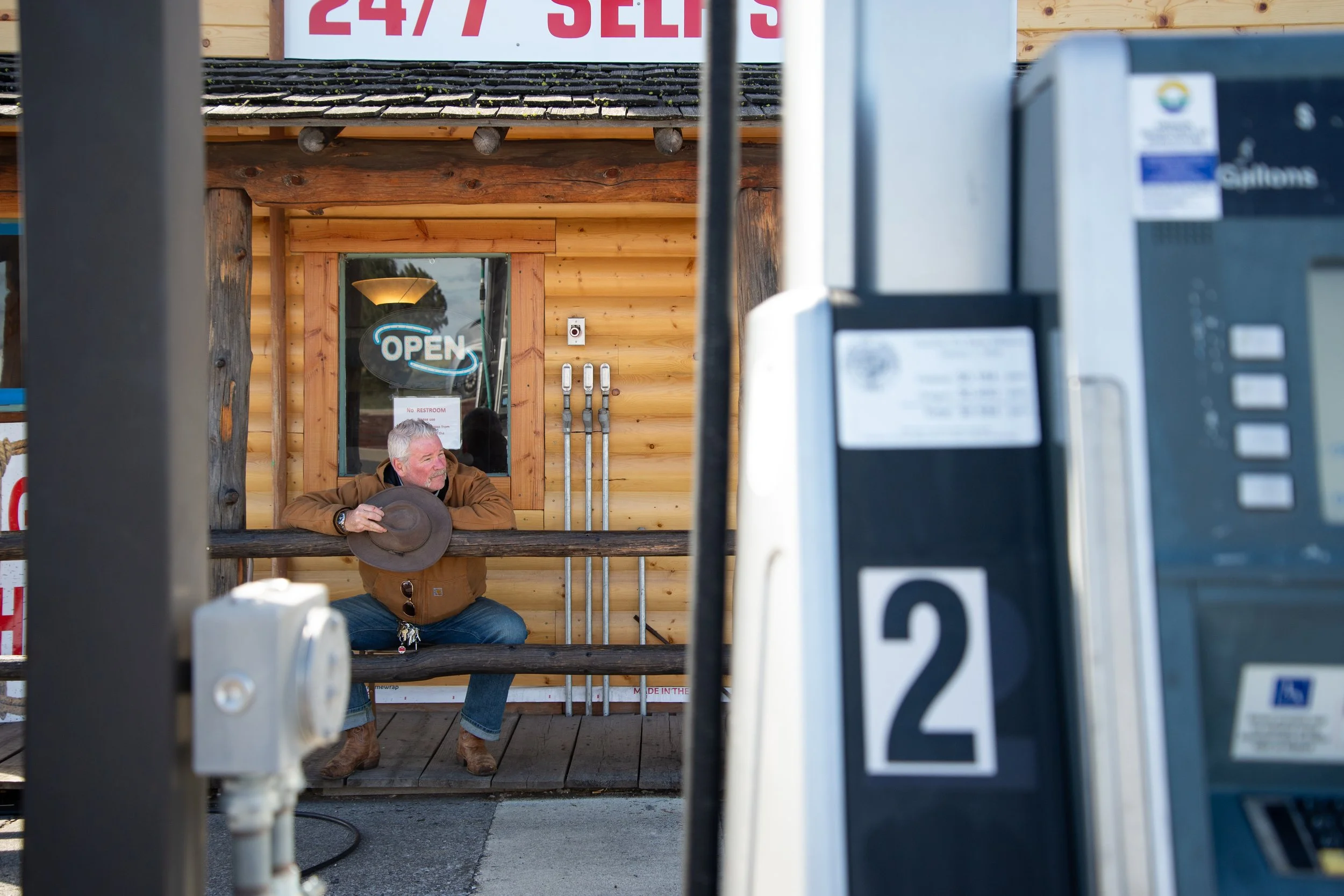
Mayor Mark Hasket, 56, looks towards Route 97 from the porch of The Outpost. He acknowledges the unique position he is in: “I have to keep my head down.”Haskett is determined to keep his head down and continue working through the city council’s list of infrastructure improvements, regardless of the rumors and gossip that seem to follow every action the council takes.
Tasks on the list, like expanding the main water line, repairing more historic buildings and applying for grants, may not be the consensus priorities for everyone in Shaniko, but Haskett knows that total unity is unrealistic.
In the late hours of the second Saturday of March, attendees filed out of the schoolhouse when the bluegrass music stopped and they tired of dancing.
Haskett and Brown crossed the street to their periwinkle-colored compound, which is 12 miles from Marrs’s Shaniko Junction residence and less than a mile from Thomas’s little yellow house on the other side of town.