


Self-Diagnosing Goes Viral
The pervasiveness of therapy speak on social media
Written by Violet Ashley & Ana Casado | Illustration and Web design by Ainsley McCarthy
While scrolling through TikTok’s endless algorithm, a user might come across a video titled “3 Signs Of High Functioning Depression from a Psych Major.”
The video has 911,500 likes, 4,230 comments, 159,400 saves and 24,600 shares. It lists the behaviors associated with high-functioning depression as “subtle avoidance,” “low self-worth despite achievements” and “a persistent low mood.”
The comments are filled with users relating to the list: “Put a finger down challenge,” “3/3 nailed it!” and “100% where is my prize.”
A 2025 Pew Research Center report found 34% of teens say they get mental health information on social media, with most of them considering it an important source.
Social media can blur the line between awareness and misinformation. Nearly one-third of respondents to a 2025 LifeStance Health survey reported self-diagnosing a mental health condition based on online information, and the rate among Gen Z respondents was 50%.
More than half of respondents said they see mental health misinformation on social media at least weekly.
As people turn to social media for quick, convenient advice, therapists are left navigating a new reality in their practice: Patients may arrive with more language for their struggles, but often without the nuance those labels require.
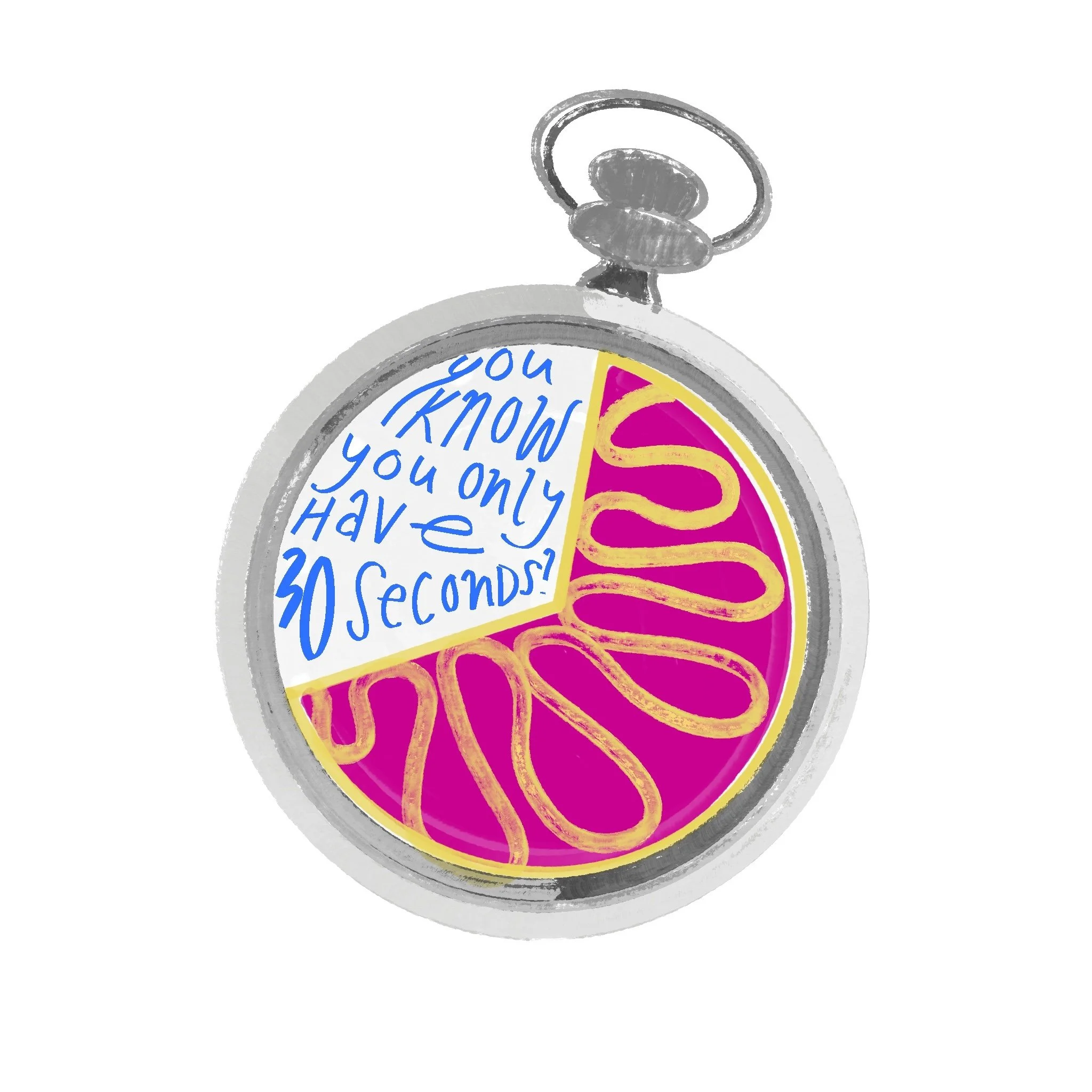
Complex issues such as anxiety and depression are now widely discussed online, often simplified to 30-second videos.
Carli Kilbourne is an Arizona-based licensed professional counselor. Under her TikTok handle @authenticaftherapy, Kilbourne creates content that incorporates therapist insights, general advice and humor.
Kilbourne believes social media has helped people recognize patterns in themselves, feel less alone and discover language for experiences they may have struggled to explain in the past.
In one post, Kilbourne lists “friendly reminders,” encouraging viewers to see discomfort as part of the healing process. The reminders include lines like, “Healing happens outside of your comfort zone,” “Your body is built to handle, tolerate, experience discomfort” and “You are brave. You are capable. You got this.”
One drawback of social media for Kilbourne is that it can lead people to over-identify with diagnoses or reduce complicated relationship dynamics into black-and-white narratives.
“Social media rewards certainty, simplicity and quick answers,” she said.
Therapy terms, she argues, can become problematic if they are misused. “While narcissistic traits and narcissistic personality disorder absolutely exist, using these terms loosely can oversimplify relationships or pathologize human behavior,” Kilbourne said. “The goal is to create more understanding, not judgment.”
Without proper context or training, she said, it can be easy to flatten complex human behavior into labels.
“Sometimes words that originated in clinical settings get diluted into catch-all phrases for normal discomfort or relational conflict,” Kilbourne said.
This concern is shared by former therapist Ana Yudin, who has watched therapy language move from clinical spaces into everyday conversations.
For six years, Yudin has been posting weekly psychoeducation for her 659,000 YouTube subscribers.
Yudin explained how easily therapeutic language can be misapplied or weaponized, like when people label a disagreement as “gaslighting” or use “setting a boundary” to avoid a hard conversation.
“Somebody being tidy means they have OCD [Obsessive Compulsive Disorder],” she said. “Someone being in the zone when they’re enjoying a topic is hyperfixation caused by neurodivergence. Someone getting overwhelmed is them having a sensitivity to overstimulation.”
It is uncommon for therapists to use therapy-speak with clients, she said. “It’s not productive. It’s not how progress is made.”
Yudin argues that once people start identifying with something, it becomes difficult to let go of.
“I don’t believe in self-diagnosing,” she said.
According to Yudin, some of the most frequently self-diagnosed disorders, like attention-deficit/hyperactivity disorder or autism, happen to be very complicated to diagnose — even by highly specialized clinicians.
“It’s difficult to be comprehensive with short-form content, especially when it comes to such important terms,” she said.
While social media provides an introduction to mental health information, it lacks nuance. Therapy-speak can initiate new and valuable conversations, but understanding requires time and effort.
“Whatever label you do or don’t have, it doesn’t change the reality of your experiences,” Yudin said.