

Writers Cassia Littlefield, McKenzee Lyn Manlupig
Photographer Camille McFaul
Web Designer Alexandra Bondurant
Healing trauma through Equine Assisted Services
Reining in the Soul
A gentle breeze ruffled the trees over a circle of colorful plastic chairs. Horses grazed in a large pasture facing the rolling green hills of the Rogue Valley, free to roam.
After driving four hours from Eureka, California to Ashland, Oregon, Margaret Lewis, 48, inhaled the fresh air. A year and a half ago, she was diagnosed with ductal carcinoma.
Lewis, alongside the other 18 women in the circle, leaned forward as Trish Broersma, 79, explained why she’s dedicated her life to helping trauma survivors.
“There’s just a lot of trauma going on in our world,” Broersma said. She describes her career as offering people “the extraordinary gifts that the relationship with a horse brings to human community.”
In 2013, Broersma founded Riding Beyond, a nonprofit providing Equine-Assisted Services to breast cancer survivors, and since 2020, COVID-19 and wildfire survivors. The primary events offered at Riding Beyond are four-week, intimate group sessions that run from mid-April to mid-June.
She is certified as an Equine Specialist in Mental Health and Learning through the Professional Association of Therapeutic Horsemanship International. PATH Intl. is a nonprofit that provides credentialing for equine programs.
Alongside horse interactions, Broersma includes poetry, brain exercises and music to regulate mental and physical imbalances in the body. She aims to rebuild some of the trust and emotional self-awareness that these women lost.
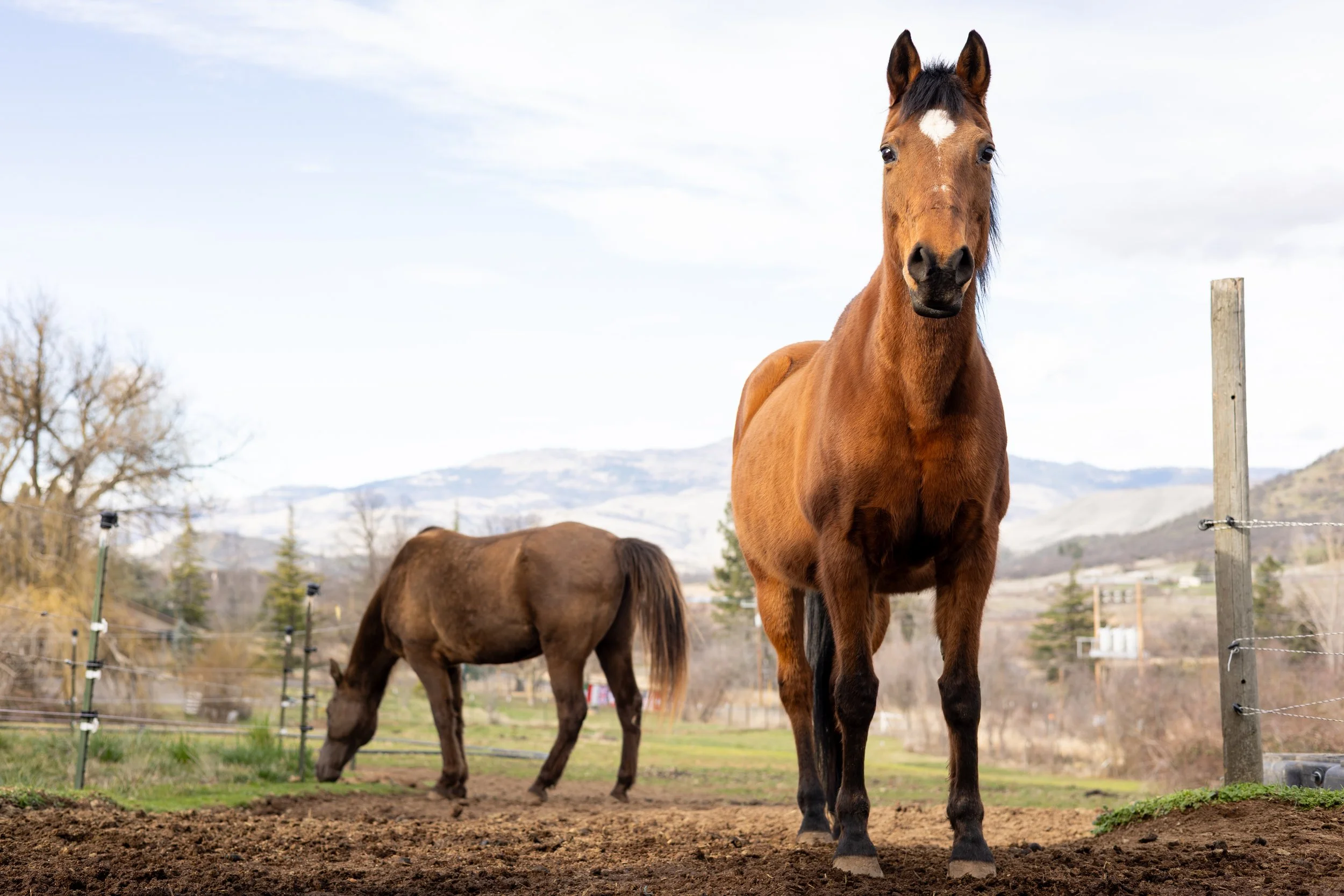
Journey, left, and Mystic, right, share a strong bond that resembles a sibling relationship. One minute, they're calm; the next, they're biting and nipping at one another.
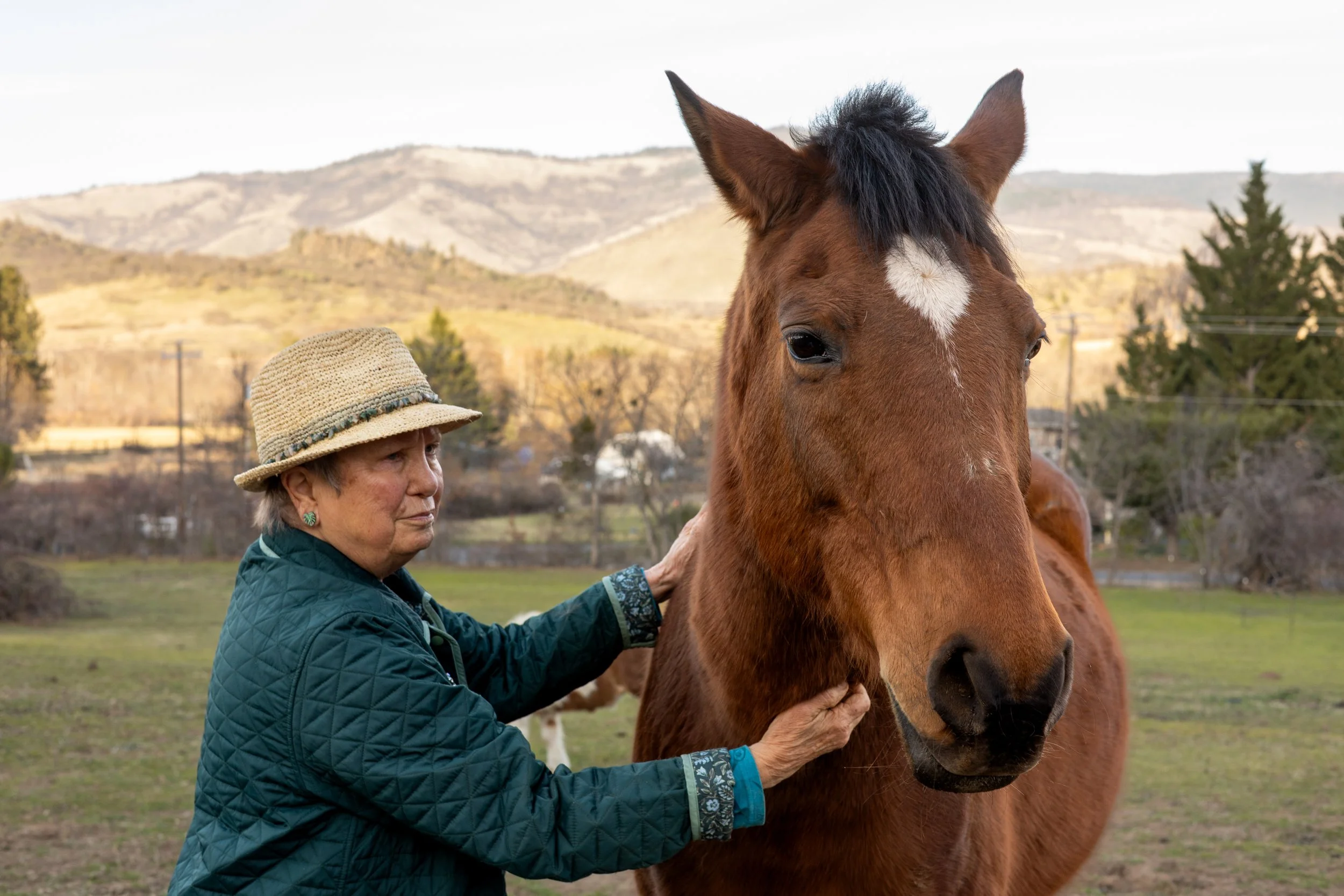
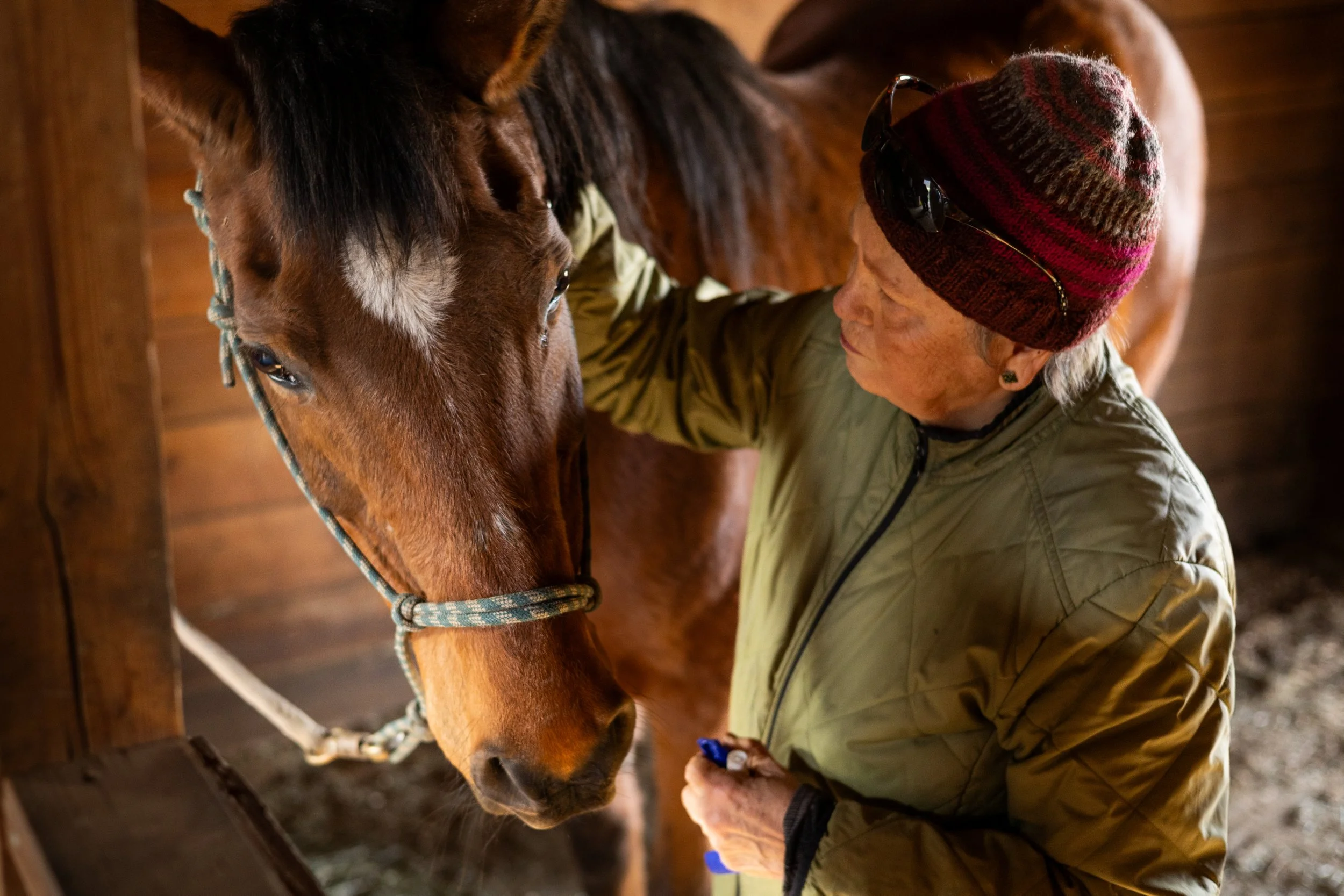
Every evening, Trish Broersma, 79, gives her horse, Mystic Moon, affectionate scratches before finishing her daily care routine of feeding and grooming the horses at the barn in Ashland, Ore.
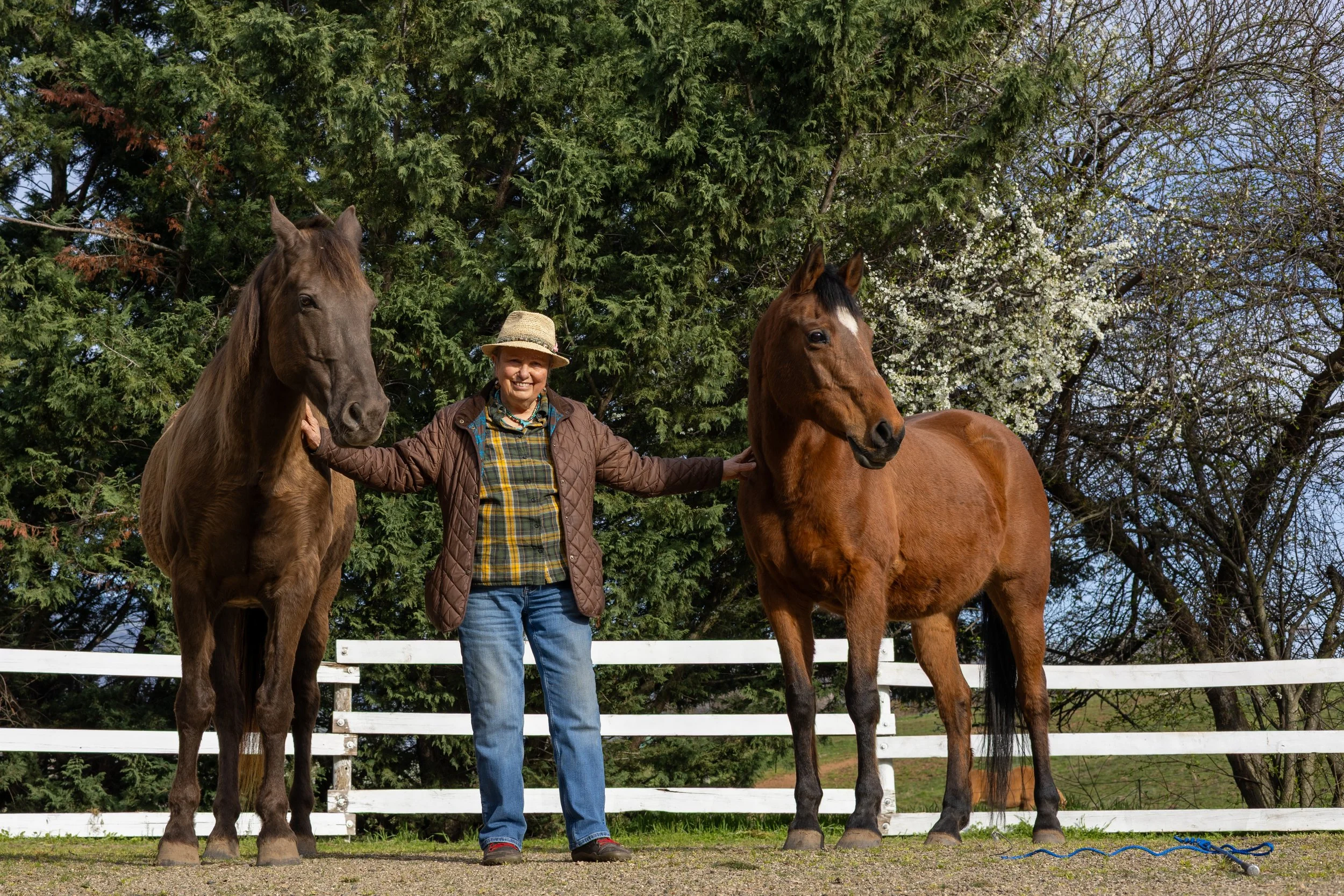
Trish Broersma, 79, stands with Journey, left, and Mystic, right, in Ashland, Ore. The two horses — spirited and calm in equal measure — have become the heart of her equine-assisted therapy program, Riding Beyond.Broersma has a long history with EAS. She’s worked at equine practices for most of her life, including a few years teaching EAS abroad, but she wanted to offer something to her own community.
“She came to understand that once women have finished breast cancer treatment, they just walk off a cliff in terms of what comes next,” said volunteer Sierra Faith, 72. “After going through this very deep, transformational journey, they’re not the people they were.”
In Oregon alone, there are at least 50 EAS programs. The practice was formalized in the 1960s. It encompasses a wide range of treatments, including psychotherapeutic work and physical, occupational and speech therapies. For all types of EAS, the horse is a member of the treatment team.
“I was very adamant, and I still am, that [my program] should be offered free to the women,” Broersma said. After 13 years, her gratis program, Riding Beyond, has touched hundreds of lives.
In July 2022, Karen Barrow was diagnosed with triple-negative breast cancer, a rare and aggressive form resistant to treatment. After being told she was in remission, she had no support. She found Riding Beyond in 2023 when a mutual friend recommended it.
“When I got done with the four-week program, I had direction. I had clarity,” Barrow, 77, said. “I wasn’t healed all the way, but I knew what direction to go to help myself get healed.”
After months of hospital visits, participants enjoy relaxing in a calm, natural environment.
“A lot of people have a harder time getting around. They’re not able to go out into the forest or go for a hike,” said past participant and volunteer Starfire Jones, 47. “This gives you the same restorative properties.”
Besides the four-week program, Broersma hosts free meditation circles with her two horses — Mystic Moon and Journey — every Thursday in the winter.
On a breezy February afternoon, Broersma sat on a lawn chair in the field outside of her horses’ four-stall barn. Three other women sat beside her, forming a semicircle that allowed for an unobstructed view of the horses.
Broersma started the meditation by reading verses from Sutra 70 to set the tone. The rhythmic chew of hay and the cold cutting wind filled the gaps of silence.
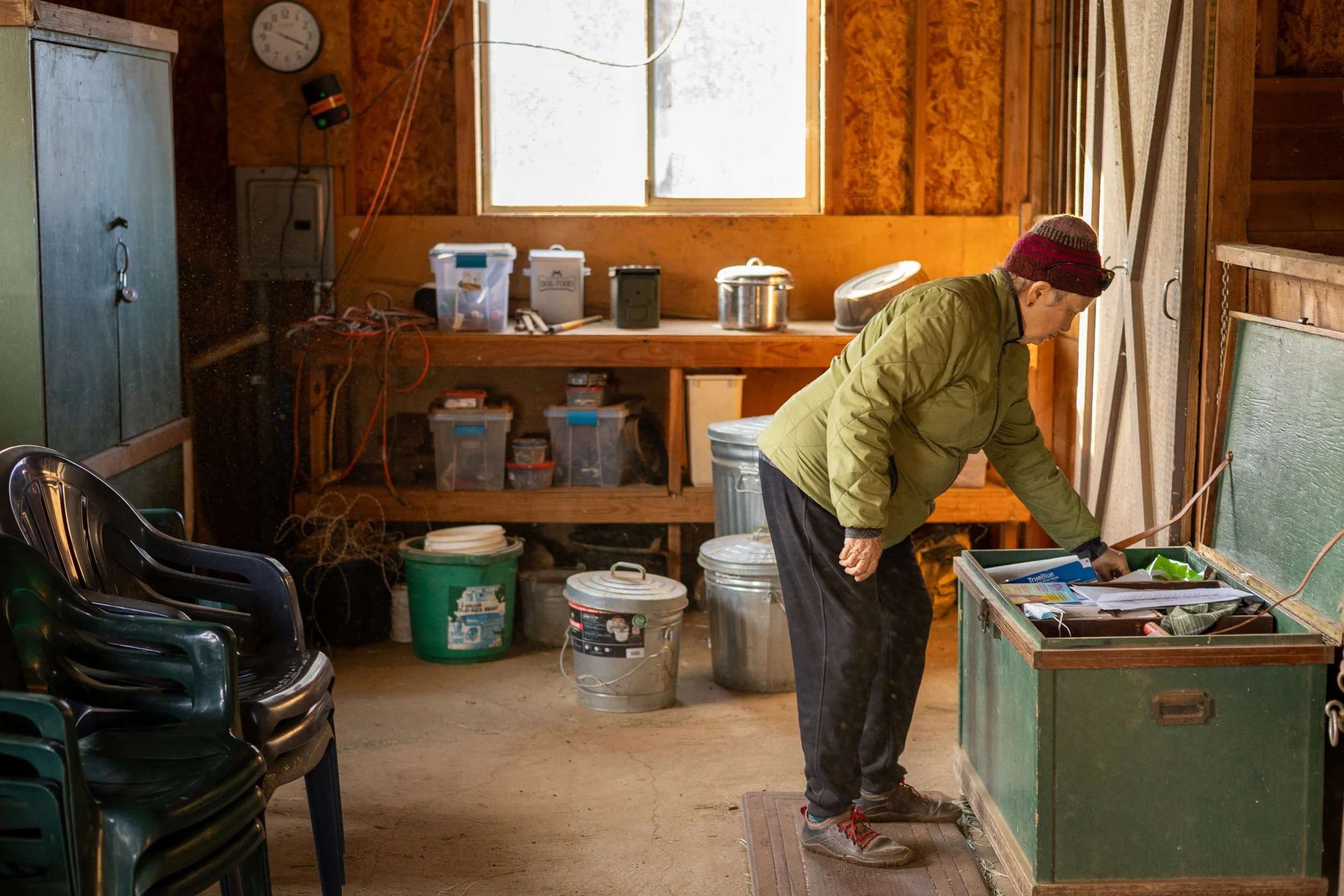
Trish Broersma, 79, rummages through a green chest for dehydrated apple treats for her two horses, Journey and Mystic. In Broersma’s work with EAS, she prioritizes her horses’ choice and comfort alongside her participants.
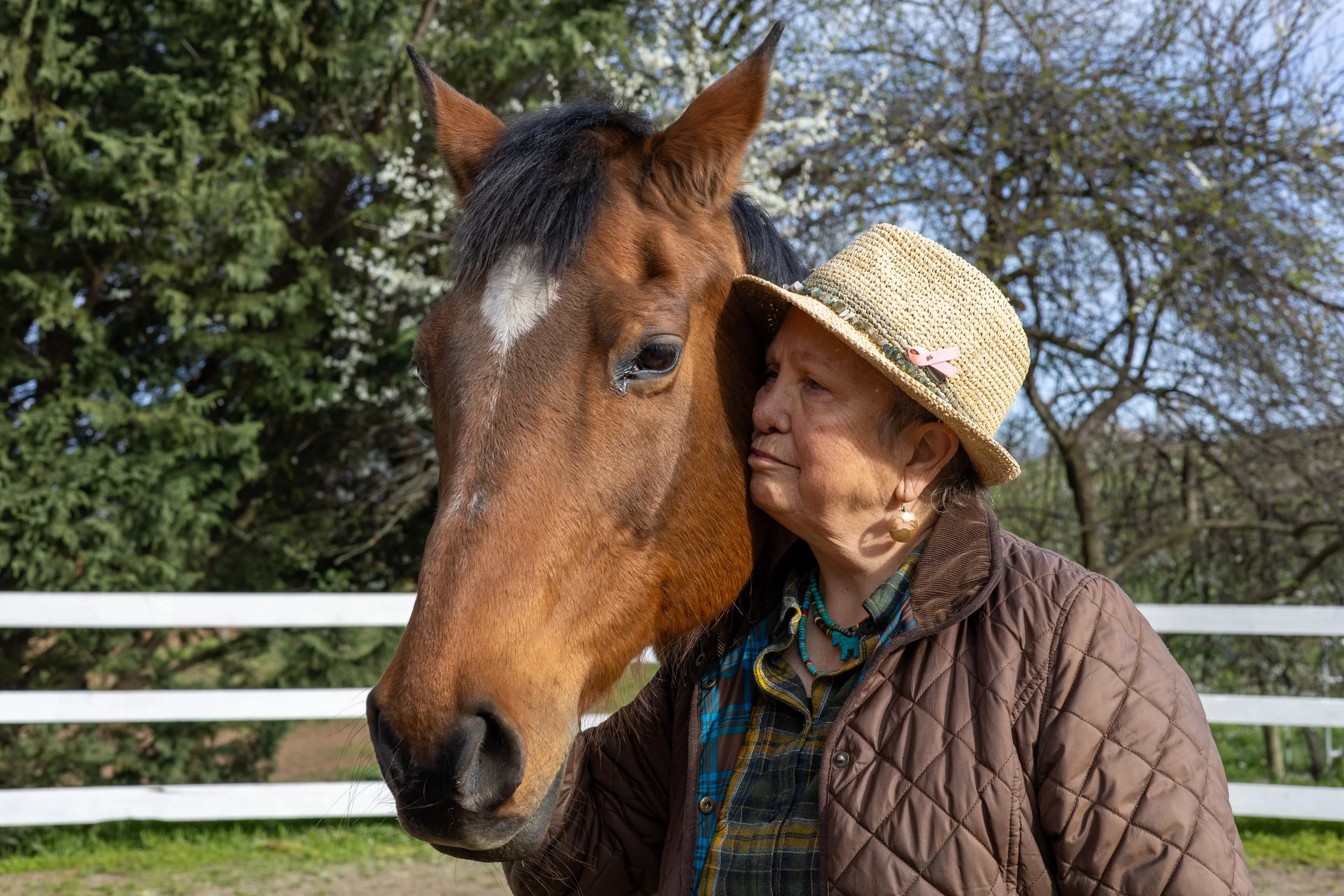
Trish Broersma, 79, rests her cheek against Mystic’s face. There’s a small pink ribbon for breast cancer awareness pinned to her straw fedora, which she wears every day. For Broersma, the ribbon and the horse represent the same thing: a commitment to healing, for others and for herself.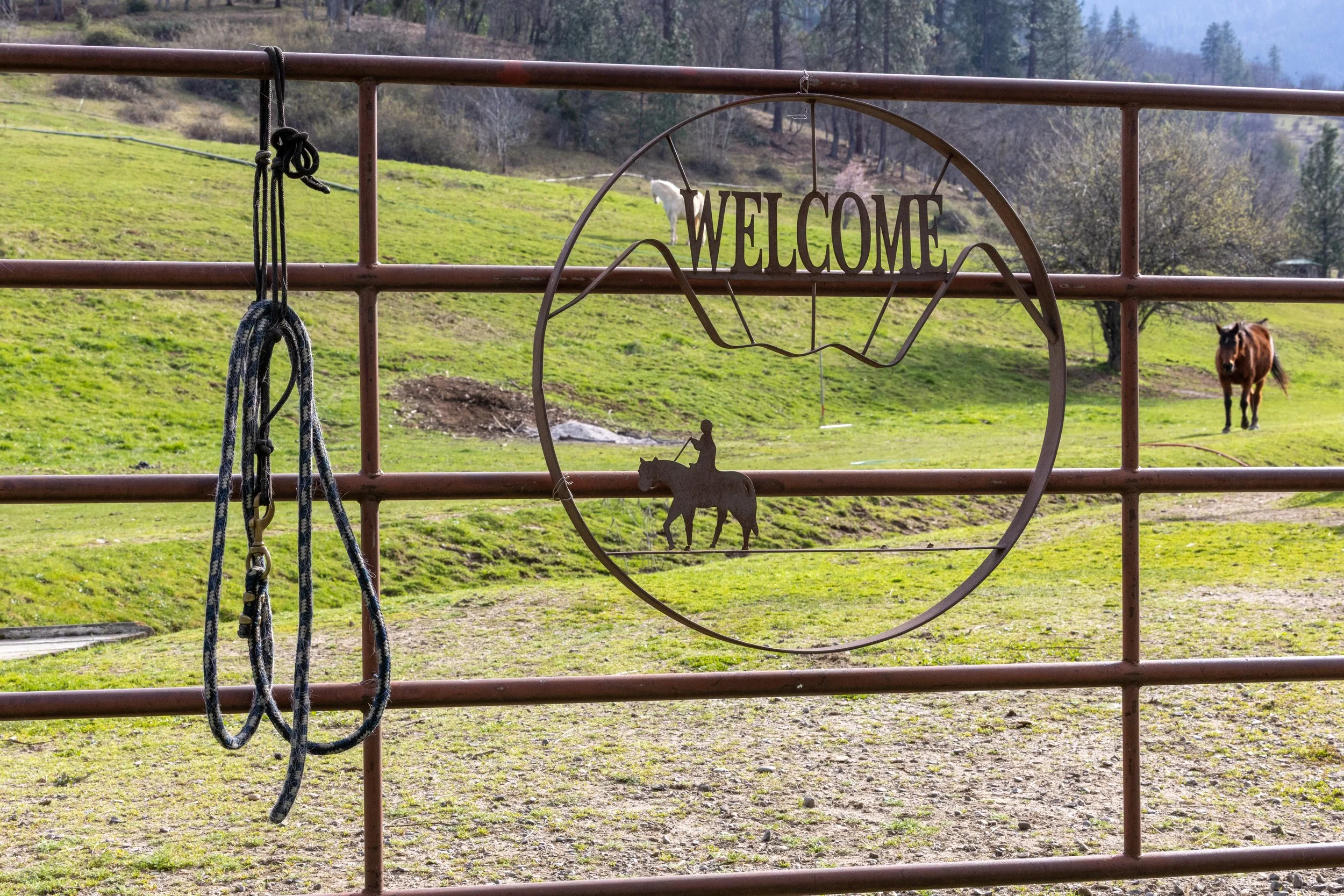
A metal “Welcome” sign featuring a rider on horseback hangs on the gate at Little Creek Ranch, where Riding Beyond hosts its four-week Equine-Assisted Services sessions. Beyond the gate, the open pasture stretches out, and horses roam freely in the distance.
“And remember, this too shall pass,”
Broersma read aloud, flipping over the last page on her clipboard. She reminded the women that it’s possible to find joy again. A sense of tranquility hung in the air over them.
Mystic Moon, Broersma’s 25-year-old Anglo-Arabian mare, was given to her by a friend who had become afraid of her unpredictable nature. Broersma “fell in love with her” and became committed to turning her behavior around. Over the next few years, Broersma trained Mystic as her personal horse first, then for EAS.
In 2013, she attended the PATH Intl. conference in Prescott, Arizona where she met Catherine Hand, 84, the woman who inspired her to start Riding Beyond.
Broersma sat in on Hand’s presentation about being in hospice care after battling breast cancer. Hand’s nurse recommended that she start planning her own funeral.
“Without knowing it, I was suffering from PTSD, and something had happened in my nervous system,” she said.
In an attempt to regulate her body, Hand said she tried laying on her pony’s back and syncing her breath with the animal.
The next time her hospice nurse came by, her system was recovering.
“Everybody said, ‘Oh, it’s a miracle.’ But I don’t believe in miracles,” said Hand. “Something physical happened.”
Once she regained her health, Hand established an EAS program for breast cancer survivors in Alpine, California.
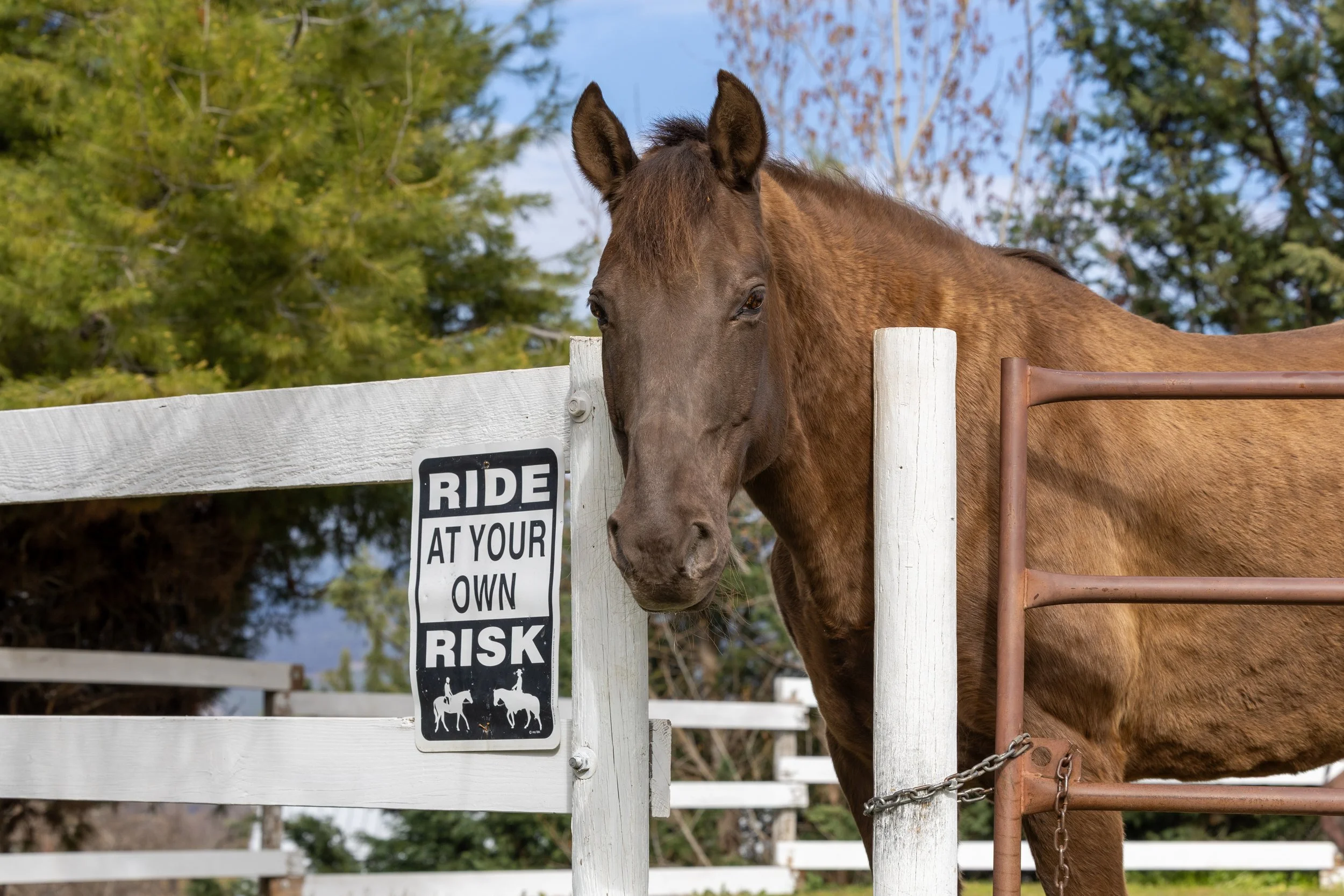
A “Ride at Your Own Risk” sign hangs beside Journey, Broersma’s 19-year-old Rocky Mountain gelding. Spirited and dominant by nature, Journey is otherwise calm, curious and sharp enough to respond to a spoken word.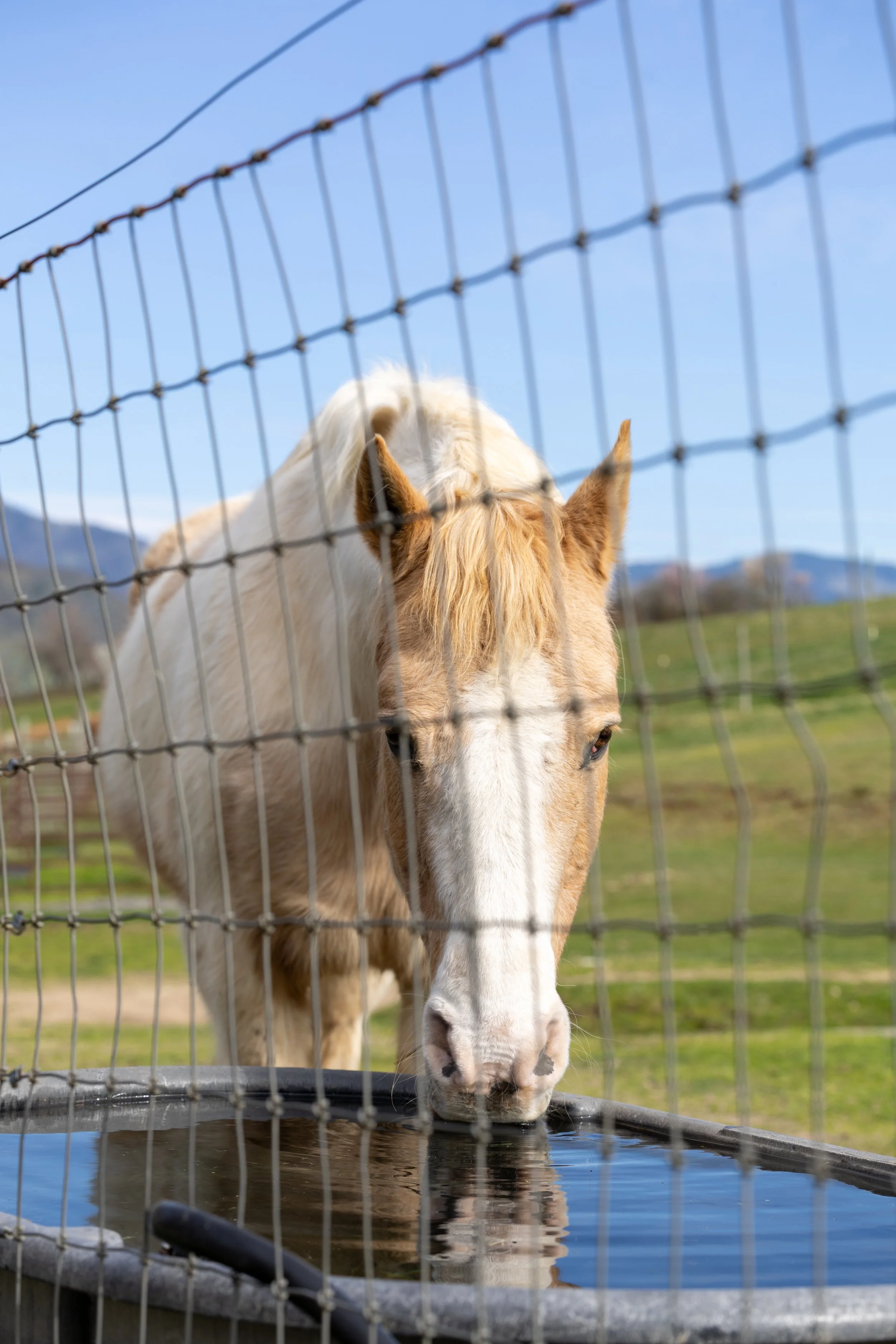
Beau, a painted palomino, is known among Riding Beyond participants for his quiet, sensible nature. His owner, Debbie Hansen-Bernard, 71, describes him as intuitive — able to sense when to enter someone’s space and when to stay back.
After going through breast cancer, “a woman has been mutilated, cut off from any source of her own beauty,” Hand said. “She’s been left bald. She’s had her breast cut off … Inside, she is shrinking.”
Broersma, having watched two close friends battle Stage 4 breast cancer, went home and started Riding Beyond.
She threw a ceremonial launch for about 50 people, and within two weeks, Broersma had her first two clients.
“We knew in that very first session that we were on to something that I hadn’t anticipated,” she said.
At Riding Beyond’s volunteer training in March 2026, Margaret Lewis shared with the other women why she wanted to start a practice of her own. She battled breast cancer, went through a divorce and moved all within a short timeframe.
“A lot of stuff happened in life all at once. I was like, ‘I need a horse back,’” Lewis said. She found Broersma through the introduction videos on the PATH Intl. website while working toward her own credentials.
“I wanted to see how she’s able to use a horse to make someone feel better after going through something so traumatic, where you think, ‘I could die from this,’” Lewis said, knowing first-hand how difficult recovery can be.
-
![]()
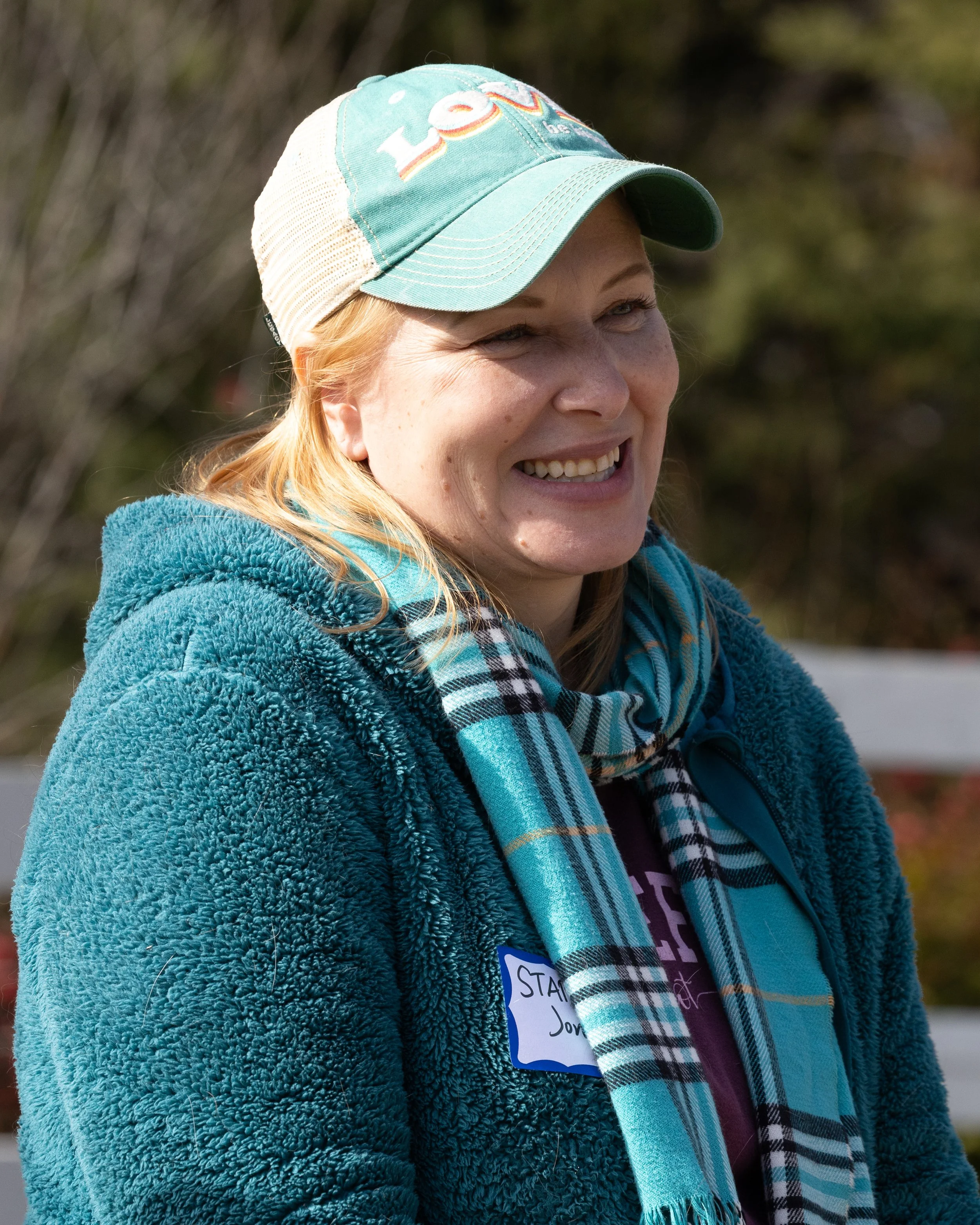
Starfire Jones, 47, once came to Riding Beyond as a participant seeking healing. On March 10, she returned as a volunteer. “The horses, you know, they’re really intelligent and intuitive,” Jones said. “Learning to read them helps you understand more about yourself, too.”
-
![]()
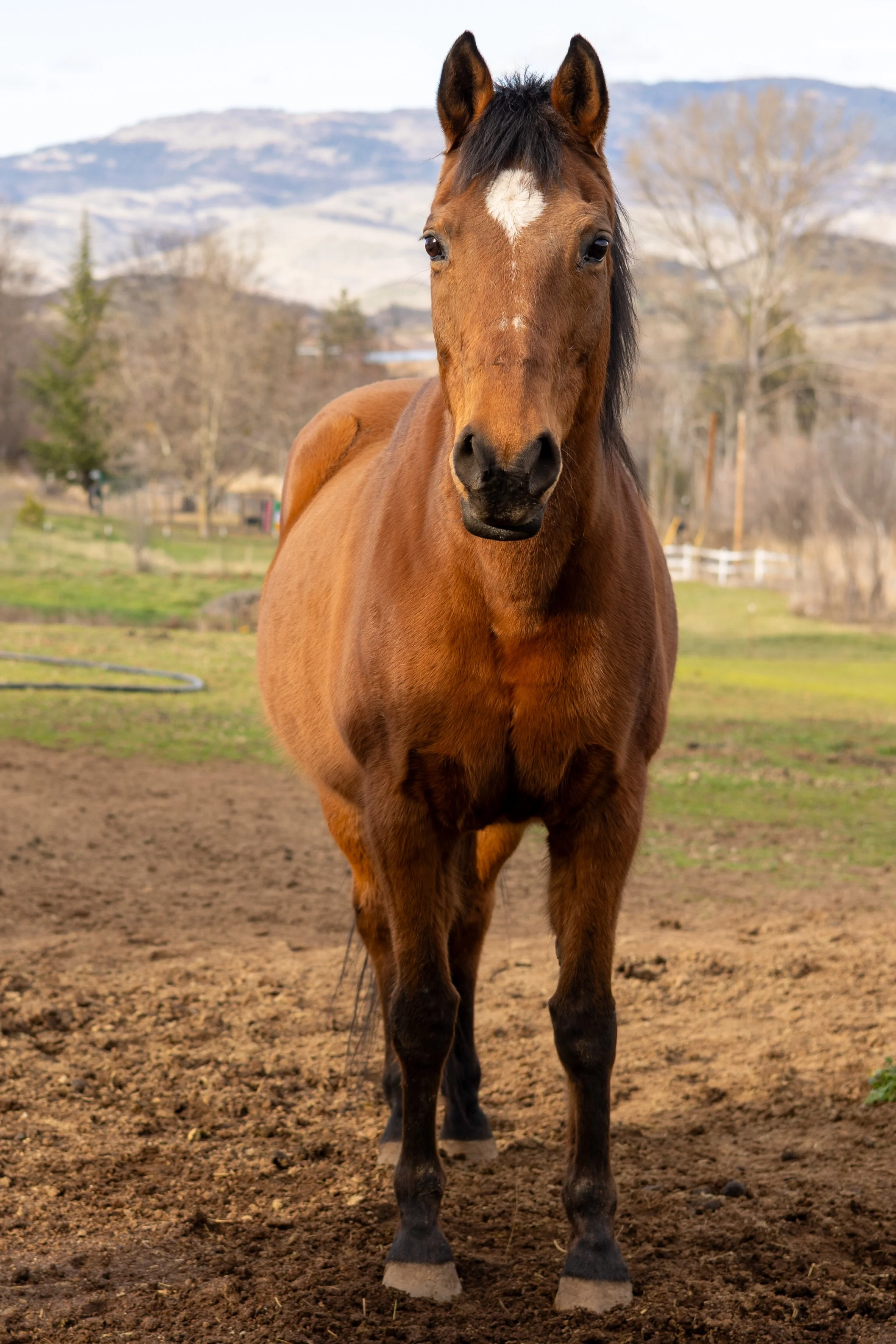
Mystic Moon, Broersma’s 25-year-old Anglo-Arabian mare, is calm but quietly stubborn. Her small frame and broad, flat back make her a natural fit for Equine-Assisted Services, and her gentle presence has made her the unofficial face of Riding Beyond.
-
![]()
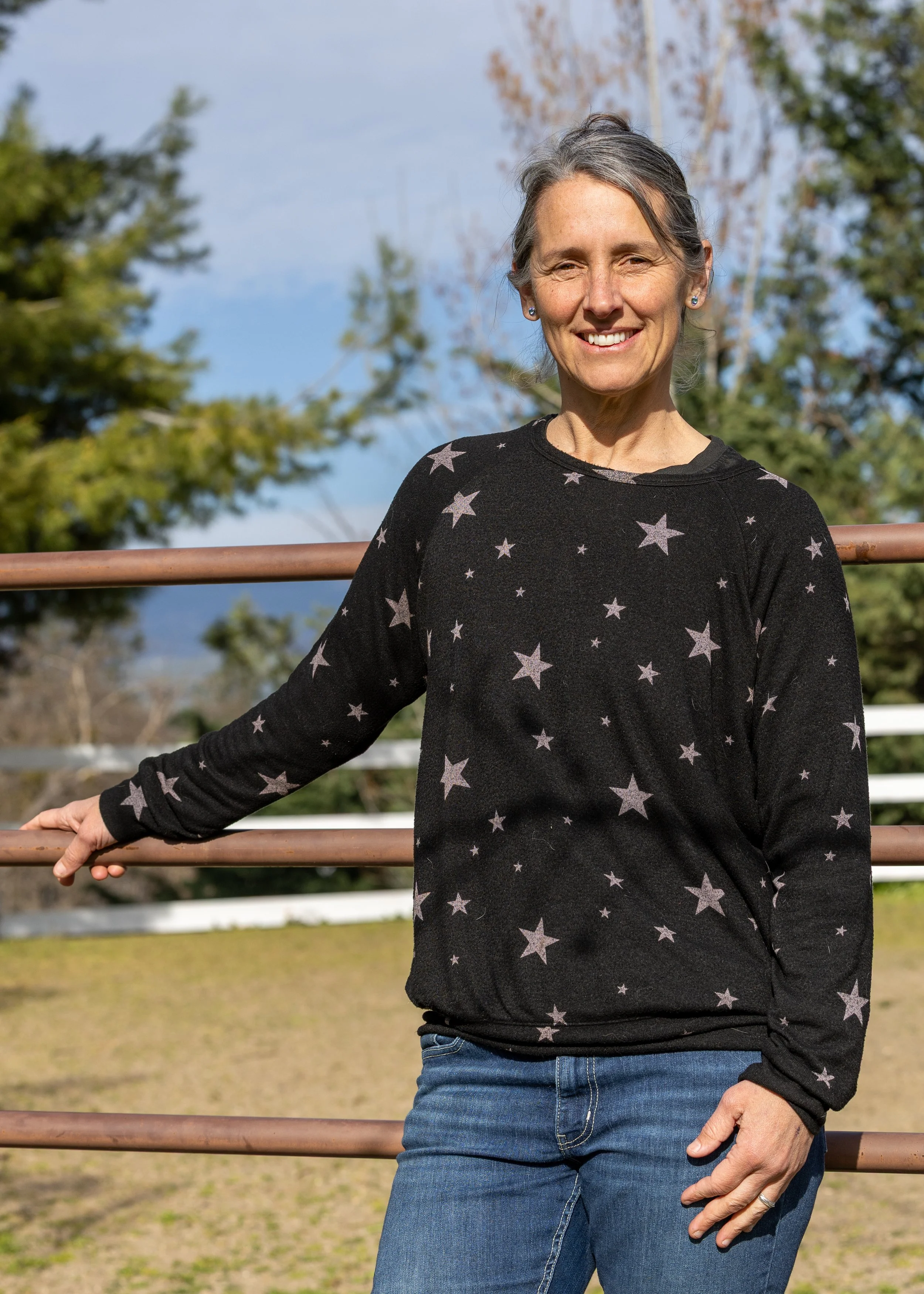
Margaret Lewis, 48, traveled from California to attend a Riding Beyond volunteer session after learning about Trish Broersma’s program. She hopes to build a similar equine-assisted practice of her own back home.
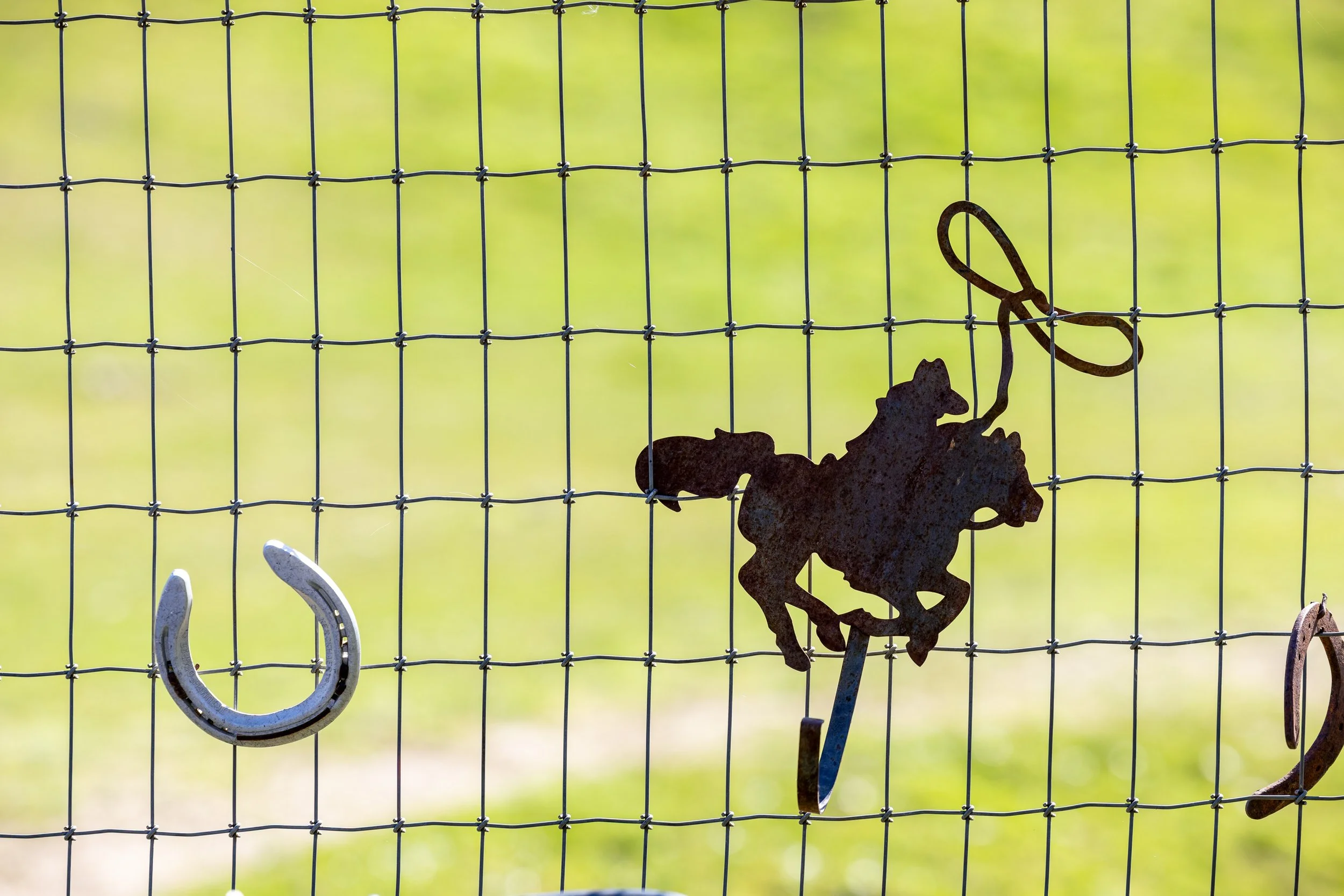
A metal silhouette of a cowboy on horseback, flanked by worn horseshoes, decorates the fence at Little Creek Ranch, Debbie Hansen-Bernard’s 20-acre property outside Ashland, Ore. which she has called home for 28 years.After the volunteer introductions, Broersma gathered the women around the pen with a sign that read “Ride at Your Own Risk.” Journey, Mystic and Beau — the third Riding Beyond horse — stood calmly inside.
Volunteer Jenny Lieber, who runs the sessions for wildfire and COVID-19 survivors, demonstrated how to approach a horse. “It’s like approaching a new person,” she said. “You give the horse space, wait for them to come to you, and watch the horse’s body language.”
The women filed into the pen and were divided into three groups, one for each horse. When Broersma rang her handheld wooden chime, it signaled the women to move on. Lewis took her time, learning to read the horses.
After 15 minutes, Broersma beckoned the women to circle up and asked how it went.
Lewis raised her hand first. “I didn’t realize there was gonna be that much emotion going back and forth,” she said. “You had to meet the horse where they were.”
Lewis purchased her horse, Bentley, in late February, and has started training him for EAS. Once she completes her credentialing through PATH Intl. in July, she will set up her own program at her property in Eureka, using the same principles that Broersma started with 13 years ago.