

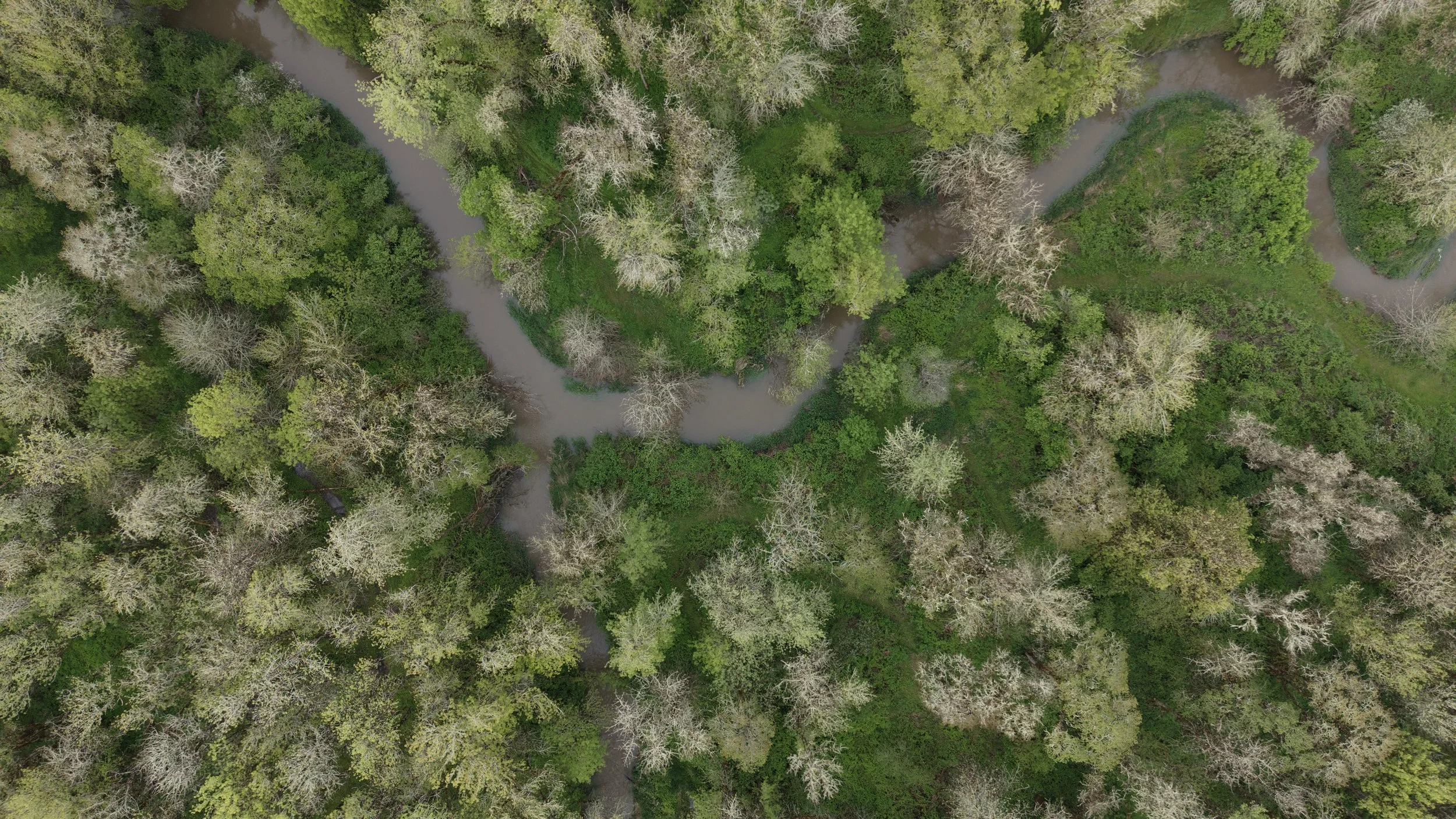
The Last sTAND
An invasive beetle brings the end of ash trees in Oregon.
Writers Leo Heffron, Violet Ashley
Photographer Peiyu Li
Web Designer Alexandra Bondurant
Waving his cane at the gangly ash trees, farmer Don Wirth, 80, recounts the history of his estate.
In Linn County, Oregon, Wirth has farmed grass seed all his life. However, his eyes aren’t always glued to his crops. More often than not, he finds himself gazing up at the trees he was raised alongside. His father was a logger who ingrained a respect for trees in Wirth.
Other farmers, Wirth said, “don’t give a damn.”
He does.
Ash trees claim over half of his 400-acre property. In a few short seasons, he’ll be forced to cut them all down — more than 80,000 — in preparation for the inevitable spread of an invasive beetle.

Don Wirth, 81, has worked in agriculture his entire life. He looks across his Shedd, Ore. property, where he owns more than 40,000 ash trees. Wirth is concerned about the potential need to cut them all down due to the emerald ash borer's spread.
Wirth now has a great-granddaughter. He doesn’t know what the future of his property will look like for two-month-old Jozie Joy. The land has been in the family since the 1850s.
Without an outlet for his stands of ash, dead logs will smother his fields, limiting what land he can use and demanding a premium upon their removal.
“If we don’t do something … that’s going to be just a nightmare,” Wirth said.
A Death Sentence
The emerald ash borer, an invasive insect from Northeast Asia, has swept through the eastern U.S., killing hundreds of millions of native ash trees. Before 2022, it was only reported as far west as Colorado, but it hitchhiked with humans undetected for over 1,000 miles to Forest Grove, Oregon. The decimation it brings will forever change Oregon’s landscape.
Without native ash trees to absorb chemical runoff from large agricultural fields, creeks would be negatively affected. The death of ash trees means they won’t provide rivers the natural shade required to regulate water temperature, and they won’t be able to protect soil from drying and eroding, potentially changing the course of waterways.
Preemptive tree removal is the most accessible way for landowners like Wirth to prepare for the EAB, but it can cost up to $2,500 per tree depending on size, location and health. For plots of ash as large as Wirth’s, the price adds up.
About 90 miles north of Wirth’s farmland, ash trees line the residential neighborhoods of Forest Grove. The larvae plaguing them guarantee their death. With translucent white skin and bloated sausage-link bodies, EABs chew abstract lines back and forth underneath the bark, causing it to fall off in withered husks. D-shaped holes pepper the tree, marking the exit of the EAB and the start of its adulthood.
Once a tree is infested, the larvae tourniquet the trunk, cutting off nutrients; the top branches are typically the first to go. The tree, not realizing it’s already doomed, grows new shoots in a last-ditch attempt at survival.
Specialists hypothesize that when the EAB arrived in North America, it went undetected for at least a couple of years before its discovery in Michigan in 2002. It may have been transported accidentally through wooden crates or packaging. Without a natural predator, the beetle’s population swelled steadily, spiraling outward to bordering states.
This spread directly correlated with the movement of firewood. In response, counties established firewood quarantines in the late 2000s. The U.S. Department of Agriculture advises people to only burn firewood within ten miles of where they buy it.
Despite this, at press time, the EAB is now in 37 states, the District of Columbia and six Canadian provinces.

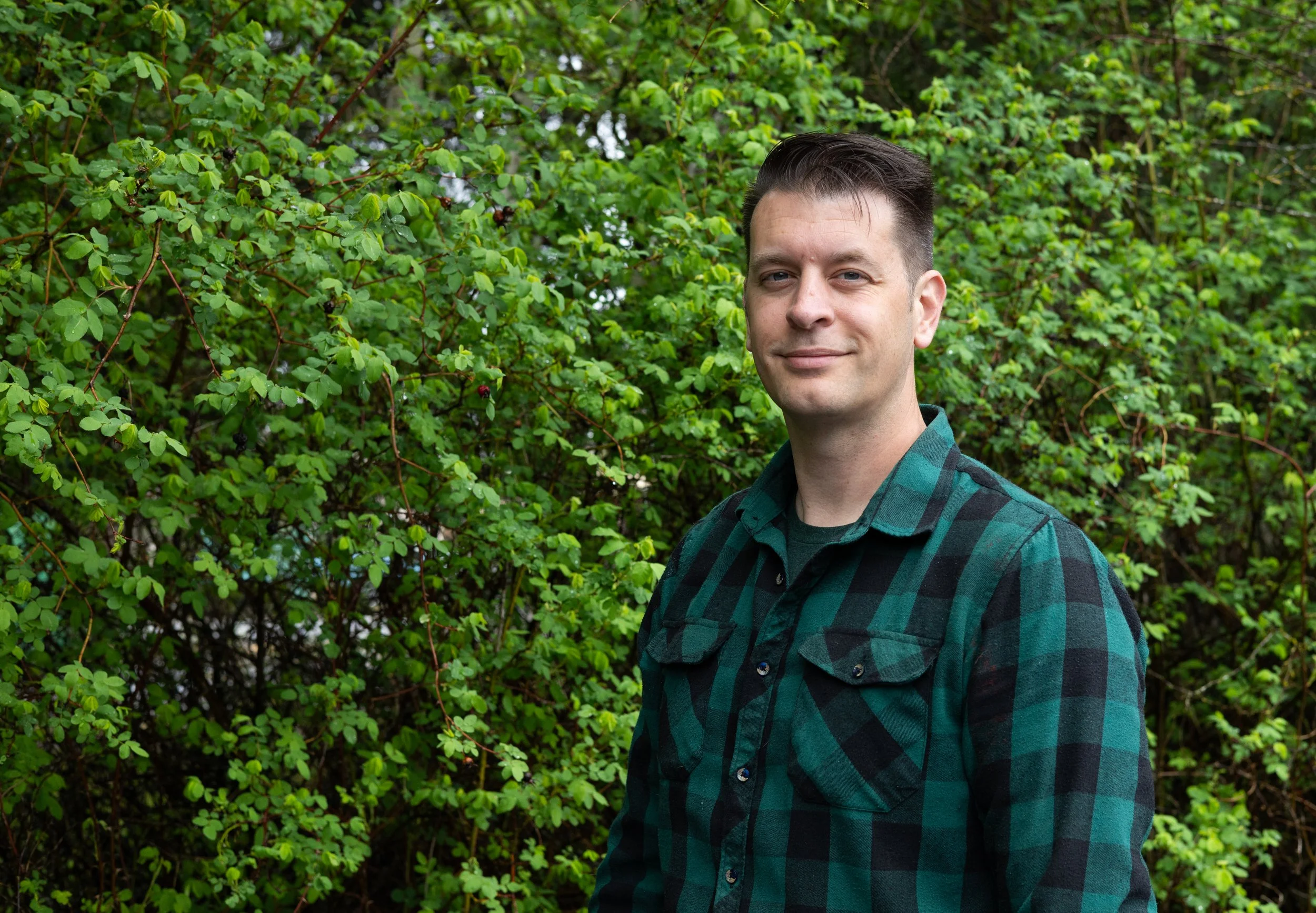
Matt Mills, an EAB support specialist, studies Oregon ash trees at the Oregon Department of Forestry. He helps cities develop emerald ash borer response plans and educates residents about the presence of EAB.
Walking through the parking lot of the Oregon Department of Forestry, Matt Mills, EAB support specialist, points out a handful of deciduous ash trees. The branches are sparse and skinny, adding no greenery to the winter morning.
The EAB is considered the most destructive forest pest in North America. Oregon can’t stop widespread ash tree death, but the state has a narrow window to address it.
“Most of this ash will be chopped down this summer, and replaced by other species,” Mills said.
However, species substitution is not a viable fix for ash in rural areas. Its niche role in wetland zones, common throughout the Willamette Valley, makes it invaluable.
Although Mills has seen his fair share of infected ash, he said he’s only seen about a dozen grown EABs. “Adults only emerge in June and live for just a few months, spending most of their time up in the tree canopy, so they’re not easy to spot,” Mills said.
The initial response was funded by a one-time allocation from the State Emergency Board. With it, the Oregon Department of Agriculture assembled a specialized team to visually inspect Forest Grove’s ash trees for signs of the beetle.
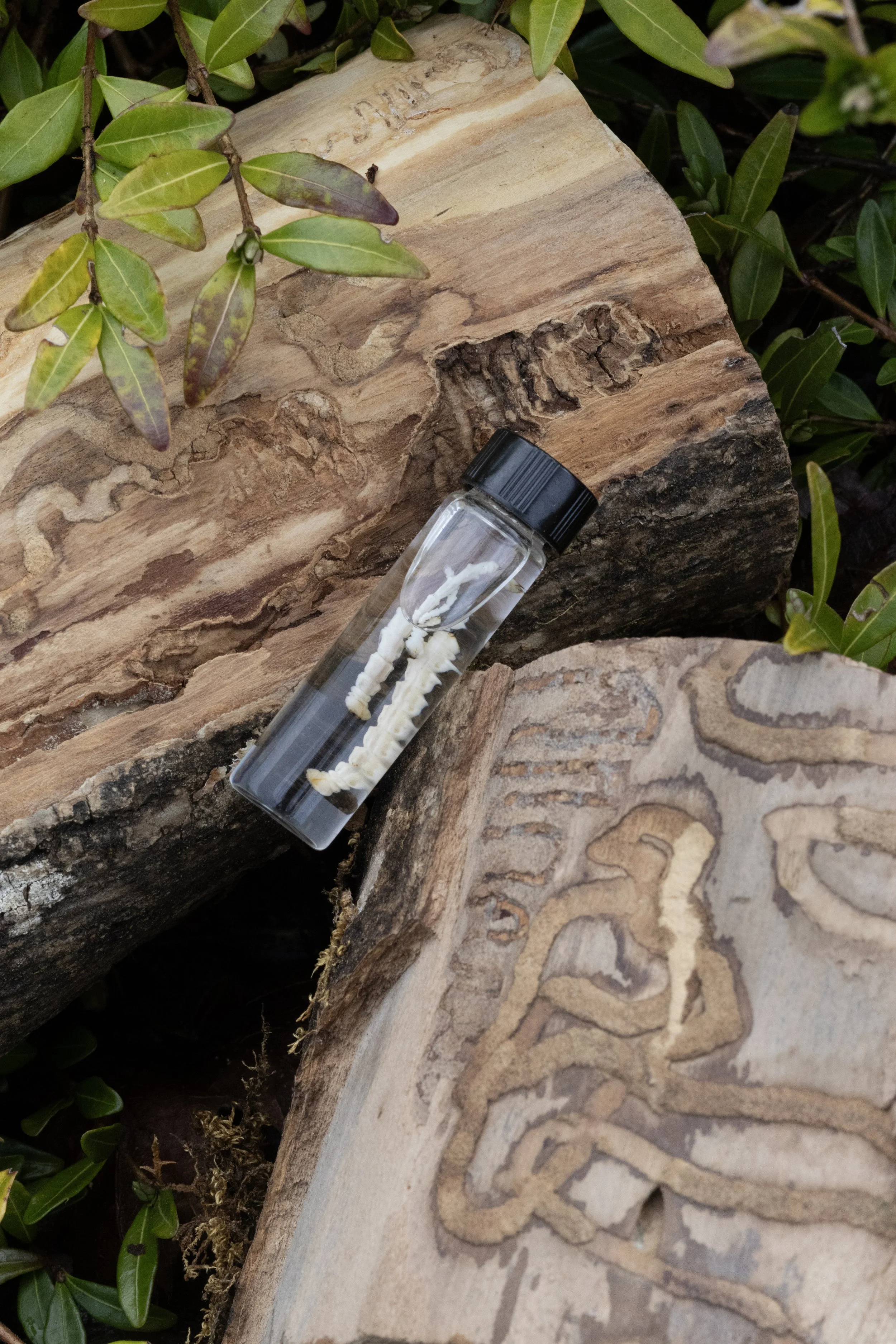
Emerald ash borer larvae and infested branches are stored in labeled tubes at the Oregon Department of Forestry in Salem, Ore. The serpentine larval “galleries” are one of the most distinct traits of the emerald ash borer-infested trees.
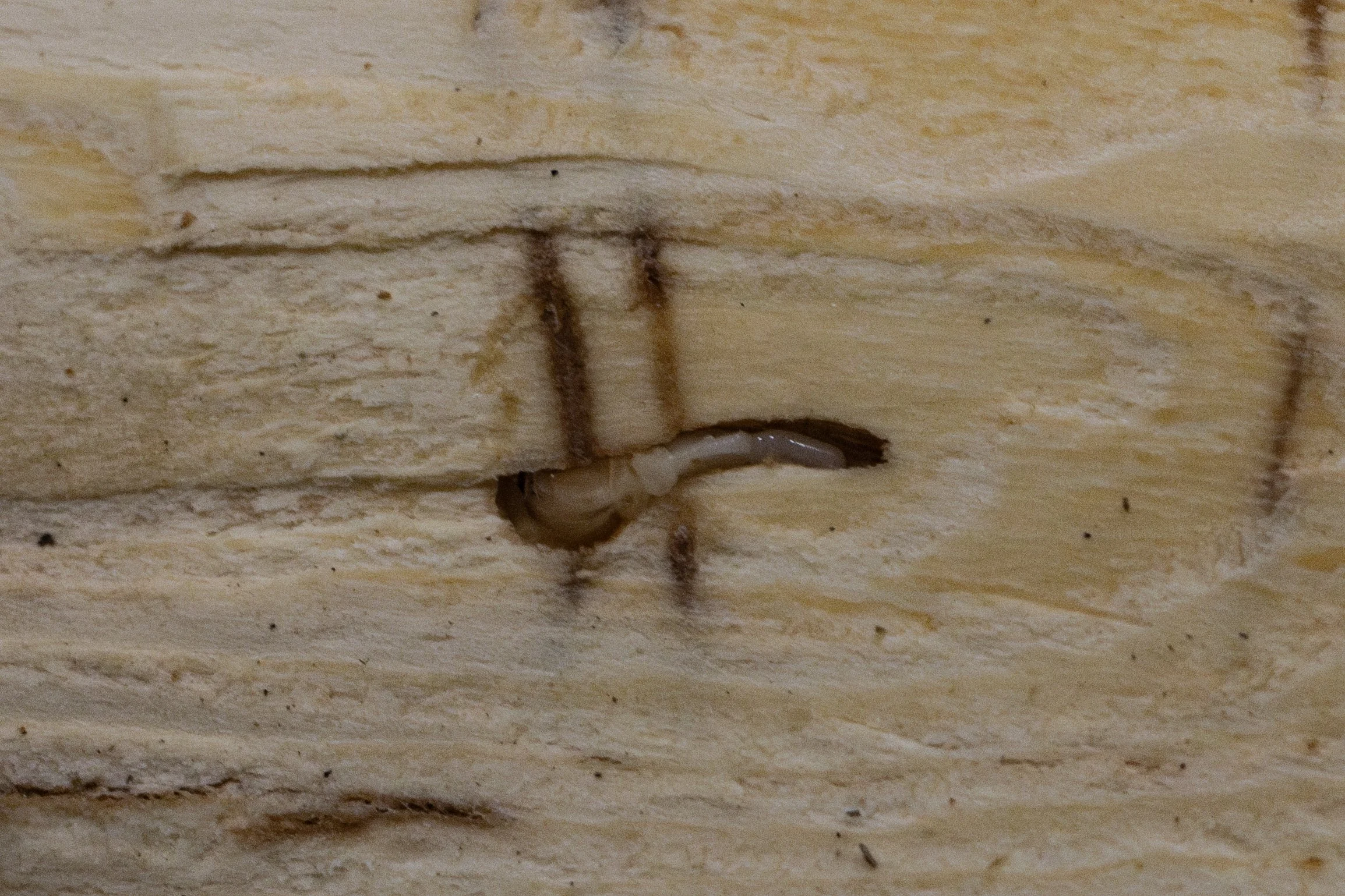
The Insect Pest Prevention and Management Program hosts a sampling event at the Oregon Department of Agriculture in Wilsonville, Ore., on Feb. 25, 2026. Staff members discovered numerous emerald ash borer larvae inside ash logs, some of which were still alive.
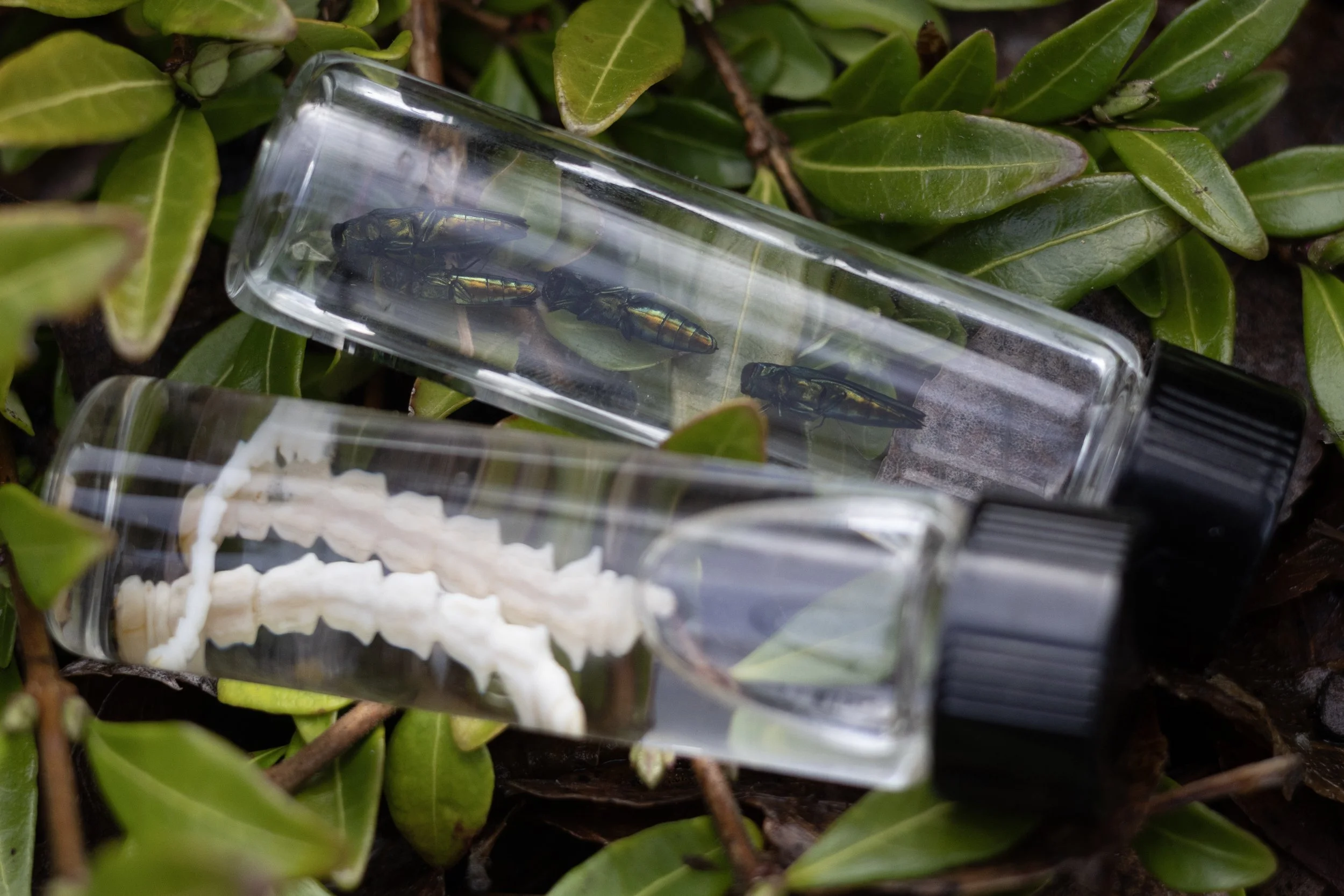
Emerald ash borer specimens and larvae are stored in labeled tubes at the Oregon Department of Forestry in Salem, Ore. The samples are part of the outreach kit, which teaches people to identify the bug and develop response plans.
“It destroys me to know that in my lifetime, if things don’t change pretty damn quick, nothing’s gonna be done with that land,” Wirth said.
Once the presence of the beetle was evident, they debarked trees in a ring around the city. The project, referred to as SLAM, or Slowing Ash Mortality, provided an effective first layer of suppression against the beetle population, limiting the initial spread of the insect to neighboring towns.
The “easy access” nutrients served as a lure for the beetle. Beside them, trees treated with insecticide prevented further spread.
Funds for on-the-ground projects ran out, so Mills and his colleagues turned to educating Oregonians about what an ashless environment might mean.
“It can be really frustrating at times,” Mills said. “When you’re trying to communicate that this is going to kill our ash trees, and you have people being like, ‘We'll see.’ We know what this beetle will do; they’ve been dealing with it on the East Coast for over 25 years.”
Tending to Unlucky Wood
Ash is a hardwood, meaning it is denser and more durable than other lumber. The inconsistent grain patterns and rigid structure make milling harder. The lumber requires more cutting force, and the trees often decay invisibly, from the inside out. Oregon’s industry centers on softwoods like Douglas fir and ponderosa pine, leaving neglected hardwoods to rot across the state.
Wirth hopes to offload his ash before the EAB reaches it.
Both the federal and state governments have restrictions on converting forested land into tillable farmland. Selling his timber is a loophole; Wirth’s issue is finding a buyer.
Among the ash-loaded creeks of Philomath, Dennis Sanders has been working to bring value to this local underutilized timber. His new hardwood mill, Patrick Hardwoods, hopes to fill this void.
“Over the years, you’d go out and see these logging operations, and they would just be decking up and burning all this hardwood,” Sanders said. “No one wanted to cut it. No one wanted to use it.”
Historically, Oregon ash has had little commercial value.
“Until we get some cut and get it out into the market, we have no idea,” he said. This is in heightened contrast with the mill’s parent company, Patrick Lumber Co., where $40 million worth of packaged softwood awaits pickup from buyers long-slated to purchase it.
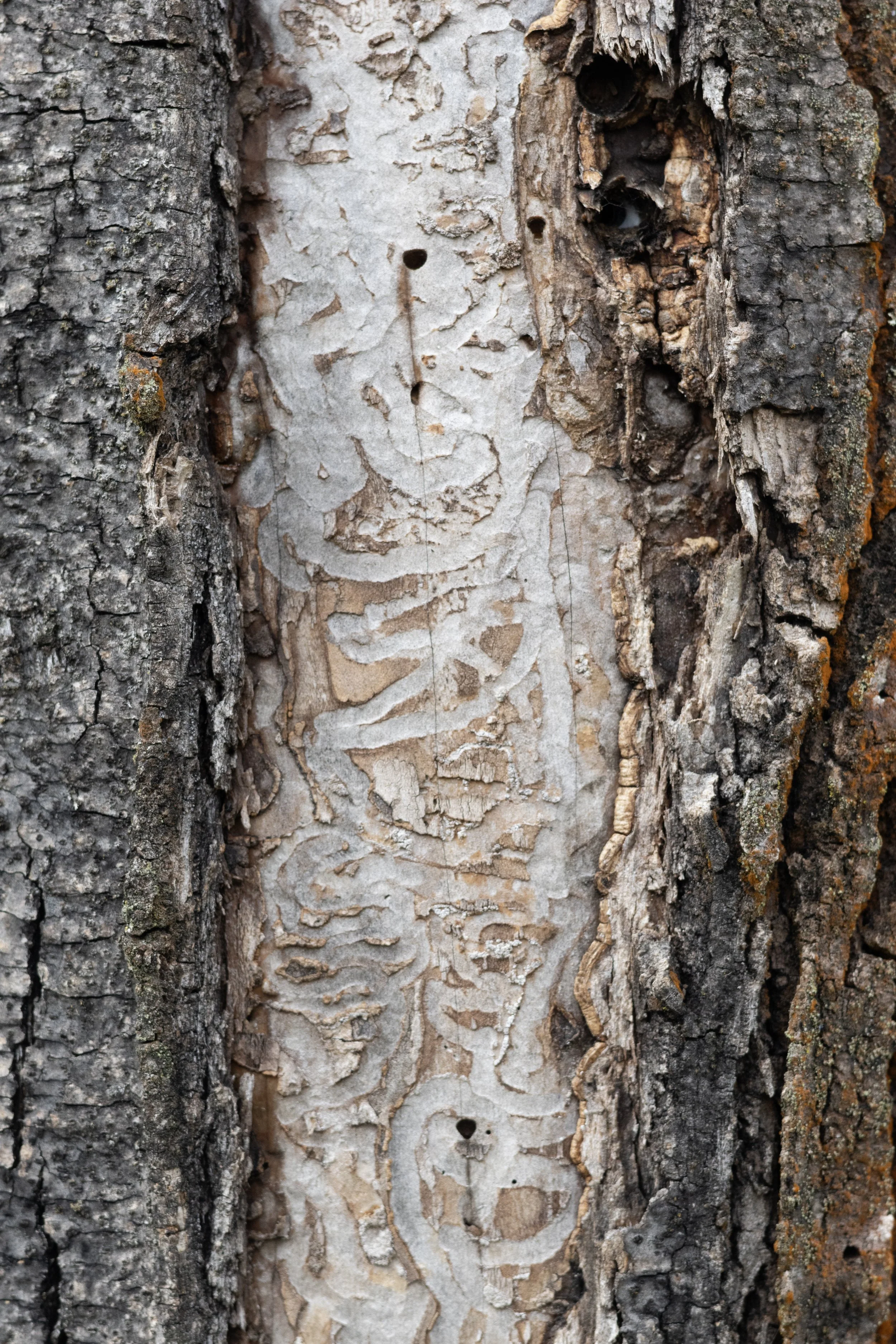
D-shaped holes and winding larval galleries beneath the bark mark trees infested by the emerald ash borer in Forest Grove, Ore. The beetle exits the tree through the D-shaped holes, leaving the tree to die
The issue now is a looming influx of ash timber. As the EAB’s infestation in the Pacific Northwest intensifies, there is a limited timeframe before whole swaths of ash trees become unusable.
Sanders isn’t concerned yet, but his mill neighbors EAB-infested Marion County, putting it at high risk for the beetle’s arrival in the coming years.
A Genetically-modified Response
Max Raggozzino shucks bark from EAB-infested ash logs in a small, brightly lit room at the ODA. Wood shavings, the perfect size for kindling, pile up at his feet. The entomologist sneezes occasionally from sawdust.
Raggozzino has debarked trees in search of EAB larvae for years, but this time, as he and his colleagues closely scan sections of lumber and peel off precise layers, they look for possible signs of genetically-modified wasps.
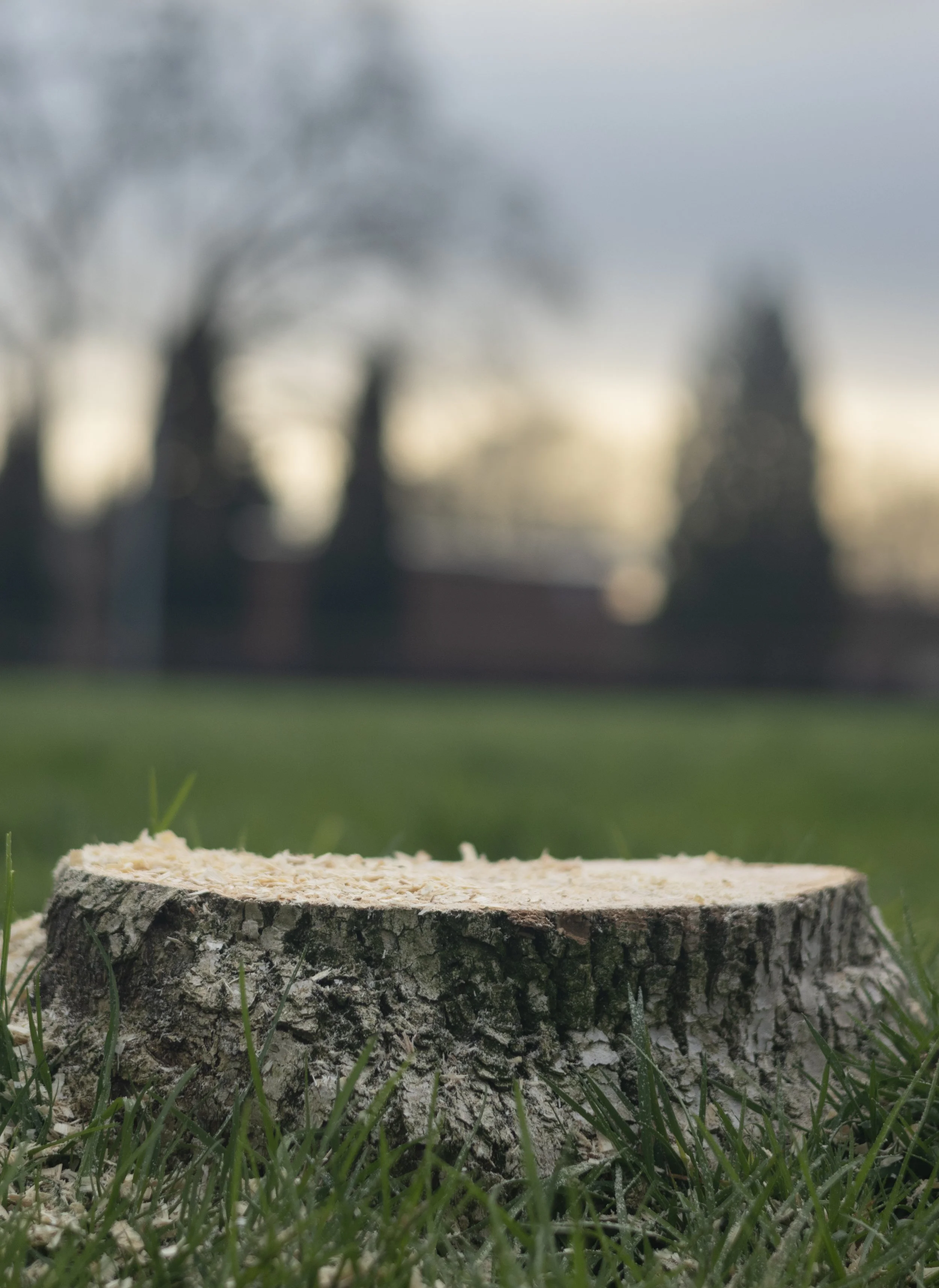
More than 30 healthy ash trees are removed by Portland Parks & Recreation at University Park in Portland, Ore., on March 16, 2026. This is a preventive measure against emerald ash borer infestation, which has already been detected in the Portland area and would significantly increase removal costs if left untreated.
The adult wasp crawls along the surface of an infected tree and uses its antennae to sense the vibration of EAB larvae. If healthy larvae are detected, the wasp lays its eggs in or on the EAB larvae, killing them before they hatch.
The USDA sends these parasitoid wasps to EAB-infested states at no cost for state-level biocontrol programs to release. Parasitoids are not a solution for the EAB, but they can help keep its population down. According to Raggozzino, there is a positive linear relationship between the number of ash that stay alive and the number of wasps released.
Parasitoids are different from parasites. Raggozzino classified parasites like ticks, and parasitoids “like the chest-bursters from the ‘Alien’ movies.”
“You literally cannot survive with a chest-burster inside you,” Raggozzino said. “But you can live with a tick.”
After each section of the tree is analyzed, declared parasite-free and all abnormalities are noted, a new log is picked up.
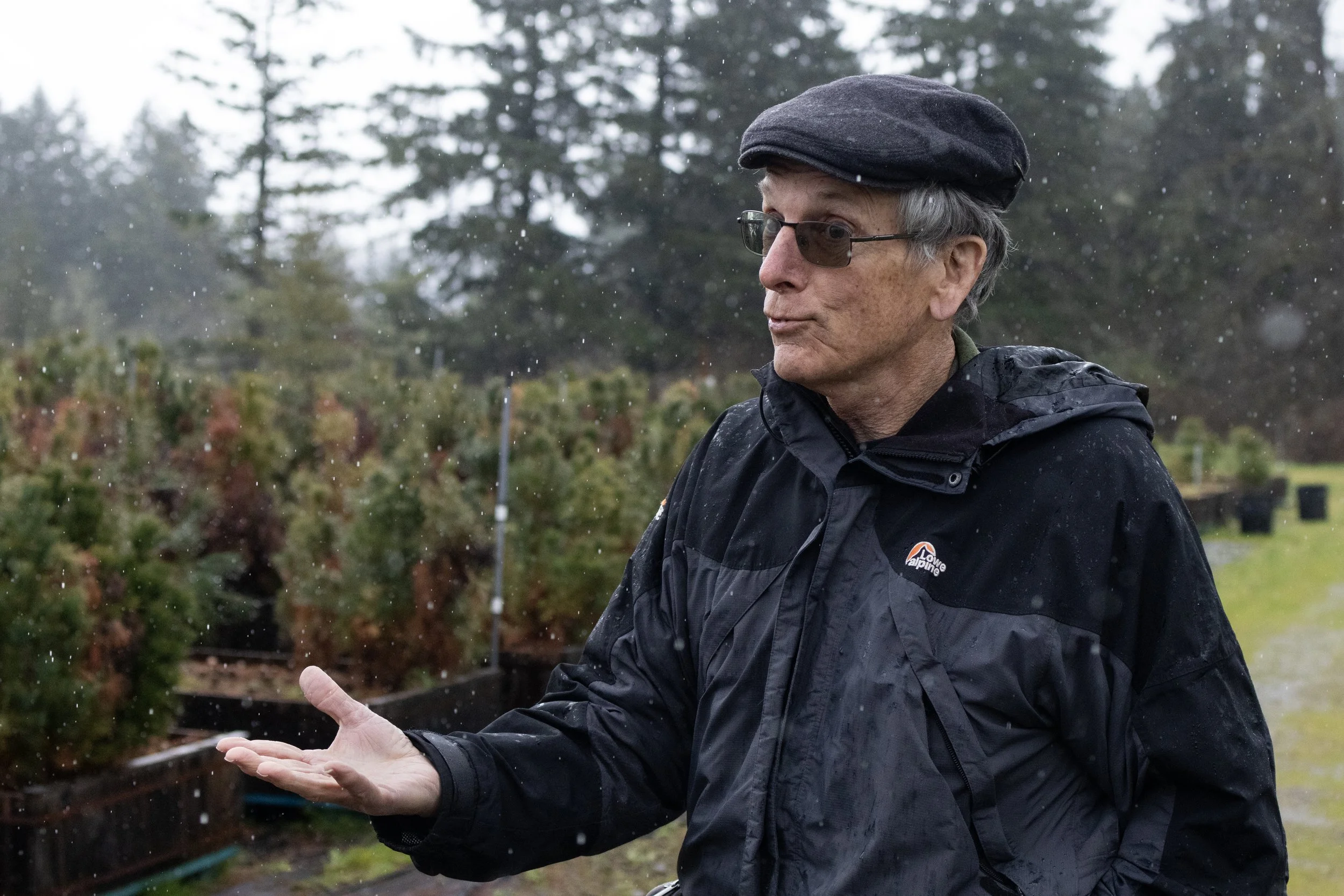
Richard Sniezko, a forest geneticist at the Dorena Genetic Resource Center in Cottage Grove, Ore., demonstrates a large-scale testing and breeding program for emerald ash borer resistance on March 4, 2026.
Seeking Durable Solutions
The U.S. Forest Service’s Dorena Genetic Resource Center works on Oregon ash resistance and conservation solutions in anticipation of widespread EAB-induced tree death. It houses over 40,000 individual tree seed collections, a fail-safe against future loss of native species.
Dr. Richard Sniezko, forest geneticist at the DGRC, knows that finding genetic durability in Oregon ash is a numbers game. This effort will demand time, money and human power, none of which will be available without public support.

Student volunteers Anissa Wright and Aurora Harrington of Oregon State University cut open tree seeds to check for emerald ash borer larvae at the Dorena Genetic Resource Center in Cottage Grove, Ore. The seeds will be used for dissection tests to evaluate their quality.
DGRC volunteers gingerly sliced open ash seeds to identify those best suited for storage. They bundled themselves in winter coats amid the freezers and refrigerators that maintain the viability of boxes of hand-collected seeds. Their work allows the center’s seed bank to harbor genetic diversity for years to come.
Sniezko pointed out the first genetic field test of Oregon ash, tiny seedlings planted at the foot of fully-grown ash trees at the DGRC. The site has 27 parent trees, some of which he himself collected from Eugene’s riverfront.
“When you bring in a non-native invasive, you’ve disrupted the equilibrium,” he said. “We’ll probably never get rid of the EAB, but what we can do is rebalance it, so that maybe it becomes a little bit of a nuisance and not a big problem.”
Sniezko said he learned about the EAB at a “gloom and doom” community talk in Corvallis in 2019, where locals discussed giving up planting ash. Taking the eastern U.S. as an example, Sniezko argues for a proactive stance.
“Being a tree breeder [and] forest geneticist, I thought, ‘Okay, that’s kind of right in my bailiwick. We ought to at least look and see if there’s any genetic resistance,’” he said.
In December 2025, Sniezko’s team, working with Oregon State University and other groups, put out three field trials with seedling families from over 200 parent trees that will be tested for both EAB resistance and regional adaptability.
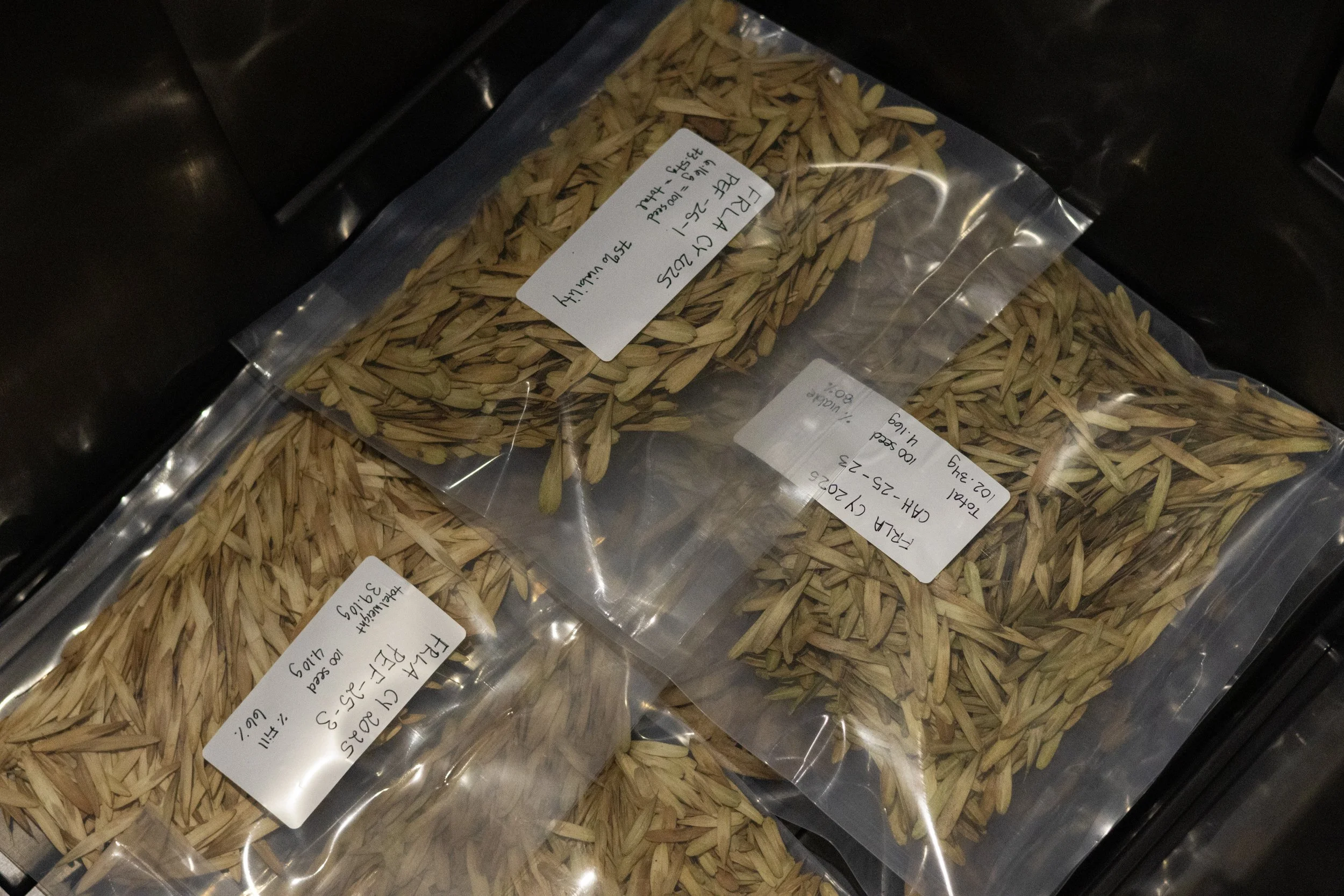
Bags of ash tree seeds are stored in a low-temperature room at the Dorena Genetic Resource Center in Cottage Grove, Ore. The seeds are used in dissection tests to evaluate their quality, and it’s important trees grow more seedlings for screening at a reasonable cost.
While Sniezko has expertise, he lacks the agency to move Oregonians. Ultimately, he said, public support may yield sustained investment.
“It’s really up to people like you, whether you want ash or not.”
Disclaimer “The parasitoids were produced and supplied from the United States Department of Agriculture’s Animal and Plant Health Inspection Service Plant Protection and Quarantine EAB Parasitoid Rearing Facility in Brighton, Michigan. For parasitoid information, please call 866-322-4512.”