
Writer Leo Brown Photographer Heronima Valledor Web Designer Anna Curtis
Dust or
Smoke?
Oregon faces potentially devastating fire season, AI looms on the horizon to augment human fire watching.
Shannon and Joe Hodgson opened their fire tower a month early this year. Usually, a wet winter pushes the start of the fire season into mid-May.
Yet this April, the ground is already
Parched and highly flammable.
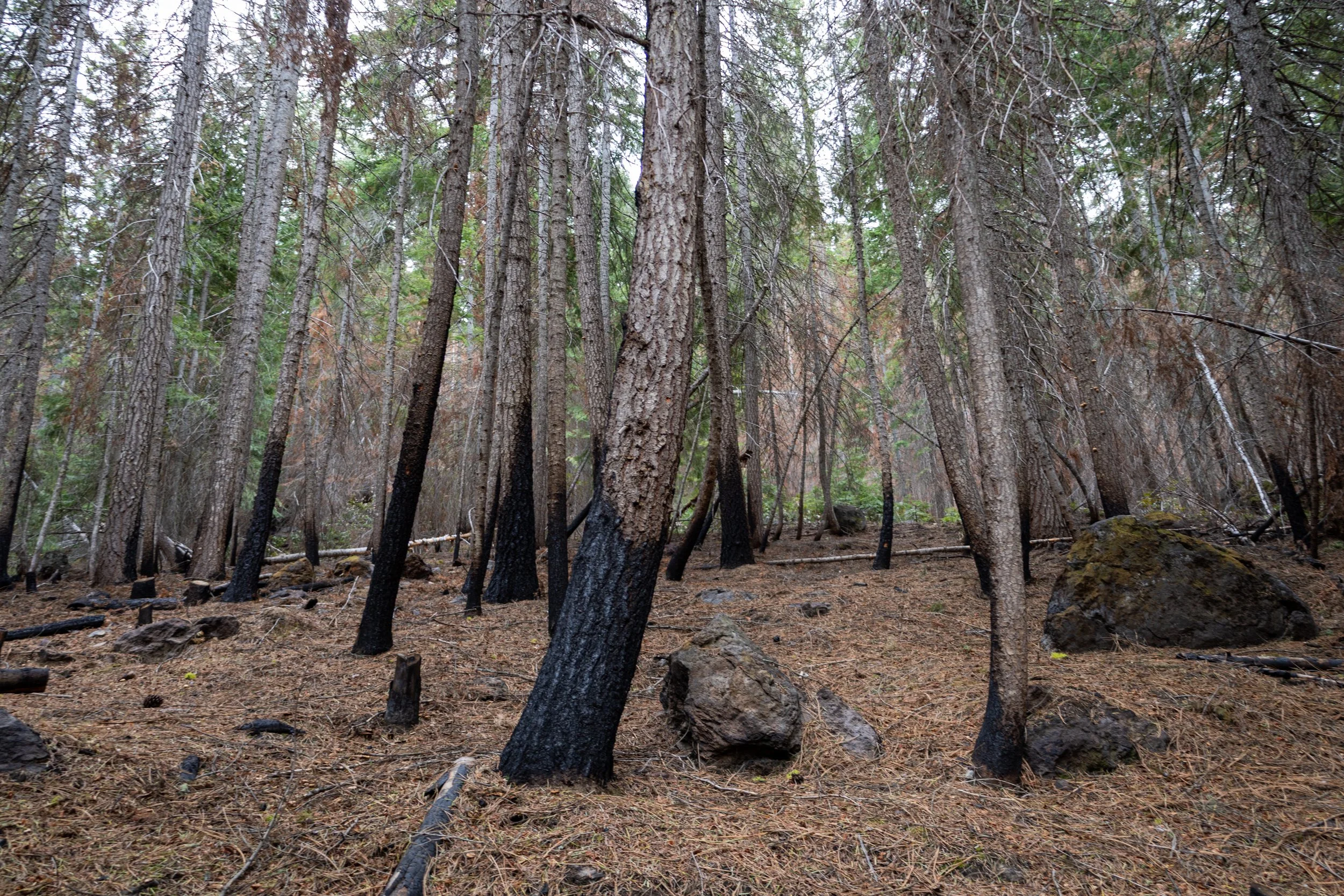
Burnt trees have been scattered throughout La Pine state park ever since the 2024 wildfire that Shannon Hodgson called in.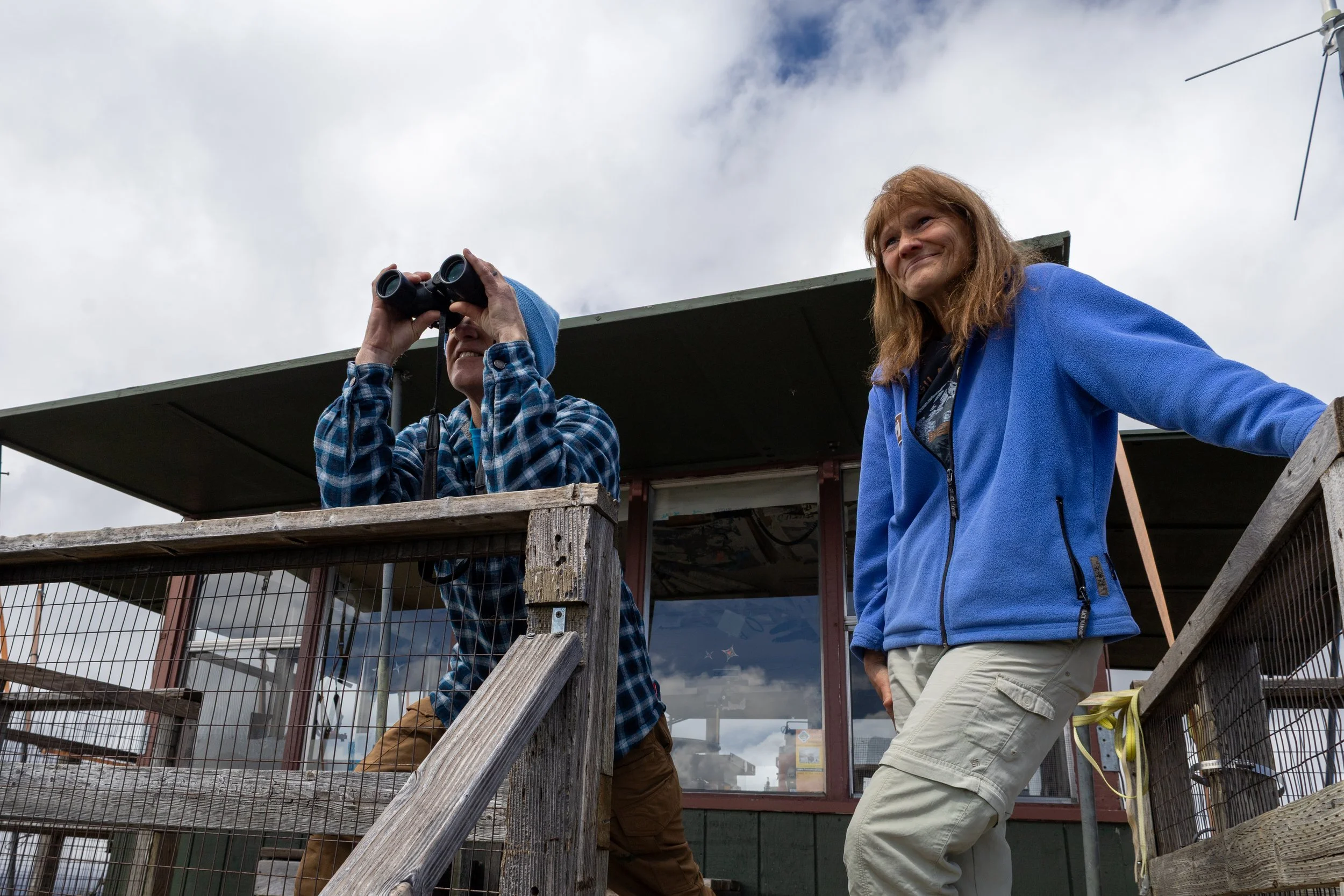
“We’d like you to respond to a stovetop fire reported by a member of the public,” said a static voice from their overhanging radio. Shannon turned up the dial while Joe logged the incident. It’s already the 176th fire report in the area this season, exceeding historical benchmarks.
-
![]()
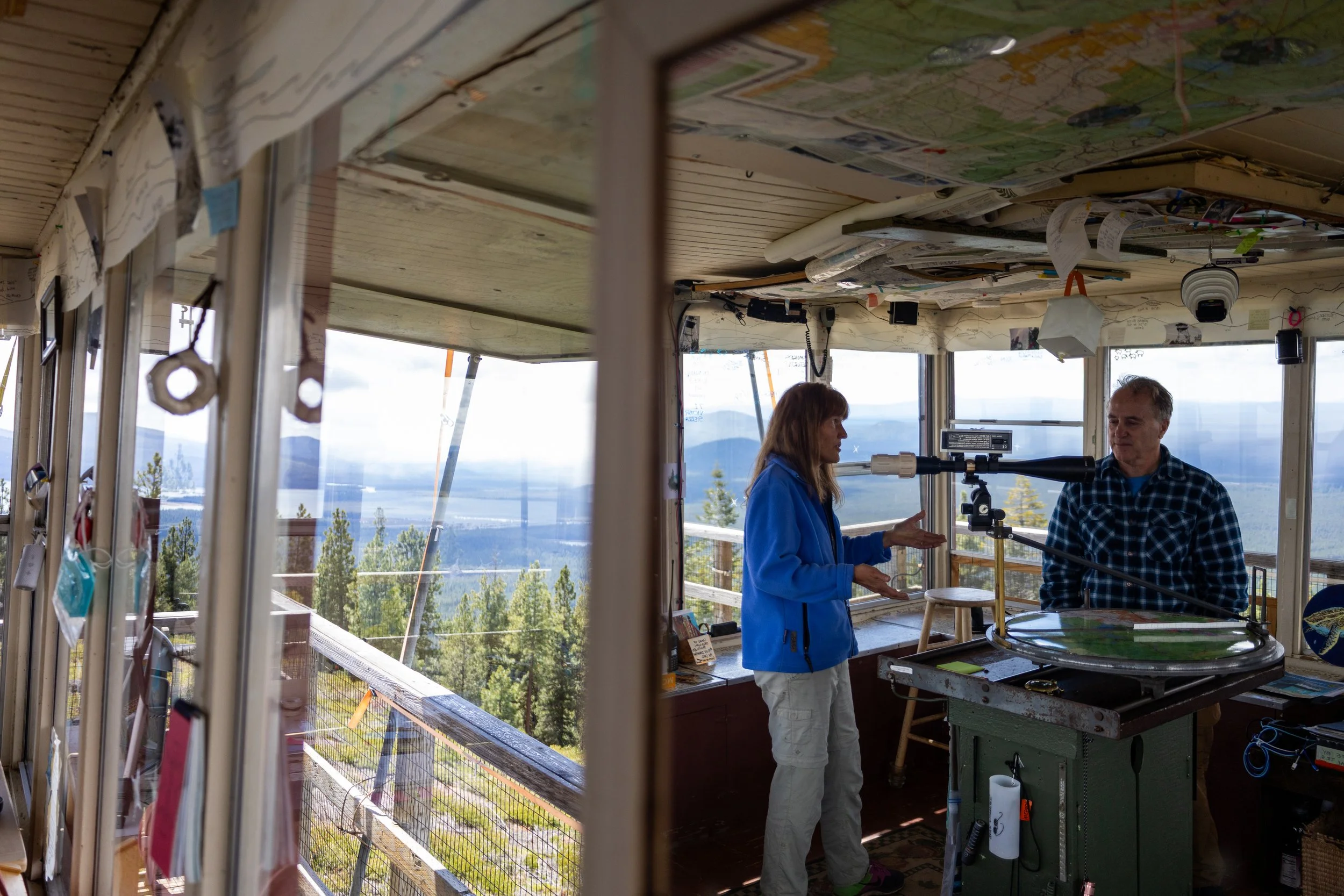
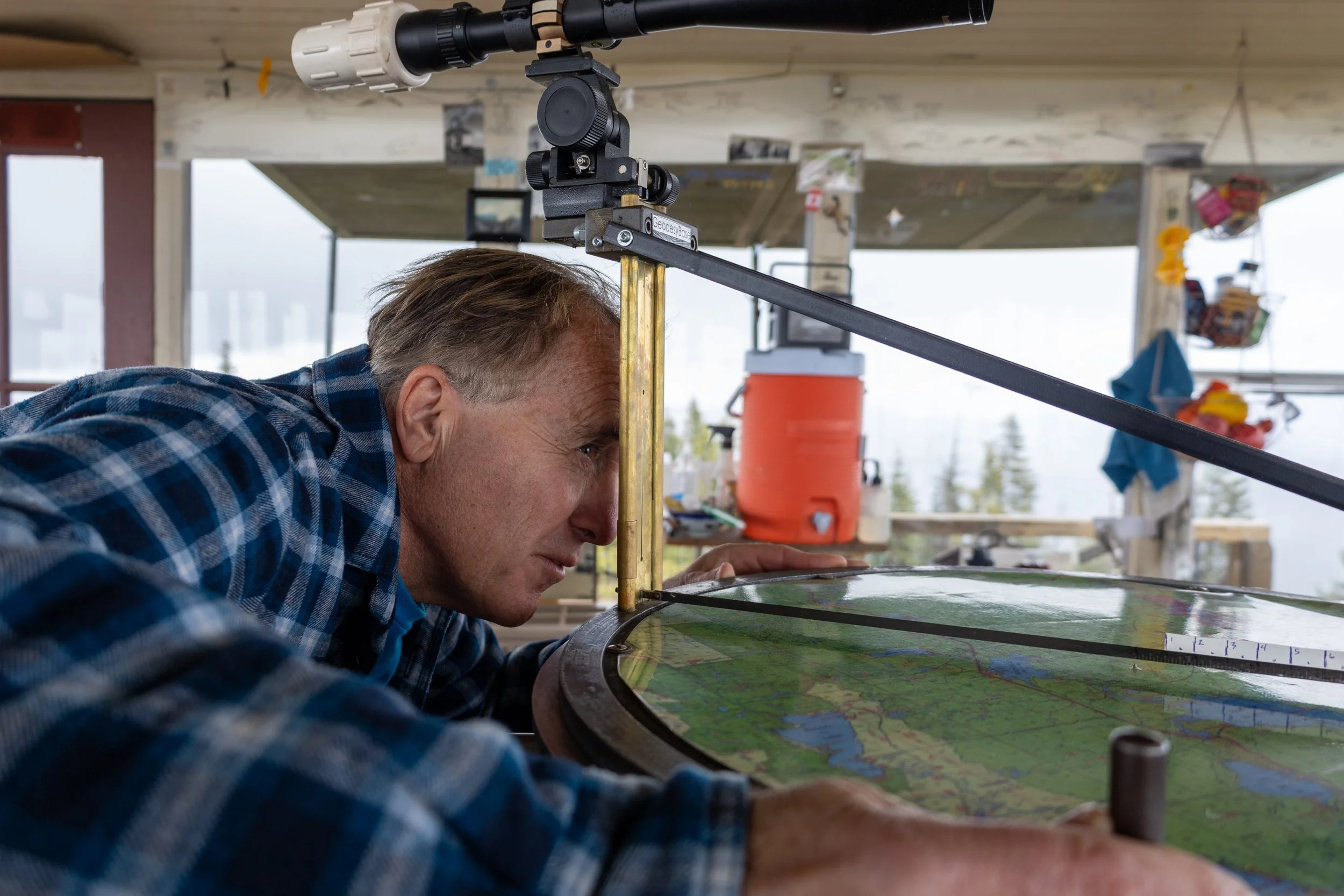
Joe looks through the “Fire Finder,” originally implemented for London fire lookouts in 1840 and redesigned in 1915. The more recent iteration of the tool is commonly seen in fire towers today. The invention is used to measure angles along visible horizontal and vertical planes to locate fires.
-
![]()
The Hodgsons get visitors often. Though they enjoy retelling fire lookout history, they explained that visitors aren't something they necessarily hope for. “We don’t get lonely,” said Shannon Hodgson, 57, “There’s always something to do.” The couple said their job is often romanticized, when in reality, people have to understand the efforts and knowledge necessary to become an experienced lookout.
-
![]()
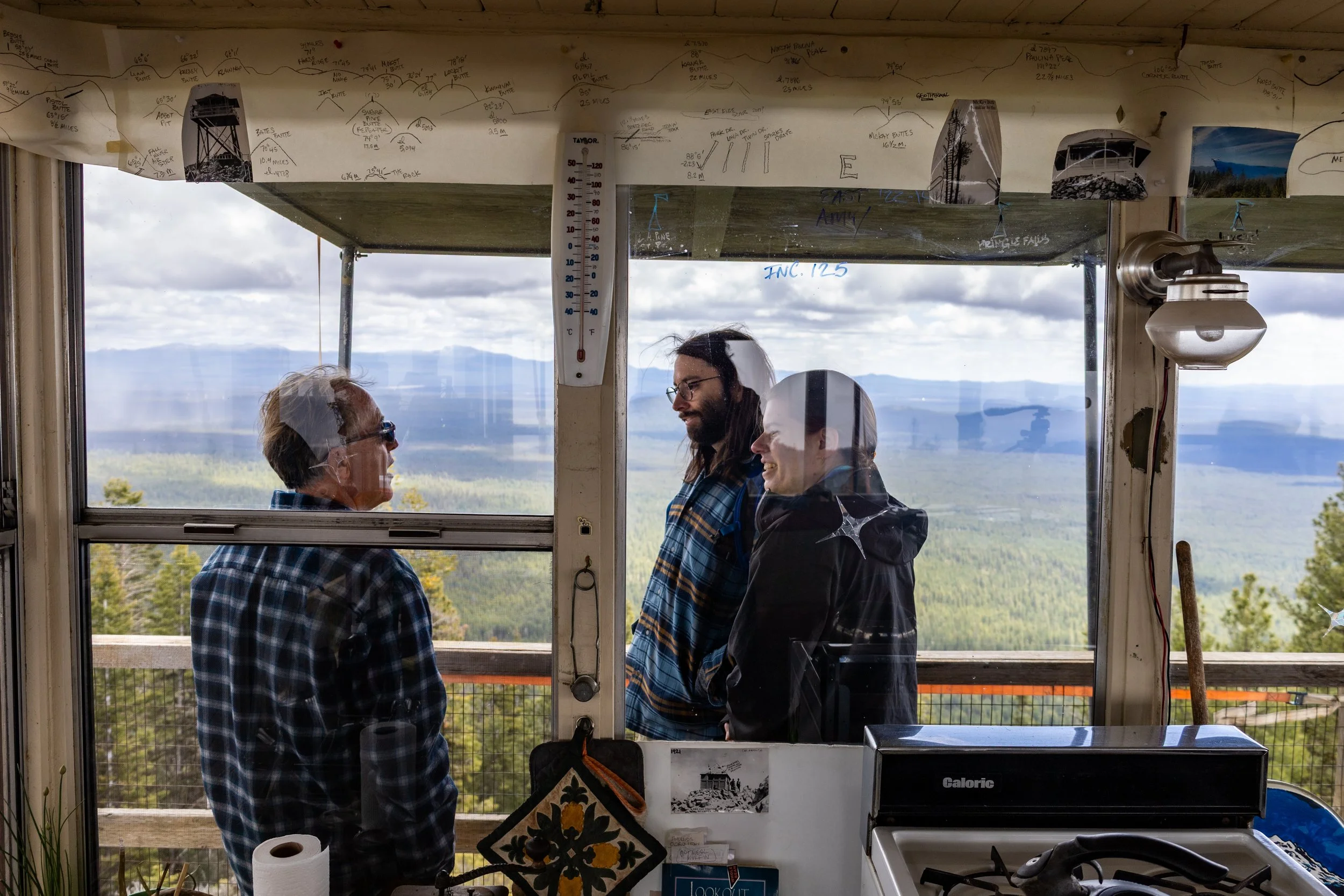
The Hodgsons’ lookout windows are covered in erasable marker notes, tracing paper displaying drawings of the surrounding landscape, and their main radio, from which they get all their reports on neighboring wildfires.
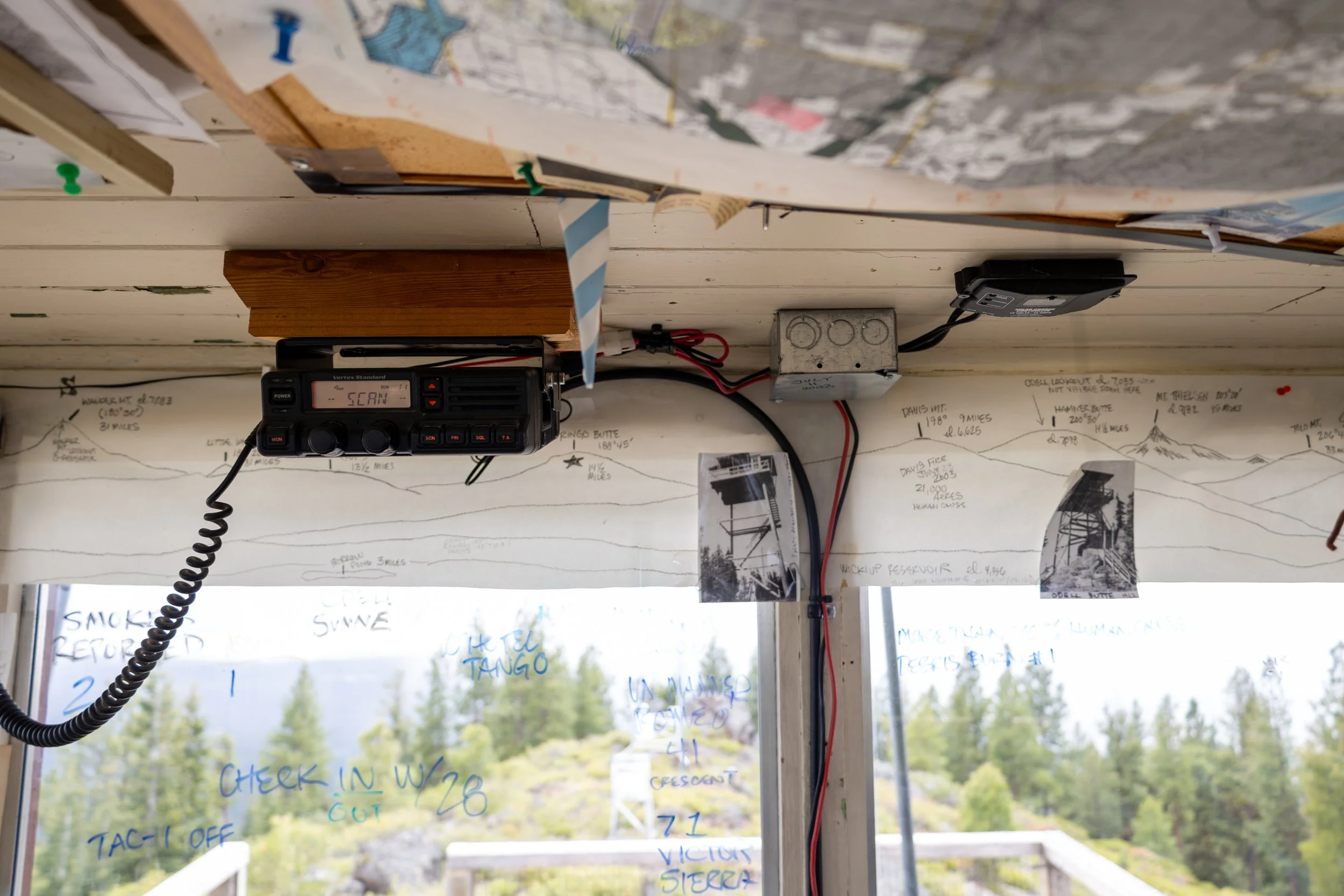
This year’s dry winter sets Oregon up for a potentially devastating fire season. The need for experienced fire lookouts, like the Hodgsons, remains crucial.
Their tower was built in 1933 during a massive, standardized construction of a fire lookout system across Oregon. Since then, it’s hosted fire watchers who scan the horizon for signs of smoke.
A fire watcher’s job is to monitor fire hazards during the hot and dry summer months. More than 1,000 fire towers were once scattered throughout the rolling forests of Oregon. Now, around 150 remain, and many of those still standing have fallen into disrepair.
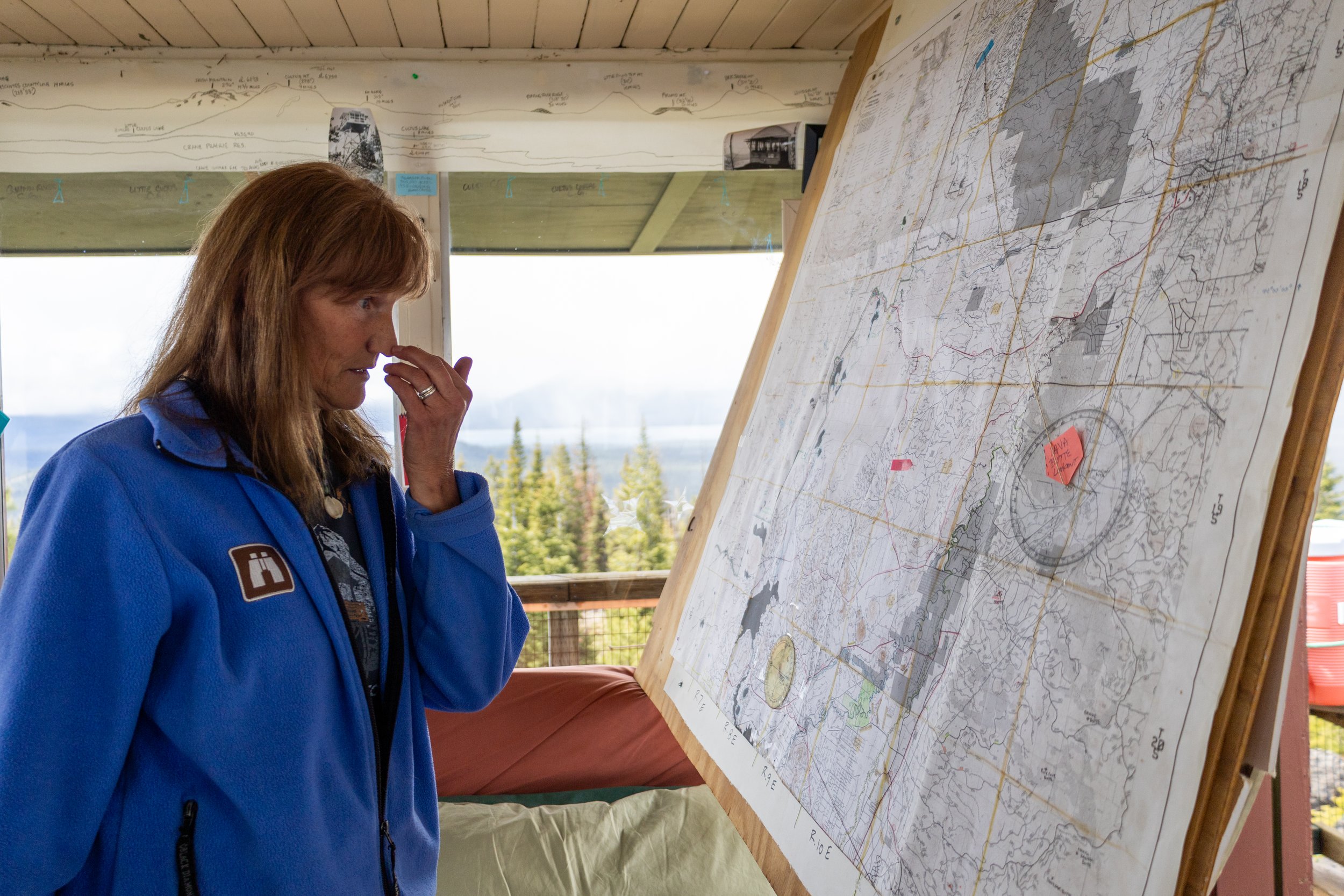
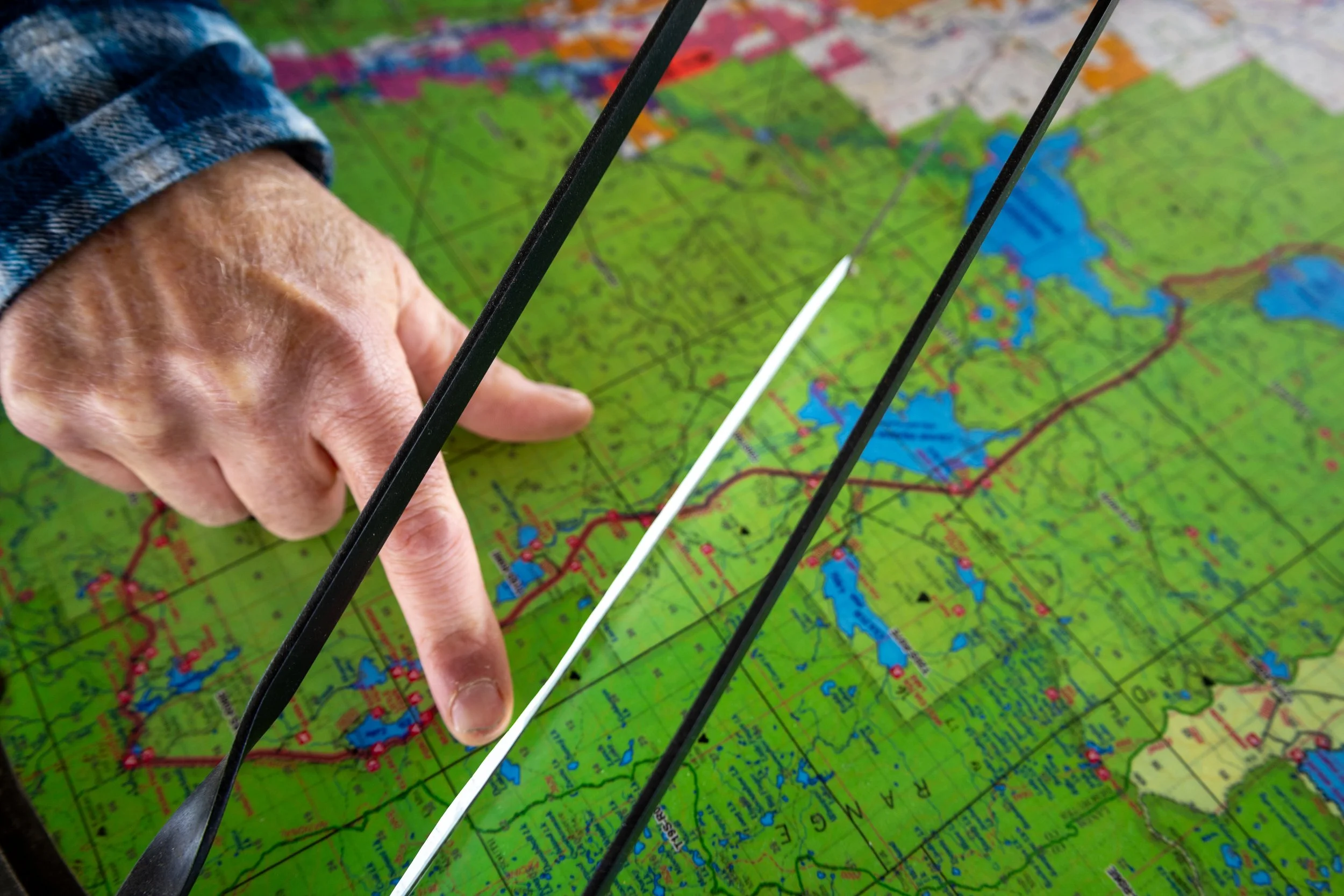
Shannon shows how she uses maps, protractors, and string to identify the exact latitude and longitude of any fire in mere seconds.
Today, nearly 85% of wildfires are caused by humans, according to the National Park Service.
Campfires, lit cigarettes and downed electrical lines spark kindling in the forest. In the last 20 years, 9 million acres across Oregon have burned, a significant increase over previous decades, according to the U.S. Department of Agriculture.
Climate change has compounded this issue.
In early September 2020, wildfires tore through more than a million acres throughout the Cascade and Coast Ranges. Windstorms blowing through the Willamette Valley nursed fires in arid forests.
Five concurrent “megafires” — fires 24,700 acres or larger — raged across the state. Known as the Labor Day Fires, they destroyed more than 4,000 homes, according to the Oregon Department of Forestry
Known as the Labor Day Fires, they destroyed more than 4,000 homes, according to the Oregon Department of Forestry.
Near the Hodgsons’ tower, high eastern winds took down power lines, sparking four fires in the region. Debris fell from the trees like rain, according to Shannon. The fires were quickly contained, and damage was mitigated thanks to their early response.
In the face of intensifying fire seasons, traditional fire towers are evolving. Some towers are now equipped with high-definition cameras.
The Oregon Hazards Lab now operates 70 cameras throughout the state, each fitted with artificial intelligence systems. Some of these systems can call emergency services directly.
Even with this shift, the human element of the job is still Critical.
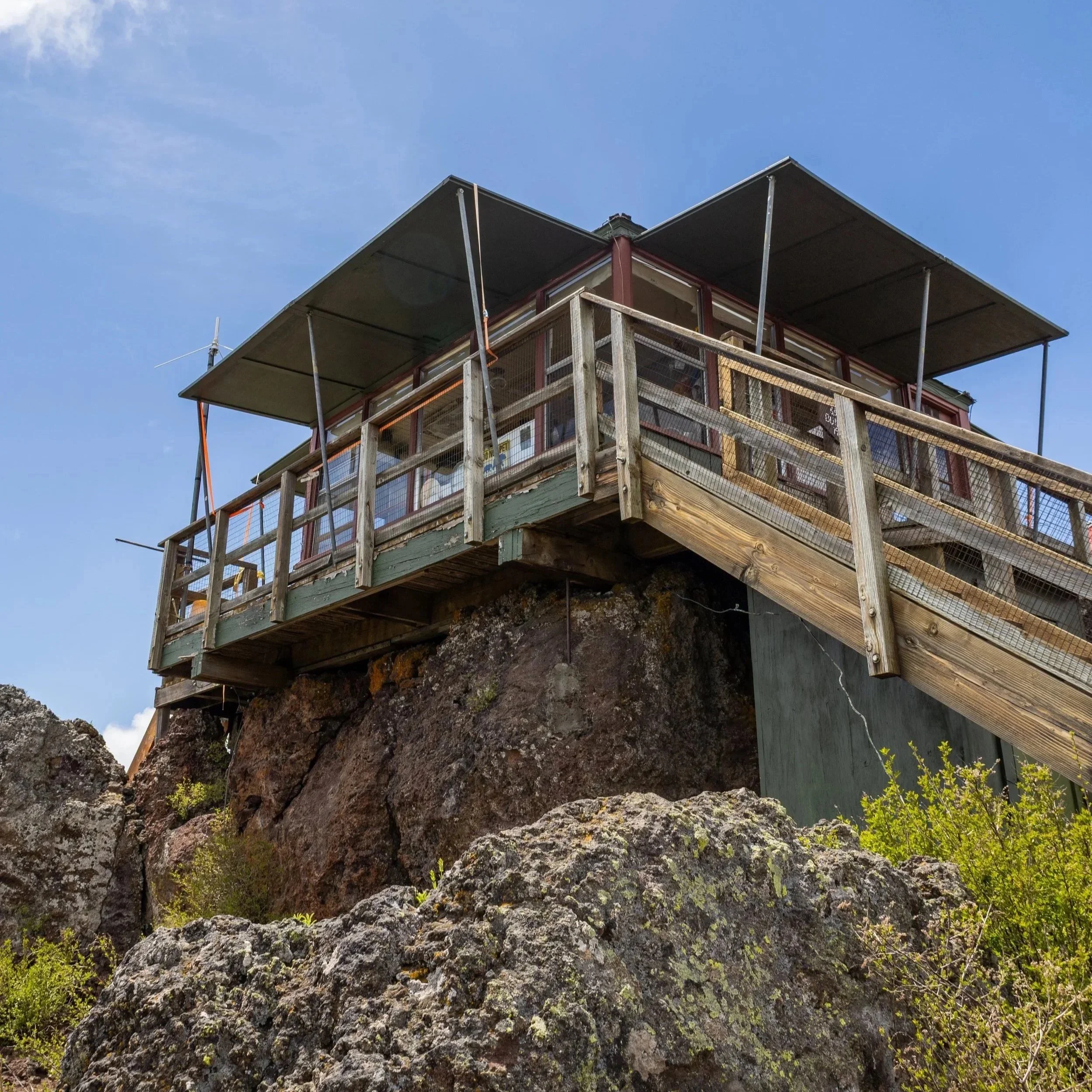
For the last seven years, fire watcher Ron Rommel has spent the summer months at an elevation of 7,400 feet, in a tower built in 1941. He sleeps on a simple rustic cot, cooks using propane and relies fully on solar panels for electricity. The 28-foot wooden structure sits atop Bald Mountain, a peak roughly 45 miles from La Pine, Oregon.
During his tenure, Rommel has seen a major push for AI and digital fire lookout systems, but he said these methods are expensive and underwhelming.
AI algorithms use 360-degree cameras to detect smoke and heat. However, they struggle to distinguish smoke from dust clouds. That is where the human eye is necessary, according to Rommel. Humans can interpret changing conditions in real time — like feeling atmospheric shifts as temperatures drop and smelling smoke as winds shift.
“The number one detection device is [lookouts staffed] by people trained to know what they’re looking for,” he said. “A properly trained person in a tower can actually make the call and make a determination.”
Because of this, Rommel believes the full replacement of human staff won’t happen until around 2035.
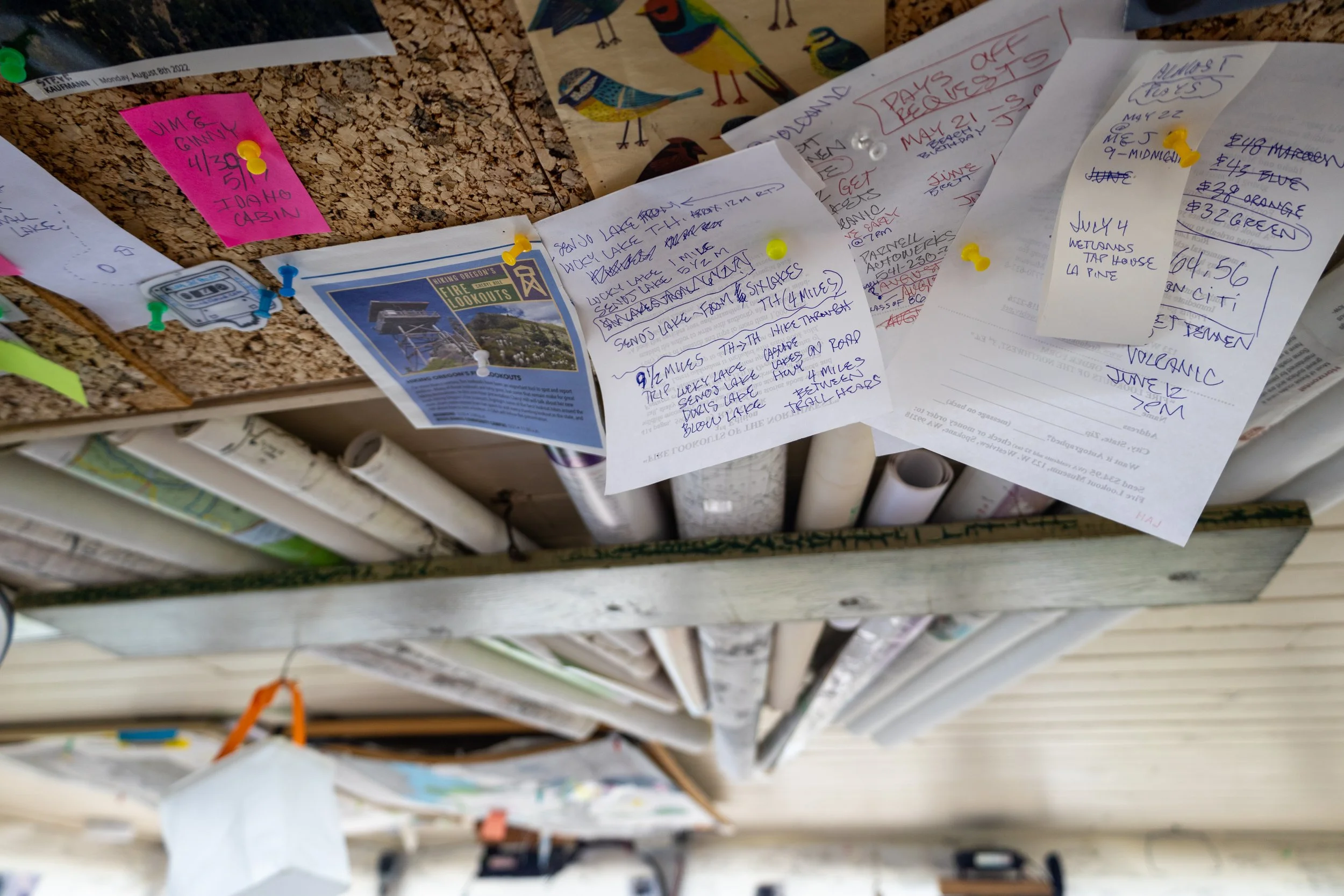
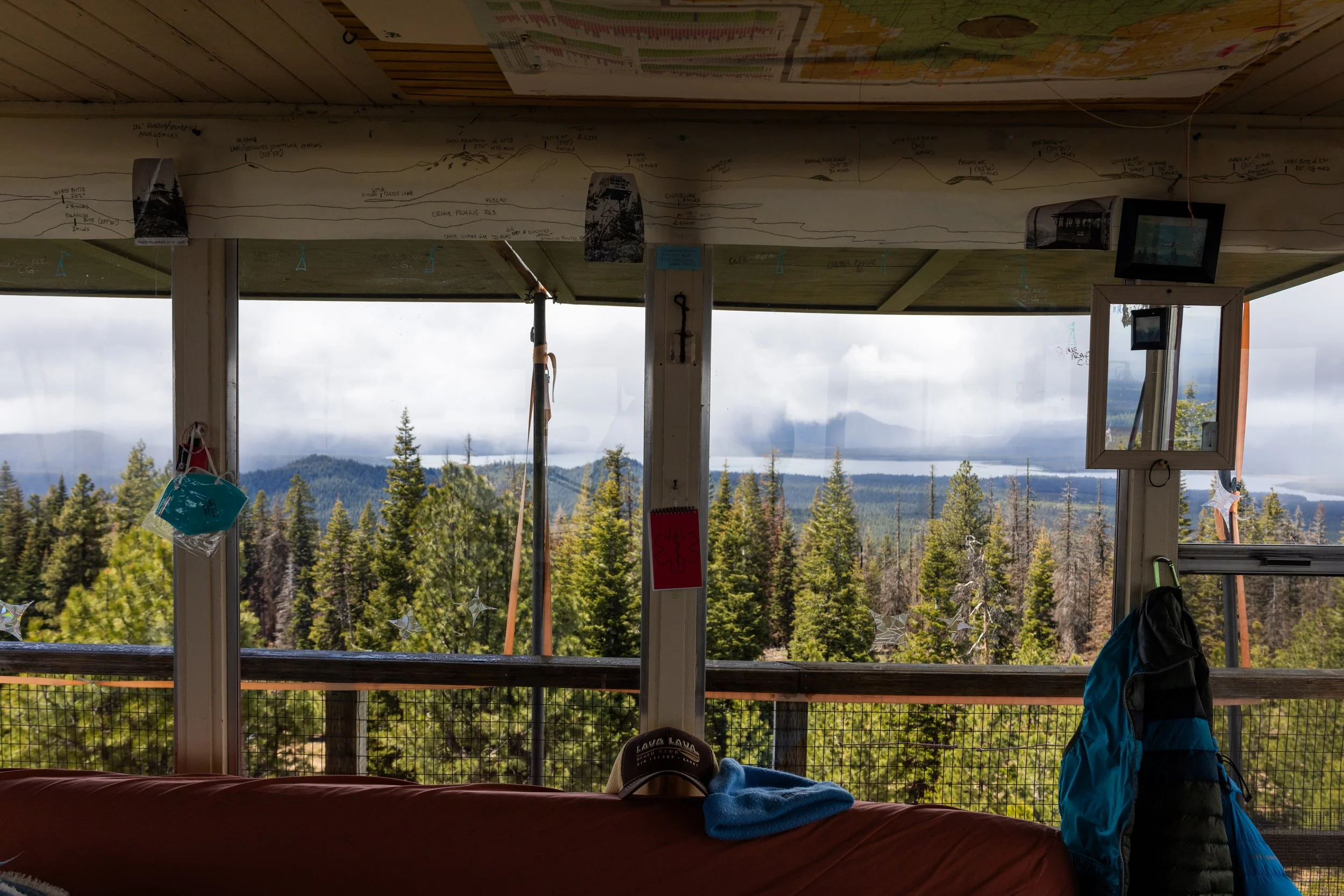
Overhead, their lookout holds collected notes, mementos, and tools, along with detachable locating maps that swing down from the ceiling.
AI detection cameras can cost in the neighborhood of $50,000 annually, the Associated Press found.
“They are paying millions of dollars for these cameras, but we can’t even buy Scotch tape,” Joe said.
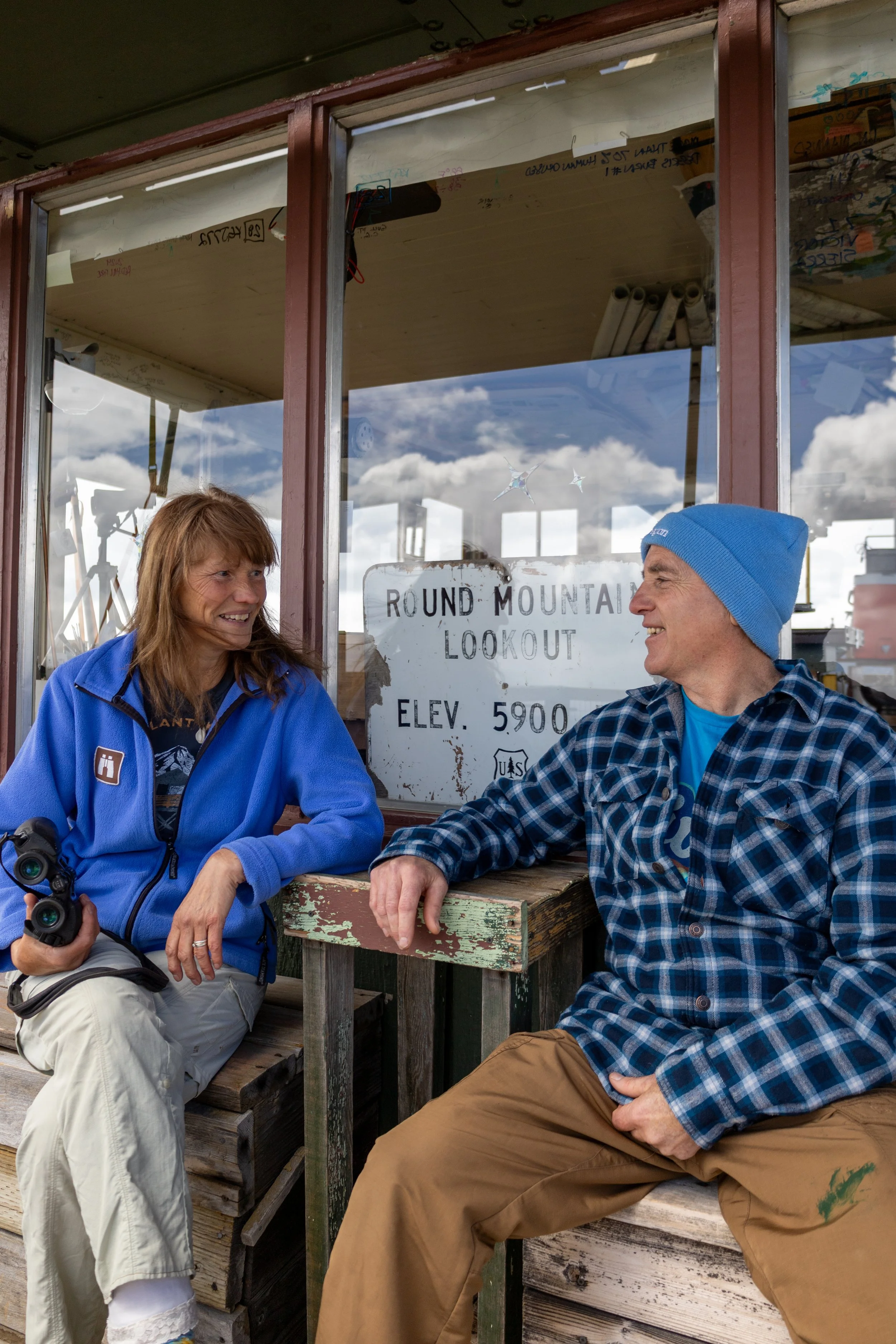
The interior of the Round Mountain fire tower is lined with chipping paint and asbestos-filled floors.
Multimillion-dollar budget cuts or freezes have devastated the U.S. Forest Service. The Trump administration’s Department of Government Efficiency gutted the budget. In August 2025, a promised $750,000 was either frozen or lost completely. Since then, around 6,000 Forest Service employees have been fired.
Even with limited resources, Shannon and Joe prepare for the fire season ahead.
“Pencils are sharpened and we’re ready, [but] we’re very concerned,” said Shannon.
Lookouts communicate with the public, provide weather reports and update fire crews.
“We are just another tool in the toolbox, capable of doing things that artificial intelligence and remote cameras cannot,” Joe said.
-
![]()
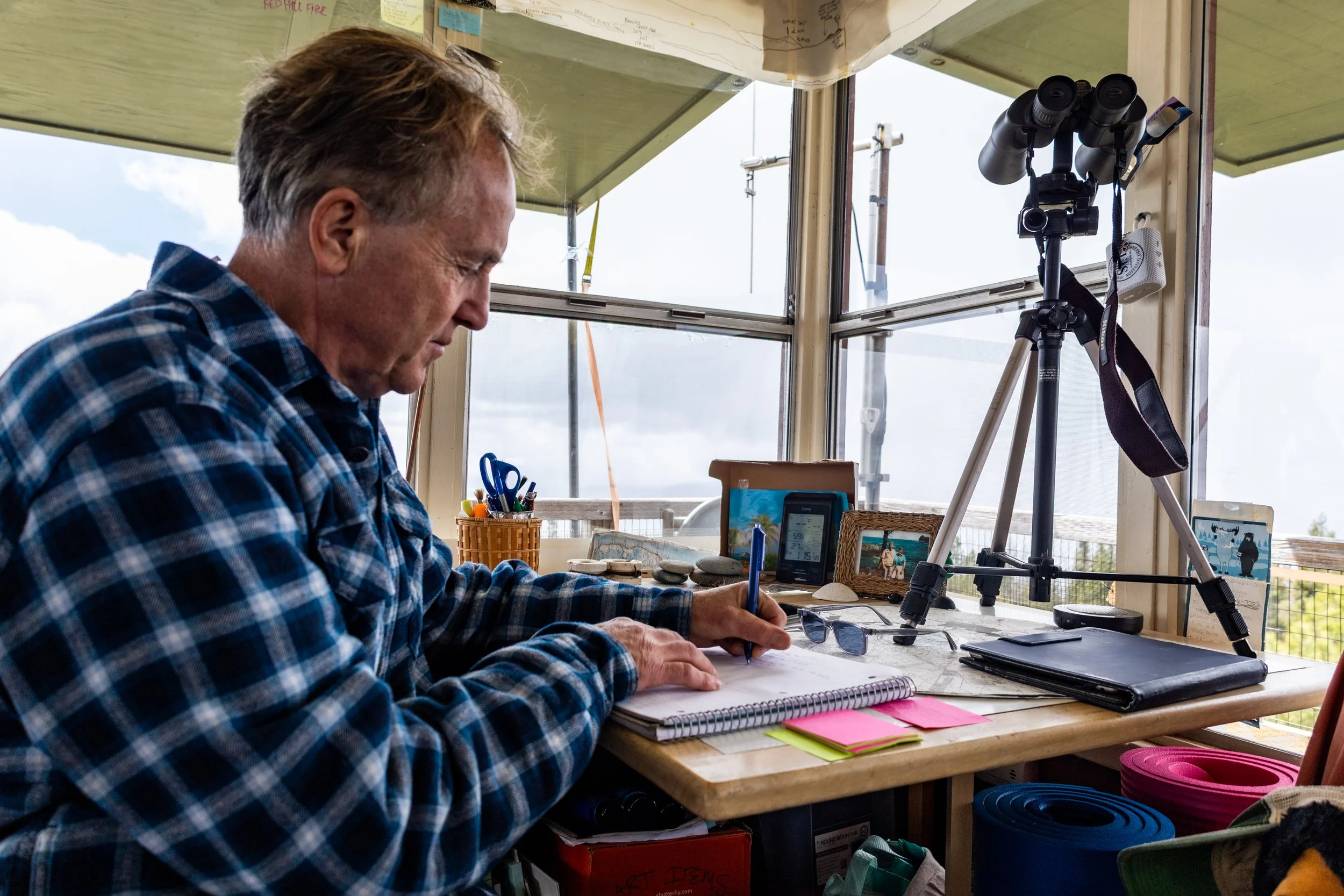
Joe quickly rushes over to his desk when he hears the radio turn on. “Turn that up,” he says to Shannon as he rapidly scribbles down the information on a reported fire as someone recites the details live over the radio.
-
![]()
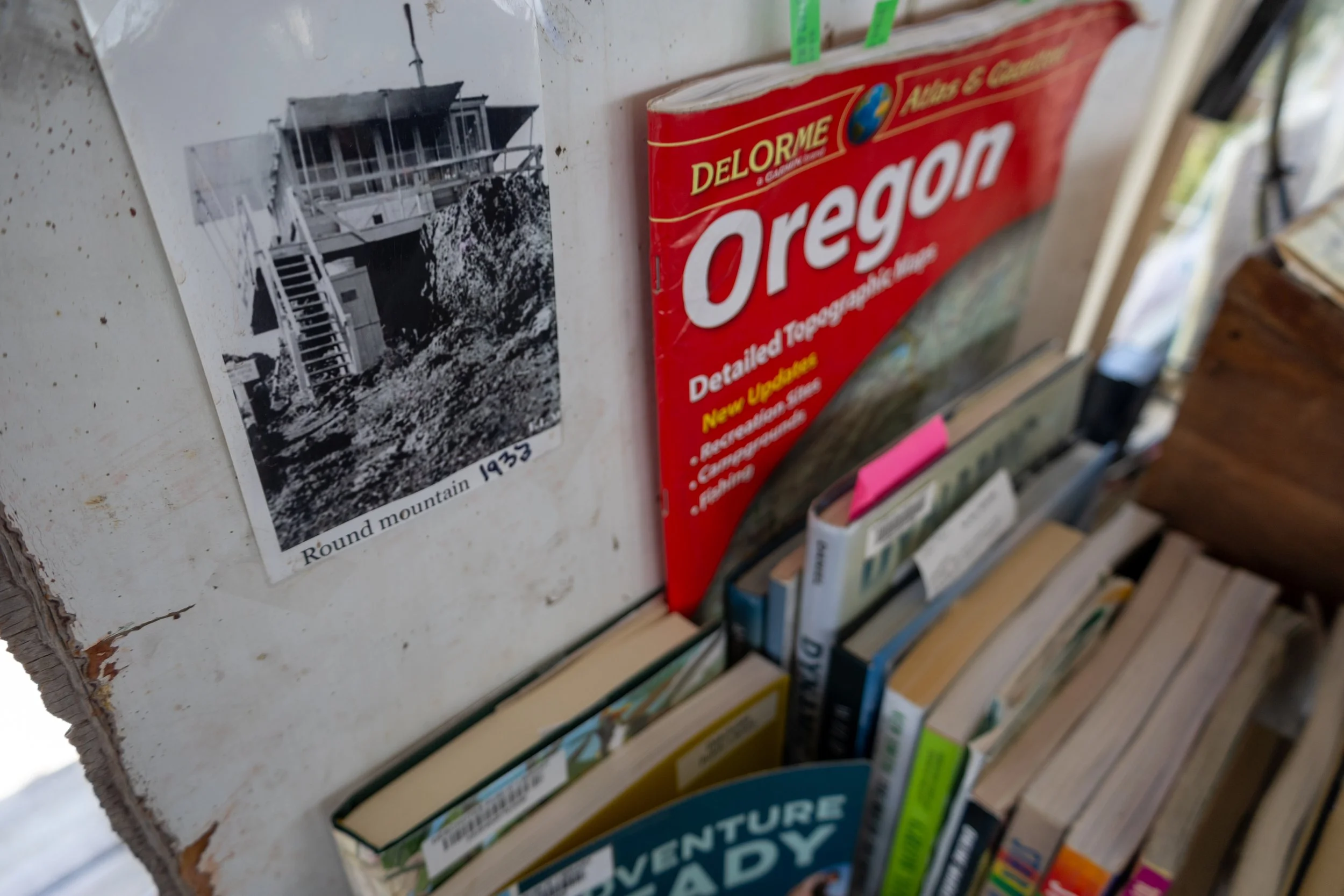
This fire tower has been around since 1931. Its last resident and caretaker spent about 40 years there. Once he was too old to look after the property, the Hodgsons took over in 2008 and have worked there every summer since. An original photo taken of the lookout in 1932 hangs above the current residents’ vast book and map collection.
-
![]()
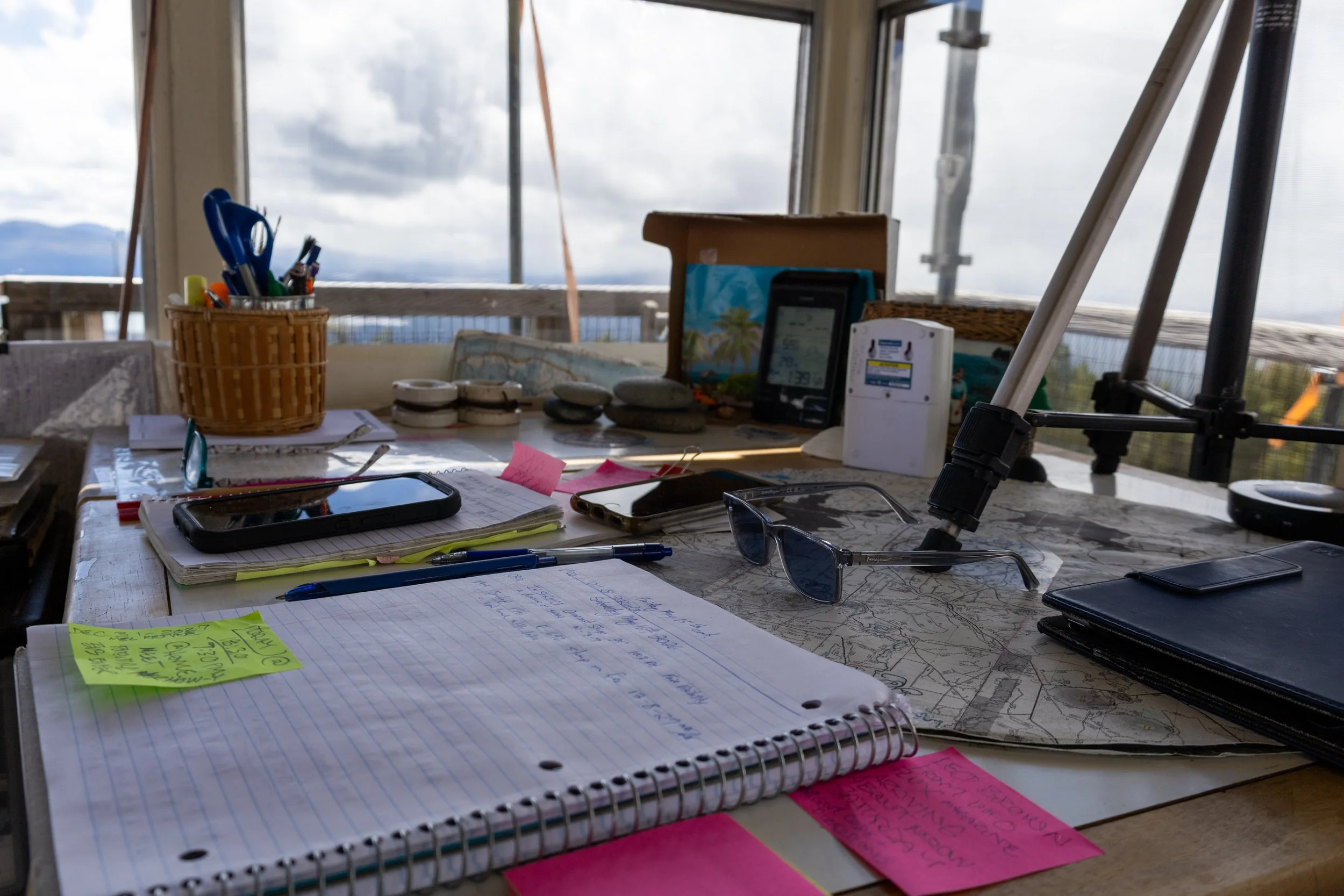
The desk is where the couple writes down fire information as they hear it live over the radio. This helps them know what to look out for and allows them to keep track of active fires.