

Cuidar y Curar
Spiritual Healing Rooted in Tradition
Writer Ana Casado-Rodriguez, Meileen Arroyo
Photographer Brooke Taché
Web Designer Alexandra Bondurant
Litzy Mendoza knew something was wrong.
Her hair fell out in clumps. Body acne flared across her shoulders. She had frequent stomachaches, and at times, her vision blurred without warning.
Medical providers ran several tests to determine what was causing her symptoms, but every MRI scan, CT scan and lab test came back normal.
On paper, she was healthy.
“No, it’s not nothing,” Mendoza said. “There’s something there. There’s something wrong.”
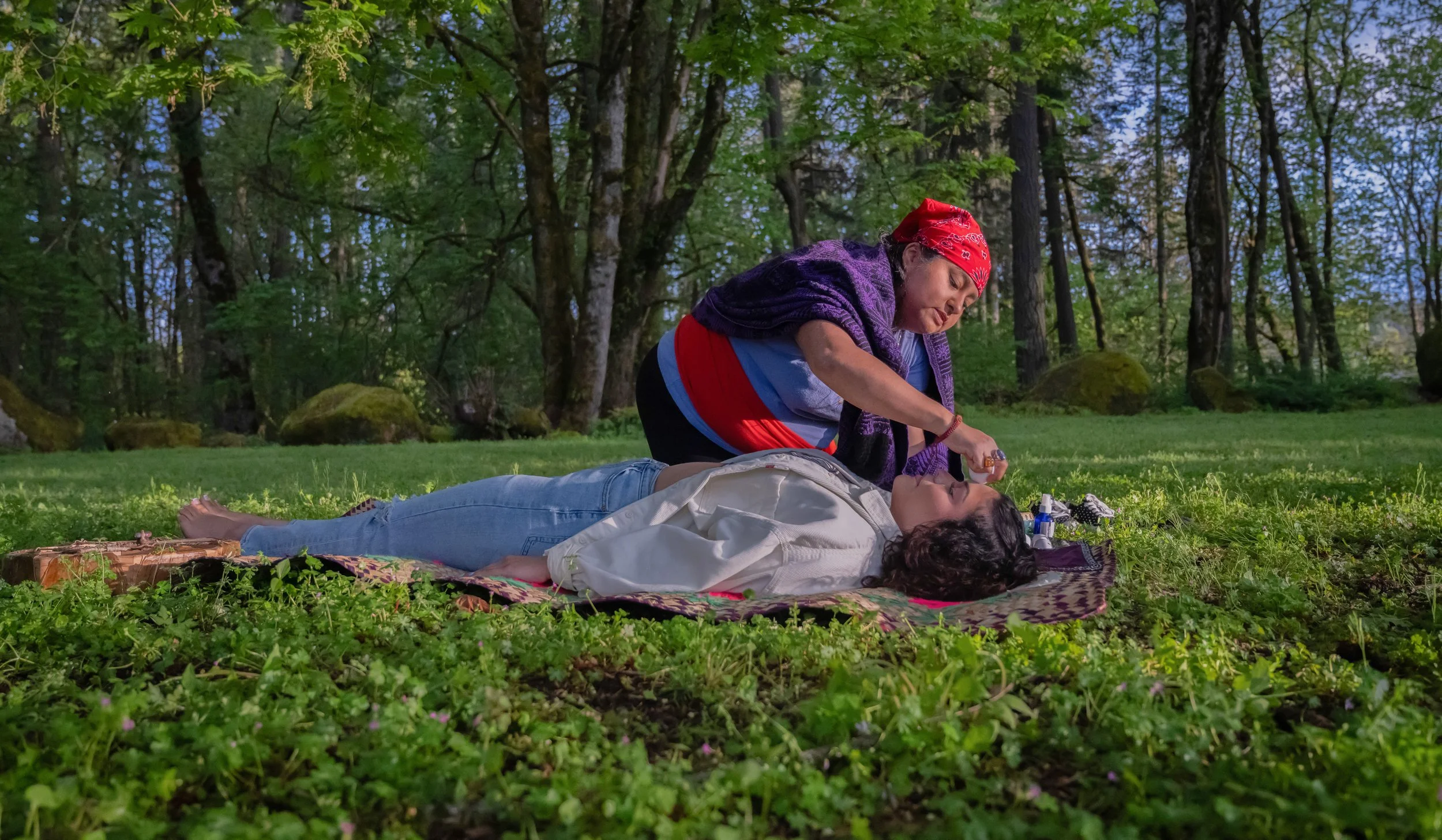
Curandera Sylvia Jimenez, 40, meets Litzy Mendoza, 25, in Salem, Ore. Mendoza previously struggled with anxiety that manifested through hair loss, stomach pain and irritated skin
Mendoza turned to Sylvia Jimenez — a curandera in Salem, Oregon — hoping to find answers that conventional Western medicine couldn’t provide.
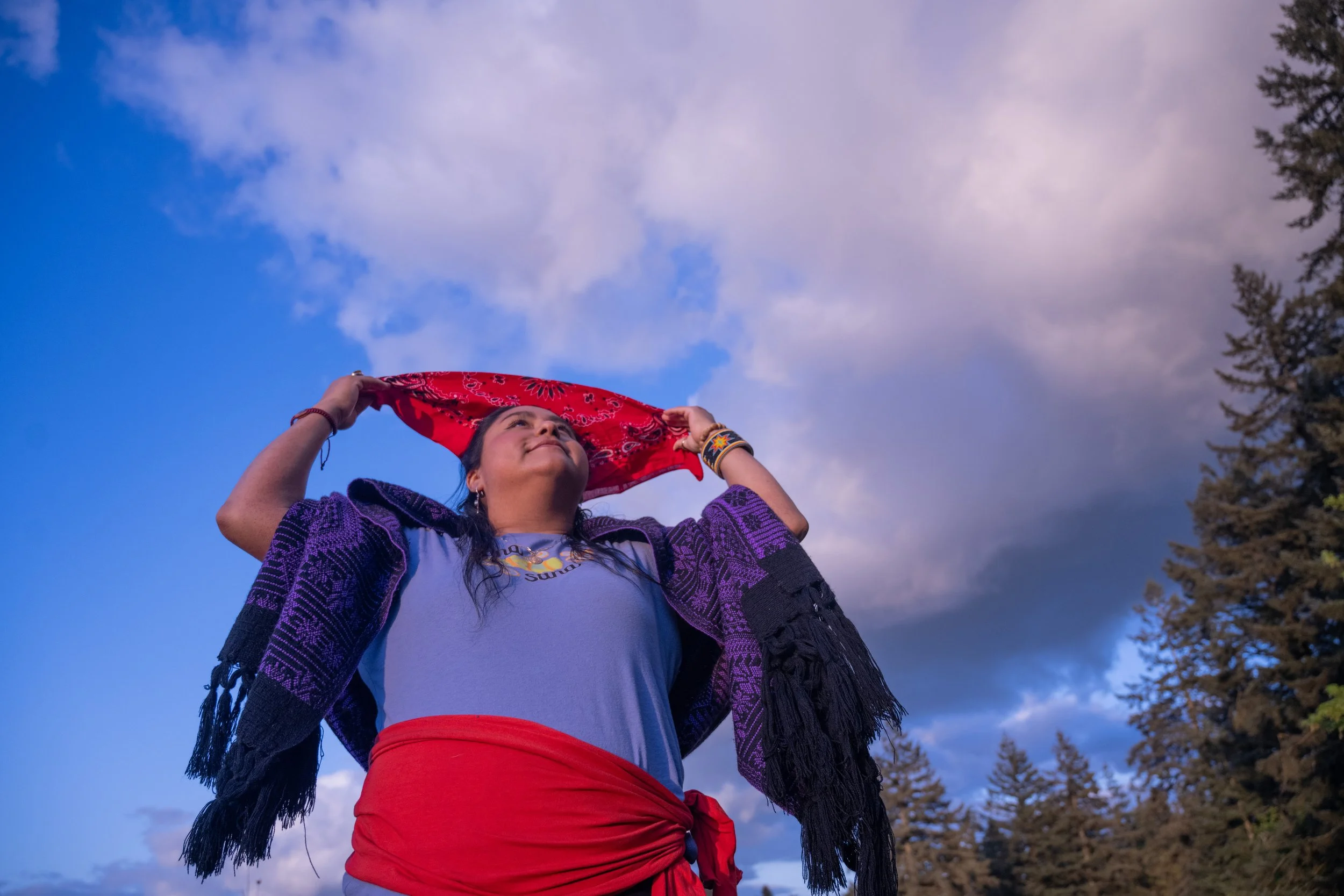
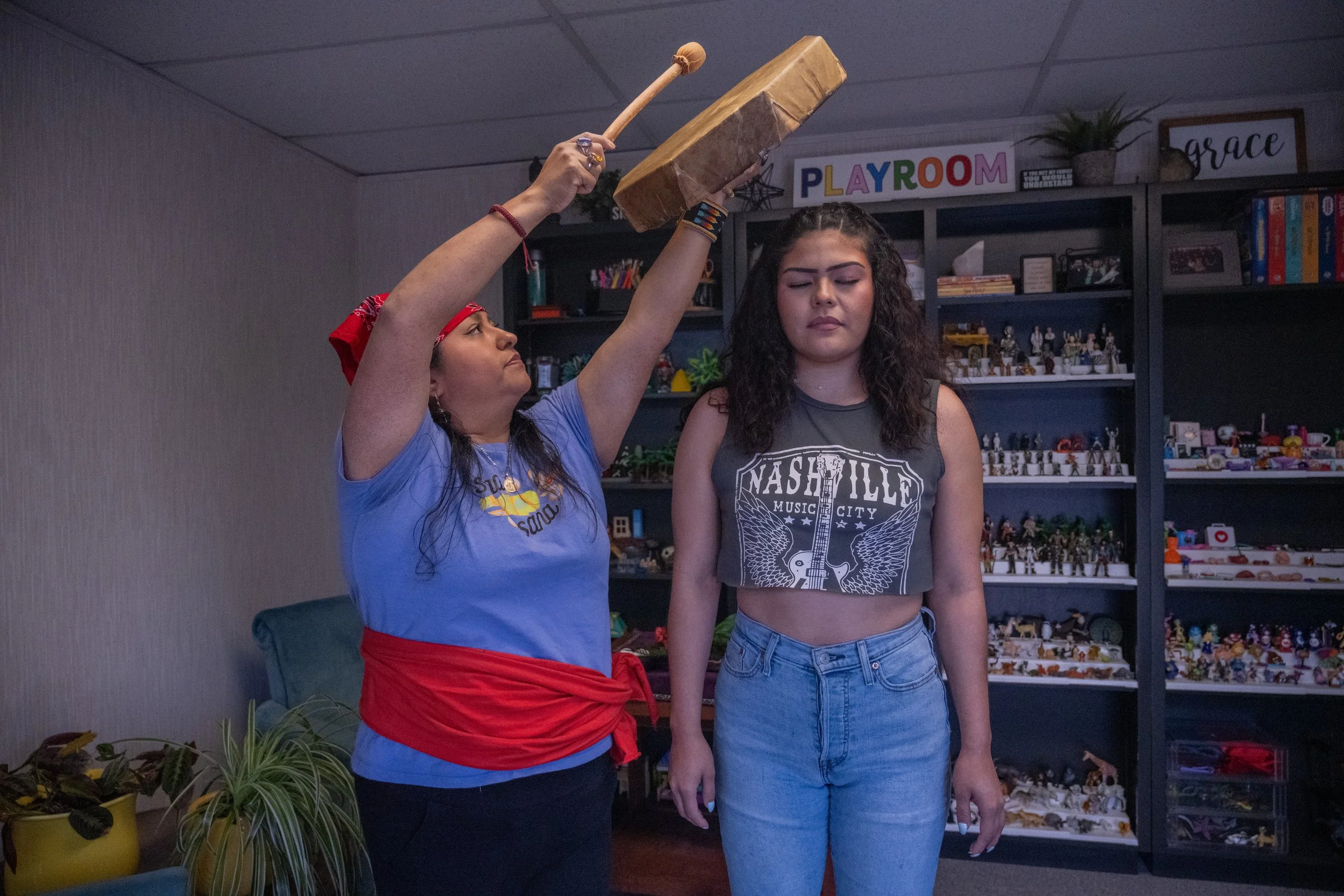
Curandera Sylvia Jimenez, 40, wears red fabric to protect herself from negative energy that is released during her limpia sessions. The red fabric is placed over the head and womb, because “a lot of things try to infiltrate your mind” and body. “You need to protect … the life giver,” said Jimenez.
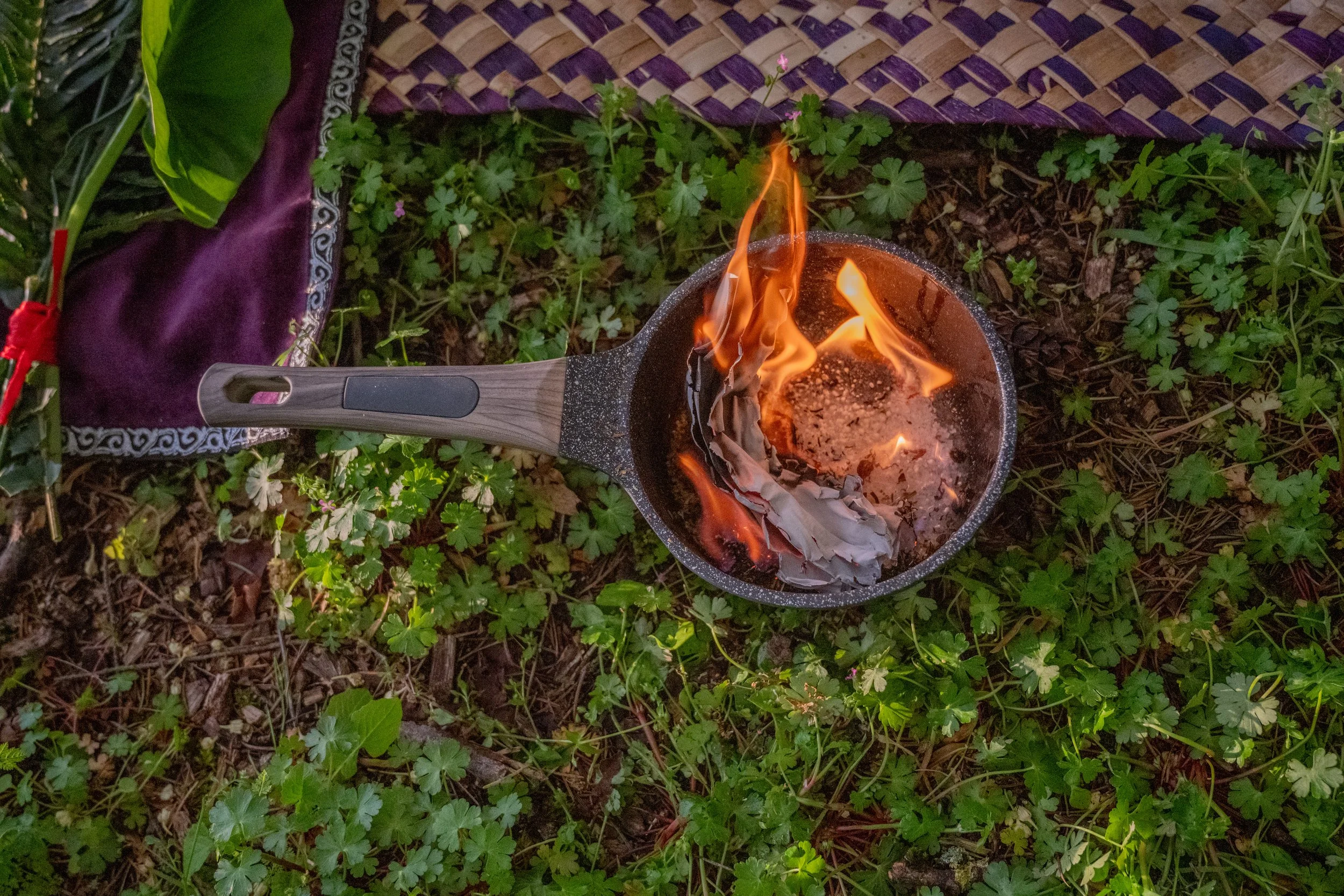
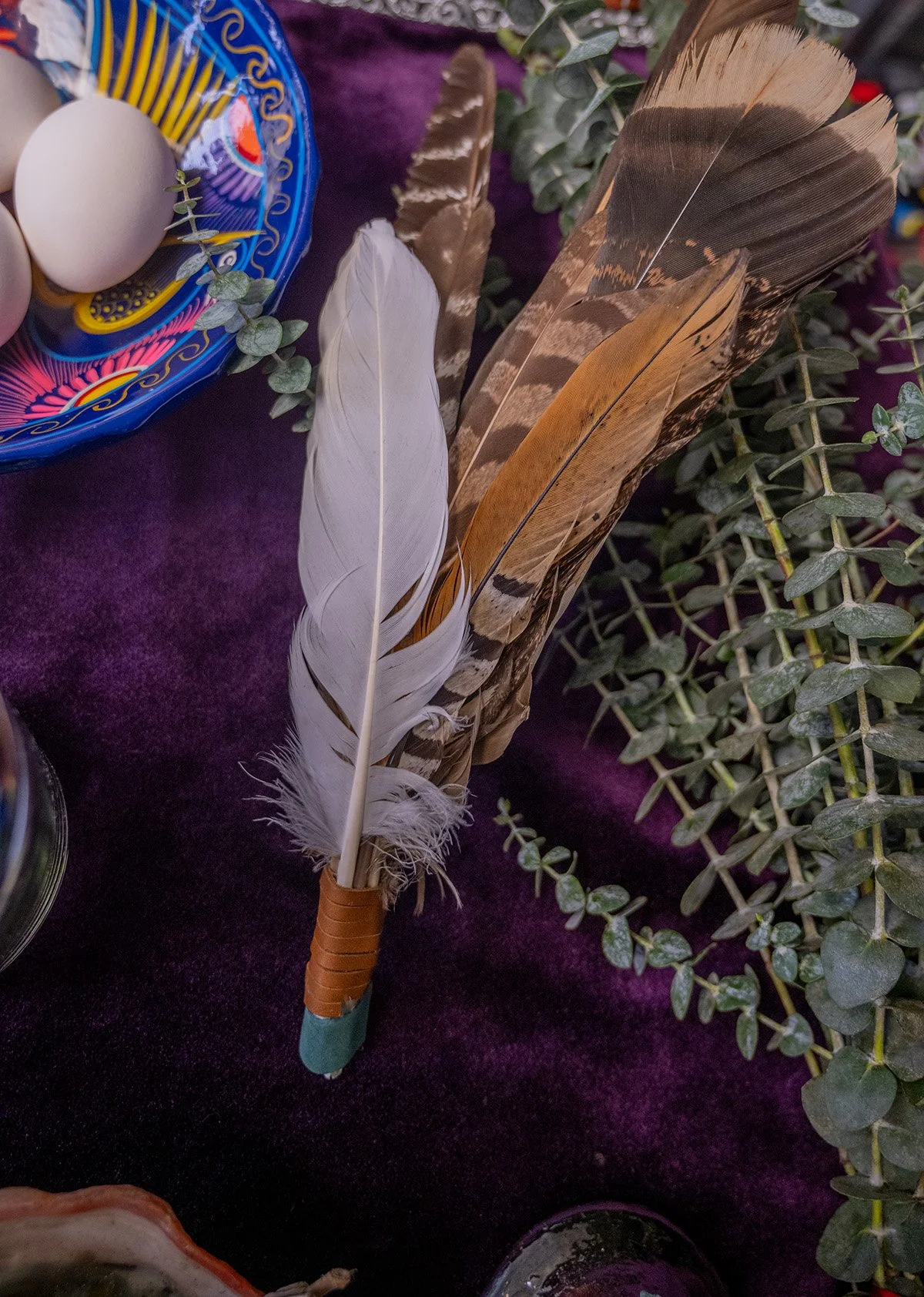
Curandera Sylvia Jimenez, 40, uses various elements in her healing practices. The eggs represent water, the bird feathers that spread sage represent fire, and the barrida plant represents the earth.
According to Pew Research Center, Hispanics represent 19% of the population, making them the largest ethnic minority group in the United States. Despite this, many Hispanic individuals face disparities that limit their access to quality healthcare, including high rates of poverty, lack of insurance, language barriers, cultural differences and high-risk jobs.
Research suggests Hispanic adults are less likely than other Americans to receive medical care. These disparities often lead people to find other paths to healing.
With increased fears around immigration status and discrimination, Ana-Maurine Lara, also known as Abuela Ana, said, “There’s both a need to be courageous and to keep showing up for the community. But also to be careful.”
A 2022 Health Equity study of 200 Latine participants found that 64% used traditional healers at some point in their lives. The primary reasons people turn to curanderas include accessibility, affordability, cultural connection and dissatisfaction with Western medicine.
Jimenez, 40, practices curanderismo, a traditional Mesoamerican healing system. The cultural tradition is rooted in the belief that illness results from an imbalance of the body’s three elements: emotional, physical and spiritual.
Curanderas restore the body’s balance through prayer, touch, herbal remedies, sacred rituals and spiritual guidance.
“[Curanderismo] is their last resort because they know if it’s not a physical thing, it’s a spiritual thing,” Jimenez said.
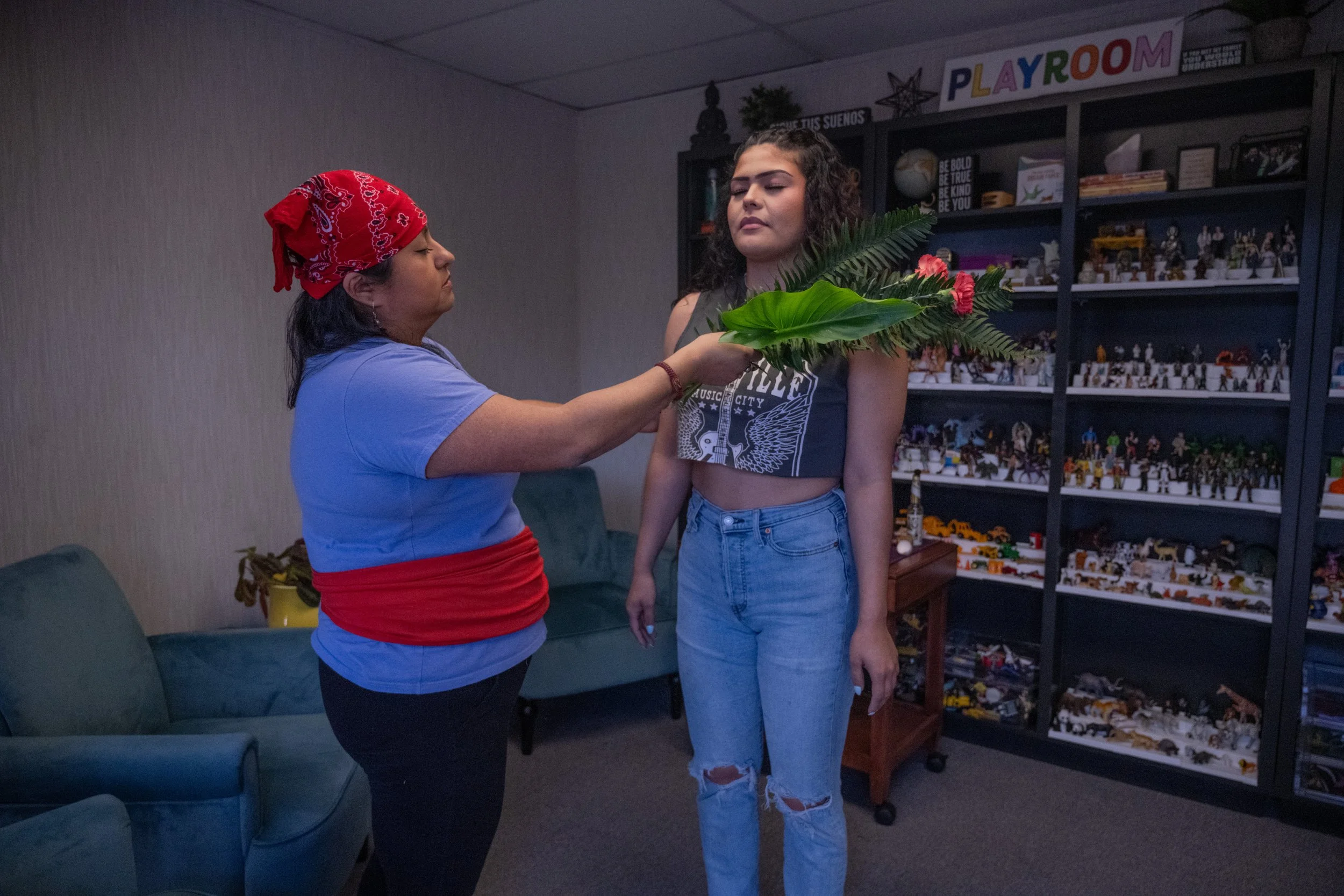
Curandera Sylvia Jimenez, 40, conducts a barrida practice. A bouquet covered in water and oil is tapped on the client’s body to cleanse them. The red ribbon protects against evil spirits released during the ceremony.
For years, Mendoza struggled with depression and anxiety. In 2024, she moved to Salem from McMinnville, Oregon, started a new job and settled into her own apartment. Because of those lifestyle changes, her anxiety worsened.
She began seeing a behavioral therapist and a psychiatrist, who prescribed antidepressants and anti-anxiety medication. Mendoza said the medication didn’t address the “root of the problem.” Instead, it “suppressed every emotion.”
She assumed the physical symptoms were the result of a hormonal imbalance or iron deficiency. Medical providers suggested taking a multivitamin.
She visited a gastroenterologist, who suspected her diet might be to blame.
“They put me on a vegetarian diet for a month,” Mendoza said. “I restricted red meat, dairy products, and eggs ... to see if it would make a difference. And nothing.”
During this time, she met a friend who suggested getting a spiritual cleanse from Jimenez.
“I was like ‘Yeah, you know what? Let me just try it.’ At this point, I've exhausted everything and I just wanted to feel better,” she said. “Maybe my problem isn’t medical or mental health, maybe it was spiritual.”
Mendoza scheduled her first session with Jimenez in November 2024.
Finding a curandera rarely begins with a Google search. It starts with word of mouth — a cousin, neighbor or family member passing along the name of someone who helped when nothing else seemed to work.
Curanderas do not become healers through formal, rigorous schooling. Instead, they undergo a training called desarrollo, an apprenticeship-style period of learning that emphasizes developing intuition alongside learning rituals.
Abuela Ana serves as a teacher in this process. She has practiced curanderismo for over 20 years. In her Taíno tribe, she is known as Akutu Ana, a title of affection given to respected elders. She passes down spiritual wisdom to her apprentices, including her godchildren, Zoraya Henao and Xochicoatl Bello Araujo.
In a red barn tucked into the woods of Lane County, Oregon, five women sat in a semicircle with their notebooks in hand, waiting for Abuela Ana to begin the day’s escuelita [schooling] session.
The day’s lesson focused on vistazos [glances], the practice of observing the body to assess physical and spiritual ailments. One way to evaluate is through reading tongue color. A black tongue indicates energy depletion. White can signal phlegm or estancamiento [stagnation], and white with red dots signals aire, an imbalance in body temperature caused by internal and external factors.
Since curanderas are not doctors, they don’t diagnose; they evaluate.
Zoraya Henao, a licensed therapist and practicing curandera, is working to integrate curanderismo practices into psychotherapy that provides comfort and cultural connection.
Henao said curanderismo is like “if you are coming back home from a journey that feels really heavy, or coming back to your abuelita to get a hug, a warm hug.”
Curanderas are there to support individuals in their spiritual journey. Jimenez practices this as a sobadora, a hands-on healer who uses massage to ease tension and promote healing. She offers Reiki, along with soul retrievals, home cleansings and healing circles.
All her sessions begin with a plática, a heart-to-heart conversation between the healer and the client.
Jimenez asks four simple questions:
“How are you sleeping?”
“When was the last time you danced or sang?”
“Do you see or hear things?”
And, “Has anything strange happened in your home?”
These questions open the floor for the client to express concerns and personal struggles they may hesitate discussing with a medical provider.
“They don’t have anybody to talk to about the weird things that go on in their life and what seems strange like, ‘My hair’s falling out, I'm [having] money problems, or I feel like I’ve been cursed,’” Jimenez said. “So, they usually come to me.”
Jimenez grew up with curanderismo. Her grandmother performed limpias [spiritual cleansings] on her when she was a child. Curanderismo is a blending of traditions and is influenced by one’s personal background. Jimenez’s healing practices are shaped by her Mexican heritage, Indigenous roots and Kickapoo Tribal customs.
Curanderismo originates from the Greek humoral system, which ties health to the four bodily humors and the four classical elements: blood to air, black bile to earth, yellow bile to fire and phlegm to water. Spanish colonizers carried these ideas to the Americas where they merged with existing Indigenous healing traditions practiced by the Aztecs and Mayans.
It lives in the small remedies and rituals learned at home: a mother rubbing Vicks VapoRub on her child’s chest for a cough or applying sábila [aloe vera] to soothe a burn. In these small acts of care, the tradition is passed down through generations.
Mendoza descends from curanderas on both her maternal and paternal sides.
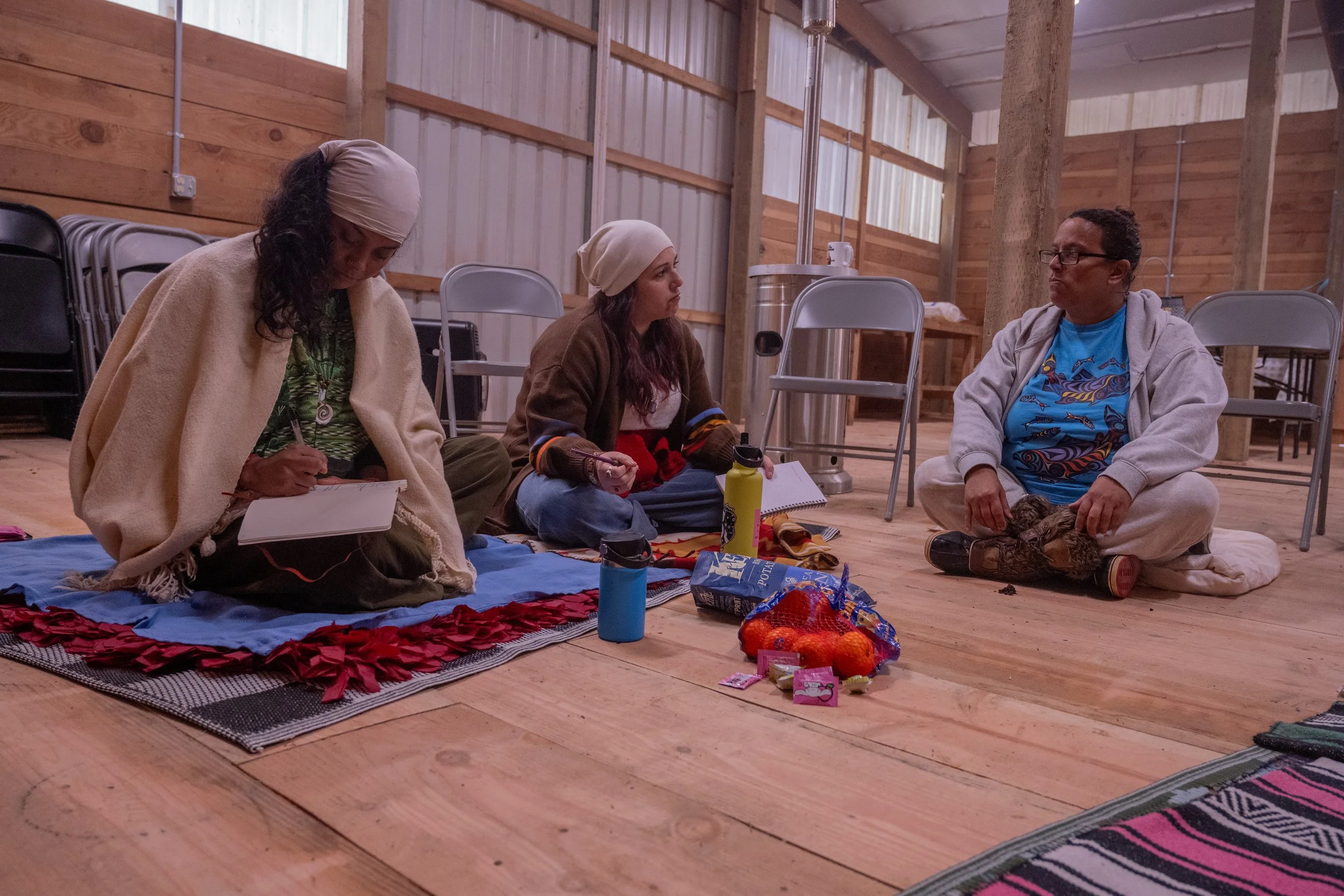
Curandera Abuela Ana Lara conducts an escuelita session in Lane County, Ore. Abuela Ana passes down her wisdom to Xochicoatl Araujo, 34, and Zoraya Henao, 46.
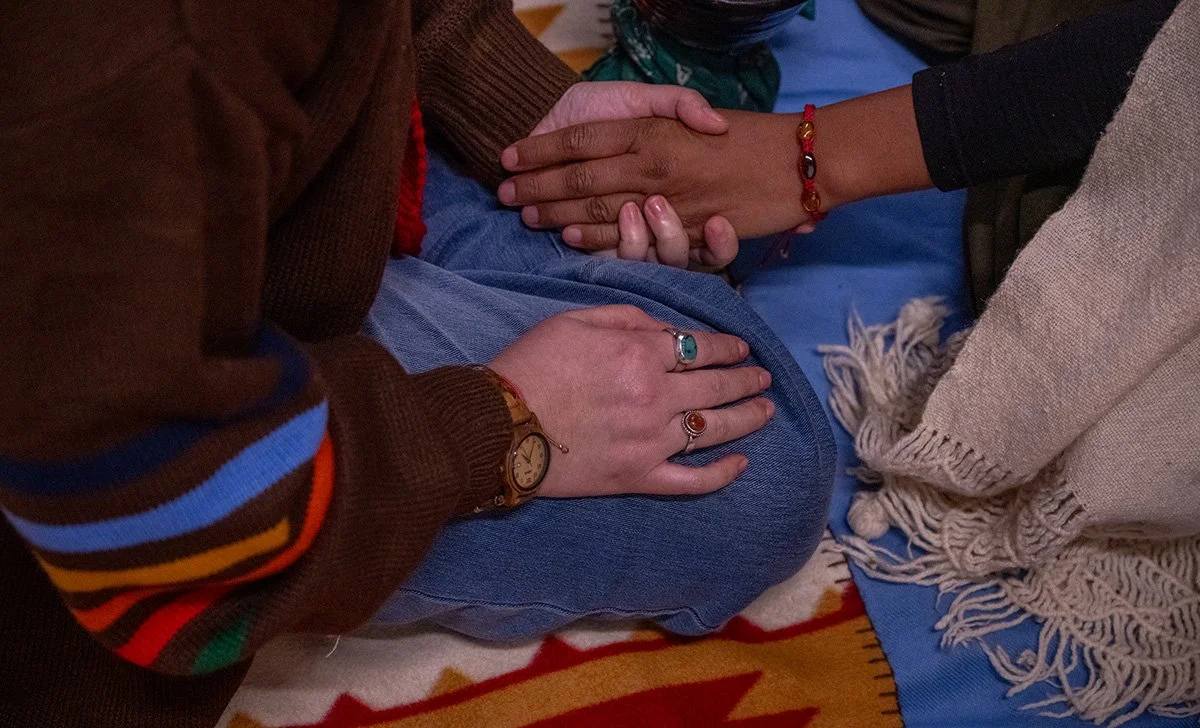
Xochicoatl Araujo, 34, and Zoraya Henao, 46, hold hands during a prayer and meditation ceremony. Araujo and Henao each took turns praying over one another and acting as a vessel for one another’s spirit guide, an ancestor who loves you unconditionally.
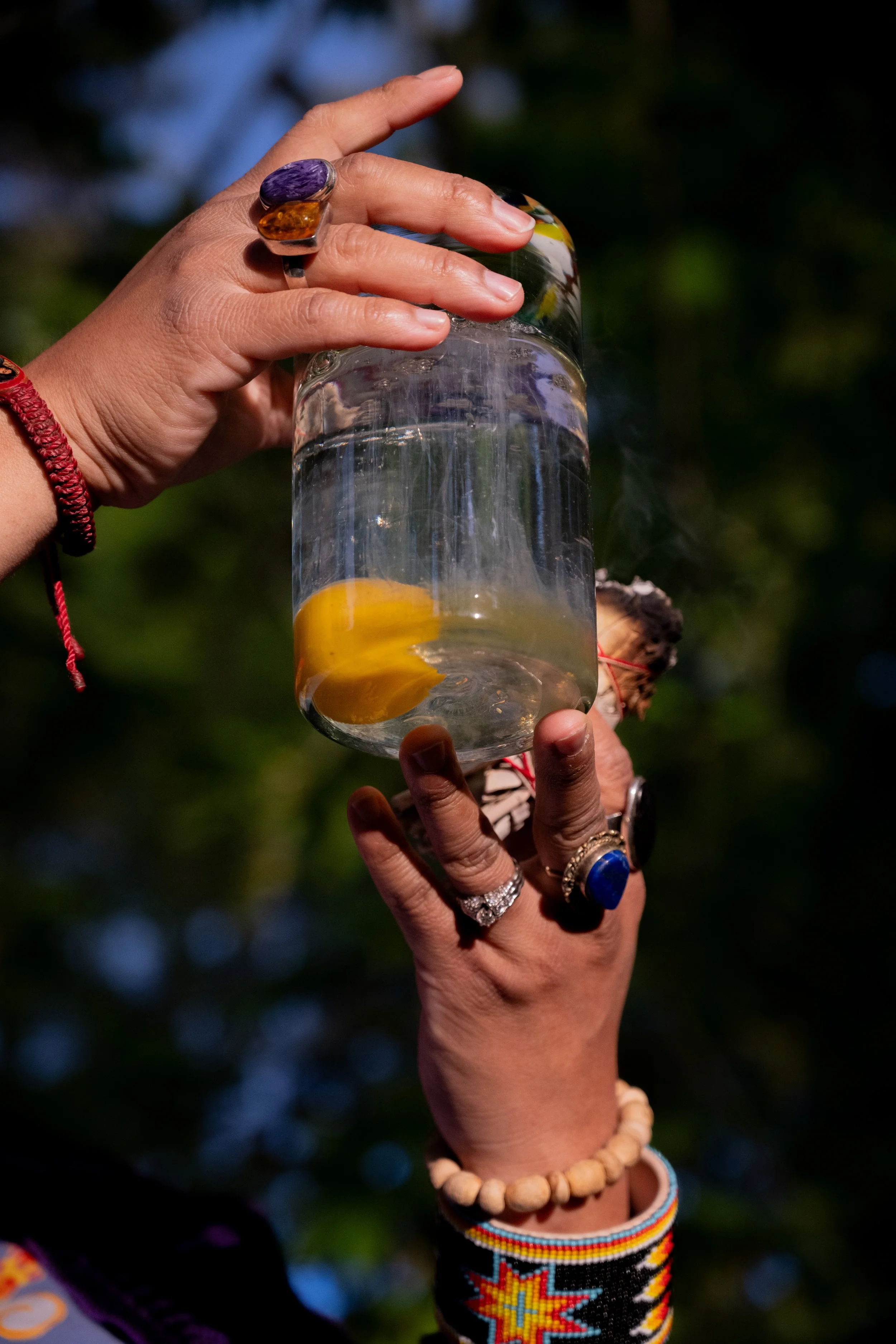
Curandera Sylvia Jimenez, 40, wears protective stones during her limpia practice in Salem, Ore. “The bubbles at the bottom reveal the root of Mendoza’s attachment,” Jimenez said.
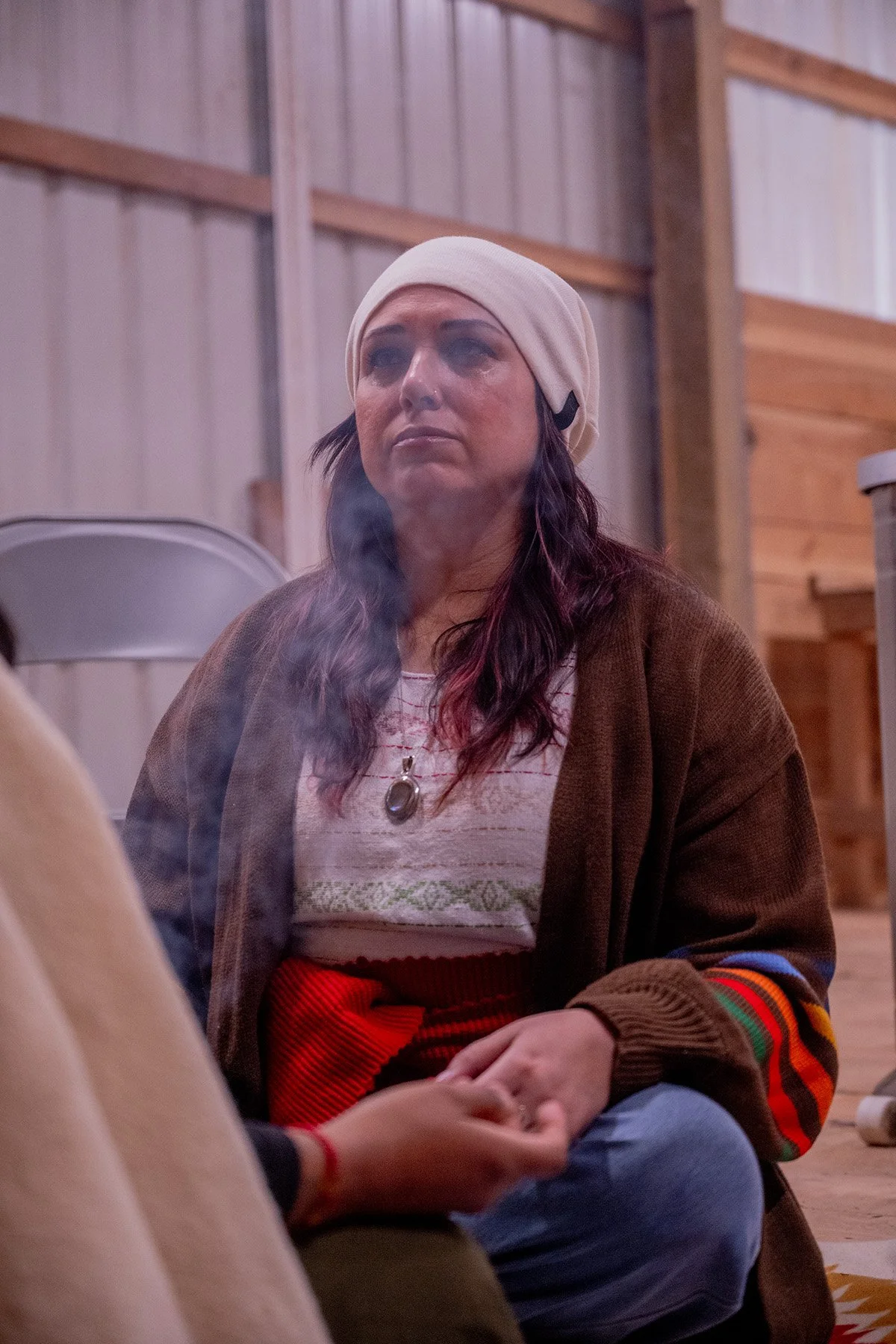
During a prayer and meditation ceremony in Lane County, Ore., Xochicoatl Araujo, 34, acts as a vessel for Zoraya Henao’s spirit guide, an ancestor who loves you unconditionally — Henao, 46, was overcome with emotion.
“Bad energy can be harnessed from your family and ancestors,” Mendoza said
Jimenez could feel Mendoza’s energy. It was intense and overwhelming. Jimenez said, “I could feel an attachment on her. I could tell that there was something. I myself was feeling sick, so I knew that whatever was attached to her didn’t want me to help her.”
She believes this attachment followed her through childhood.
One of the most common rituals Jimenez performs on her clients is the limpia, meant to remove mal de ojo, or negative energy transferred by jealous looks from strangers that can cause harm.
Whispering affirmations under her breath, Jimenez guided Mendoza through the limpia.
“Remove any anxiety, any negativity, any mal de ojo, envidia [envy], anything that does not belong to this vessel,” Jimenez said.
She cupped an egg in her hand, tracing it slowly in cross-shaped motions from the crown of Mendoza’s head down to her feet.
Jimenez cracked the egg against the rim of a glass of water. The heavy yolk sank to the bottom, leaving trails of cloudy strands. She knelt down and studied the web of white and the ring of bubbles at the surface.
“The bubbles on top are good,” Jimenez said. “Those are the energy that’s been removed.”
Twenty minutes after Mendoza left the first session, she experienced a purga — a physical release of negative emotions, heavy energy or toxins that cause spiritual imbalance.
“I think we opened up something within me … that had a hold of me for such a long time. I was finally letting go and I don’t think it wanted to let me go.”
Initially, Jimenez only performed limpias on family and close friends. Her path to becoming a curandera was far from linear.
At 29, she experienced the “dark night of the soul” — a spiritual crisis. She was “having nightmares, having panic attacks and feeling overwhelmed with everybody’s energies.
Desperate for clarity, Jimenez stepped out into her backyard. She looked toward the small creek beyond her fence and prayed: “God, I need the sign. I need to know, what do I do?”
That day, she got her sign.
“There were all of these birds in my backyard, all together, congregating. They just showed up,” Jimenez said.
She remembered the silence. The birds didn’t chirp. They just stared right at her.
Jimenez believed that sign came from her ancestors telling her “this is what you have to do.”
Soon after, Jimenez decided to go to massage school to get her license and share her healing practices with her community.
In 2022, she founded her business, Sana Sana.
Jimenez wants to practice curanderismo for as long as she lives.