


Writer Stephanie Hensley Photographer Maia Rosenthal Web Designer Alexandra Bondurant
‘Don’t Let Go’
Cowgirls kick up dust in PNW bronc riding scene
When Elizabeth Broadhead rides a bronc for the first time, everything goes blank.
She’s looking down at her horse, standing outside of the chute, her thoughts racing with self-doubt. “You shouldn’t do this. What are you doing?”
She forces her mind to go back to the basics that Brittany Miller taught her: sinking her hips into the saddle, pushing her chest forward and wrapping her hands around the rein.
She’s one of eight attending Miller’s bronc riding school for women, which was part of a larger event hosted by J.C. Harmon at Crooked 8 Arena in Kuna, Idaho.
Miller, a longtime bronc rider and instructor, drove from Montana to Idaho. In the weeks leading up to the trip, her trailer, carrying all her tack — equipment she uses in her clinics — was stolen. Two other clinics fell through due to low participation. She still made the nearly six-hour journey.

Before approaching the chute, Brittany Miller, 33, coaches Elizabeth Broadhead, 32, on perfecting her grip and body position. Arm positioning and grasp on the rein can make or break a ride.
Even before the day started, the divide between men and women was clear. After a combined session at 10 a.m., the different groups split off into their stations. While the men were set up in front of the main hall, Miller’s school was tucked to the side of the building.
Bronc riding started in the early 1800s, when cowboys and ranch hands in the American West had to train colts and unbroken horses for ranchwork. Since then, it has evolved into one of the most iconic and popular events in rodeo.
Historically, buckingstock events were geared toward men, but women have been involved in the rodeo industry just as long as their male counterparts. The first woman to compete in bronc riding, Prairie Rose Henderson, rose to fame in the early 20th century.
Henderson’s legacy lives on in riders like Miller and her students. Miller’s teaching stems from an autonomous perspective: it’s more important to do what’s right for you rather than what’s right for other people.
The horses now funnel from their pens to the bucking chutes. Broadhead notices a particular horse, referred to as “Shit Pie,” who is repeatedly kicking and bucking. She looks around at the other women, declaring, “I don’t want that one.”
A minute later, Miller tells her that’s her horse.
While Broadhead’s still grappling with the idea of riding “Shit Pie,” she looks at another one of Miller’s students and asks how she deals with fear and anxiety during moments like these.
-
![]()
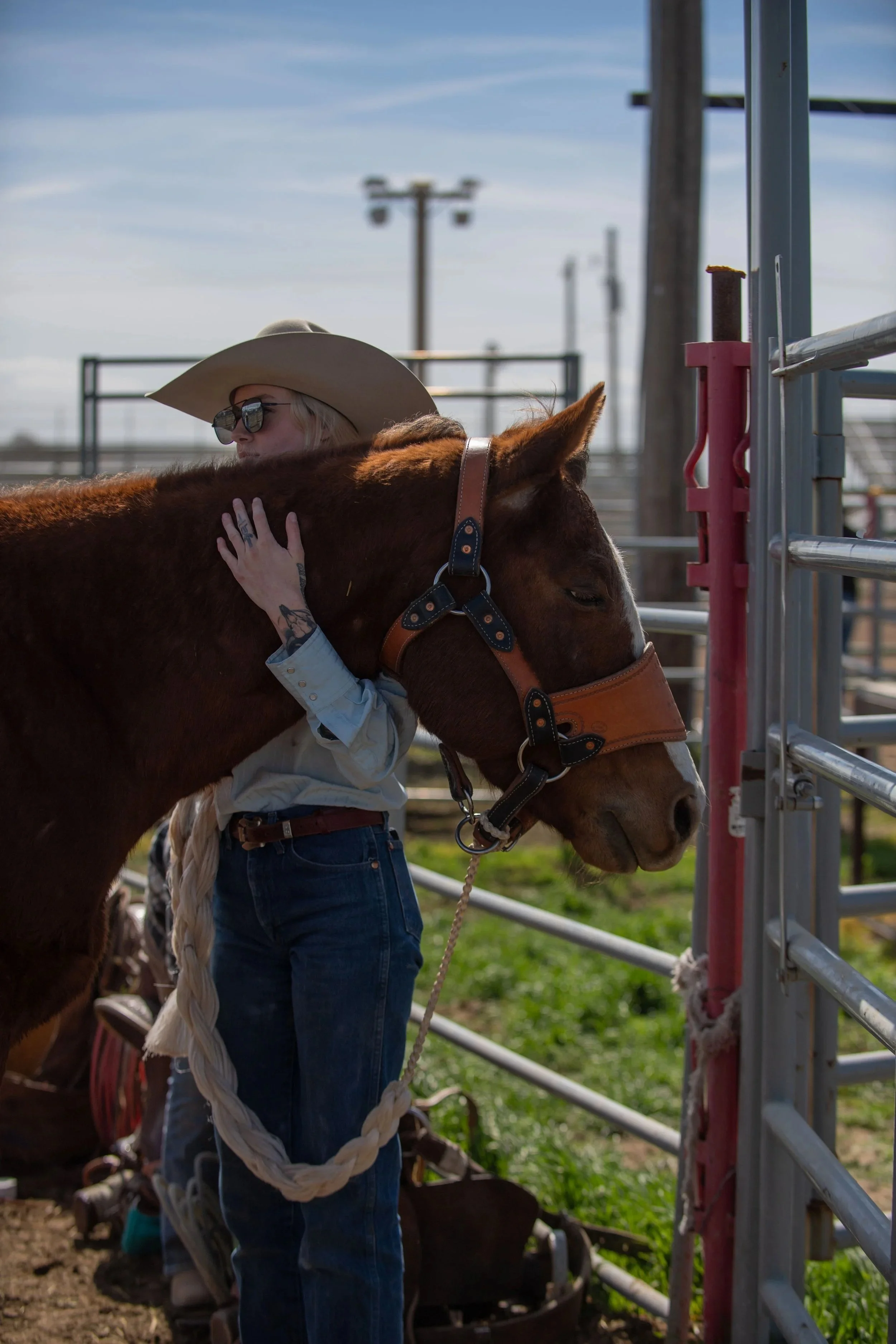
Riley Emmerick, 24, a more experienced bronc rider, keeps a practice horse company as Brittany Miller, 33, runs through specific techniques and safety precautions for the first-time riders.
-
![]()
The buckingstock are held together in the horse pen while the students prepare for their rides. Each horse is branded to differentiate stock contractors from one another on the event day.
-
![]()
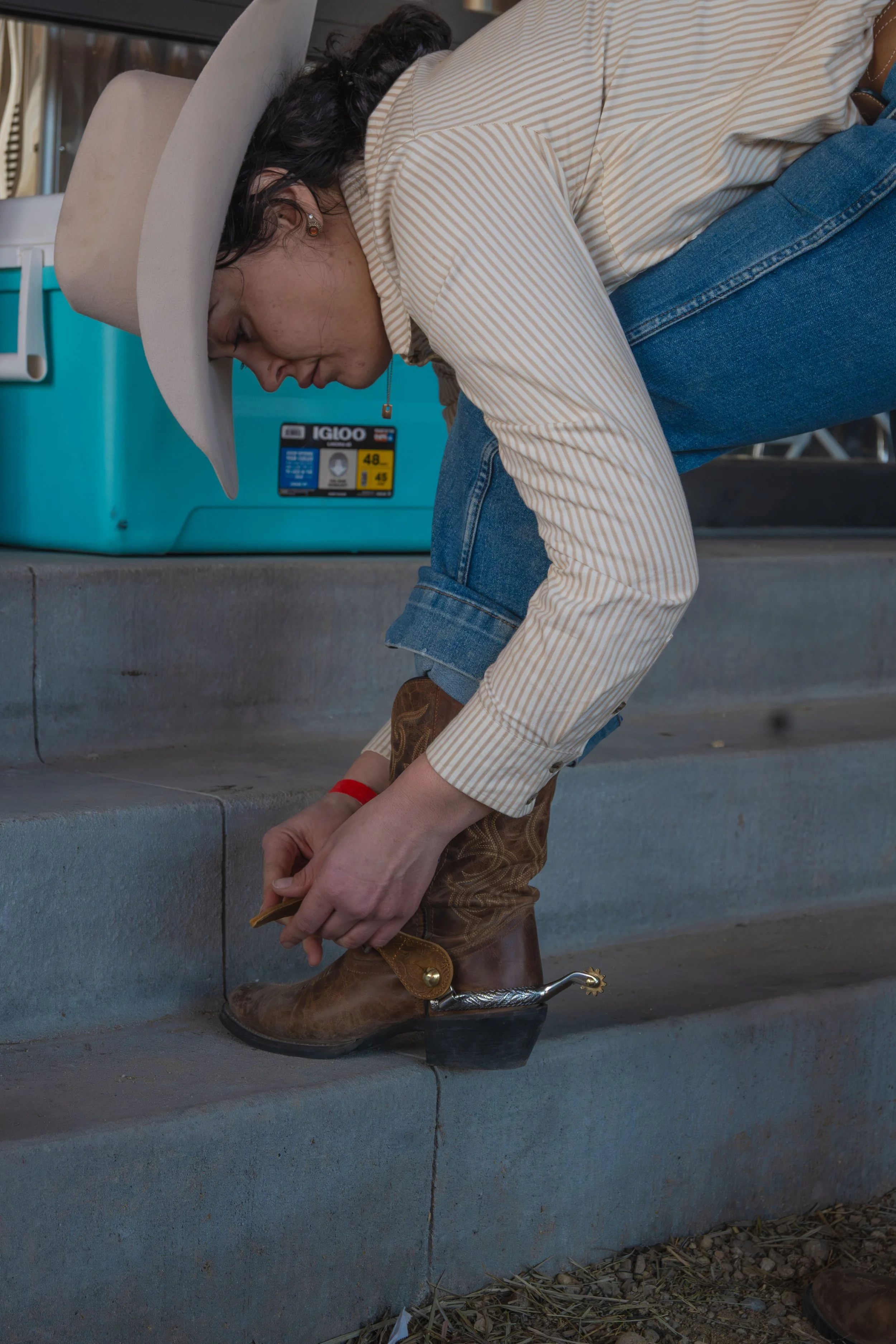
Jessica Schooley, 31, adjusts her spurs and prepares herself for the chute. All of the students prepare their gear and head over to the arena.
-
![]()
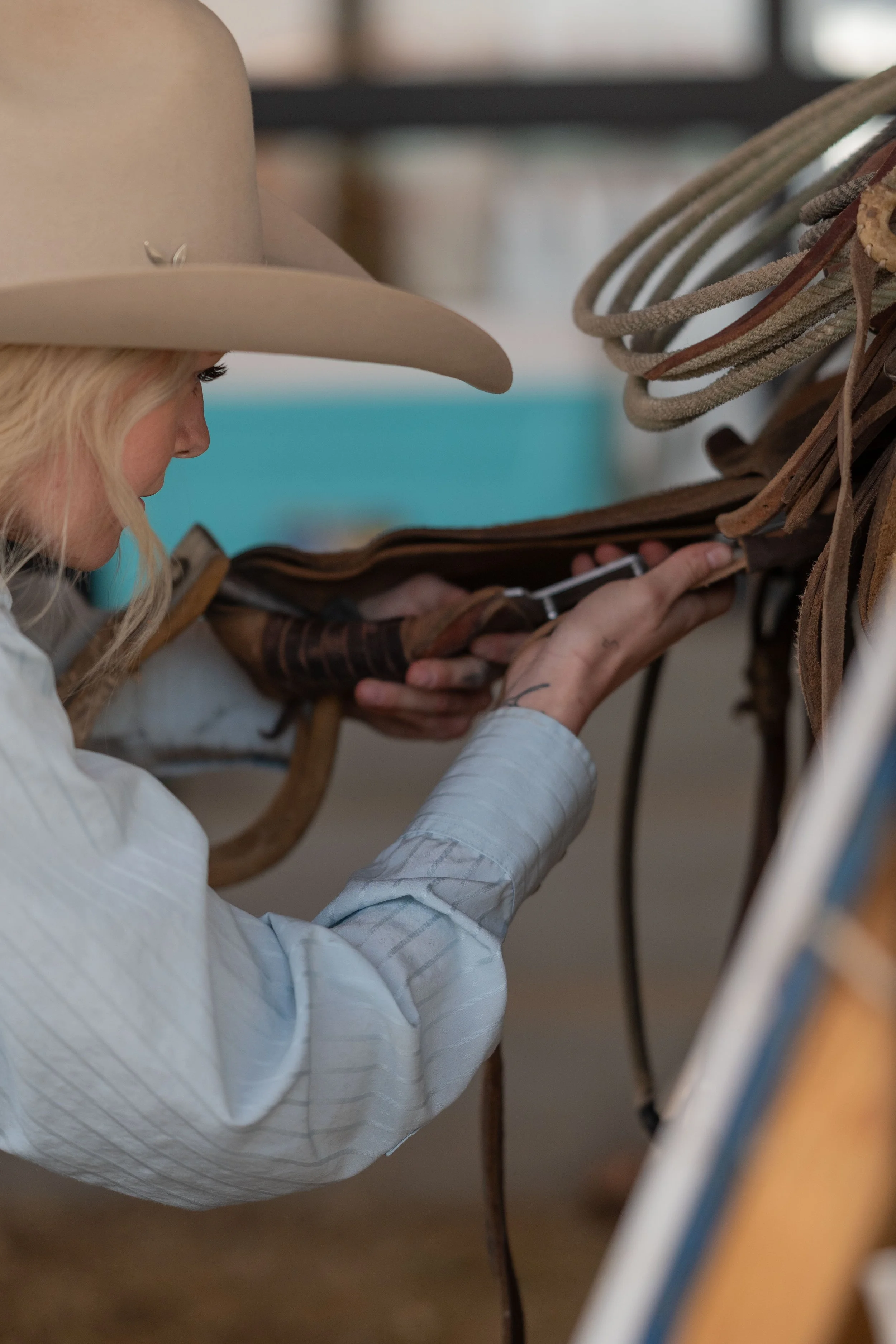
Rilee Emerick, 24, adjusts her tack before making her way to the chute for her first ride of the day at the Rodeo Skills Clinic in Kuna, Idaho, on March 21, 2026.

I asked her, ‘How do you stay so calm?’” Broadhead said. “She just goes ‘Oh, I don’t know. I mean, I’m scared.’ She just seemed so poised.”
Despite the rising popularity of women’s bronc riding, there are still some people who are uncertain about women’s involvement in the sport. According to Miller, there are often stereotypes about learning from women, as they may be viewed as less capable than male instructors.
Miller didn’t grow up with horses in her family; so, during high school, she would clean stalls in exchange for an hour of riding time. She later moved to Montana to study natural horsemanship at the University of Montana Western.
During her time at UMW in the mid-2010s, Miller competed in her first rodeo at a women’s ranch bronc event after seeing a flyer on Facebook. Following her graduation in May 2015, Miller “bounced around looking for cowboy jobs,” to further develop the skills she learned as a teenager.
Most ranches hire seasonal or temporary ranch hands and provide bunk-style housing for their laborers. For Miller, this was difficult as the majority of ranch hands were men.
“Being a female, that kind of disrupts the dynamic,” Miller said. “And so that was a lot of what I had come up against.”
Miller held no hard feelings against anyone, and instead accepted the dynamic. Her drive for bronc riding isn’t fueled by being a woman in a man’s world, but rather working hard to become as good as she can be.
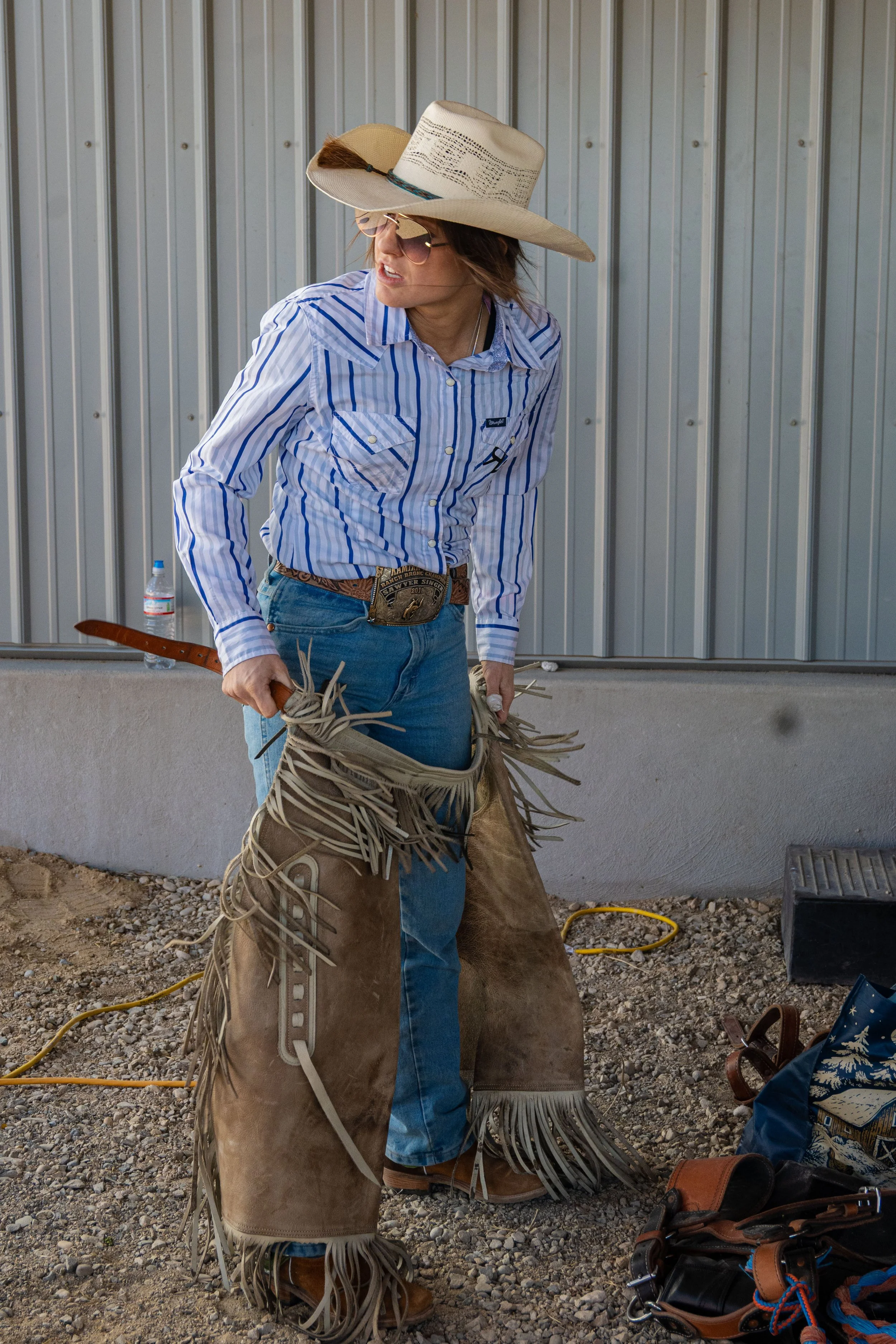
First-time bronc rider Elizabeth Broadhead, 32, shakes off her nerves as she approaches the chute. She assembles her gear, throws on her chaps, and prepares herself for the experience. After positive encouragement from her fellow students and Brittany Miller, 33, she heads over to the staging area.
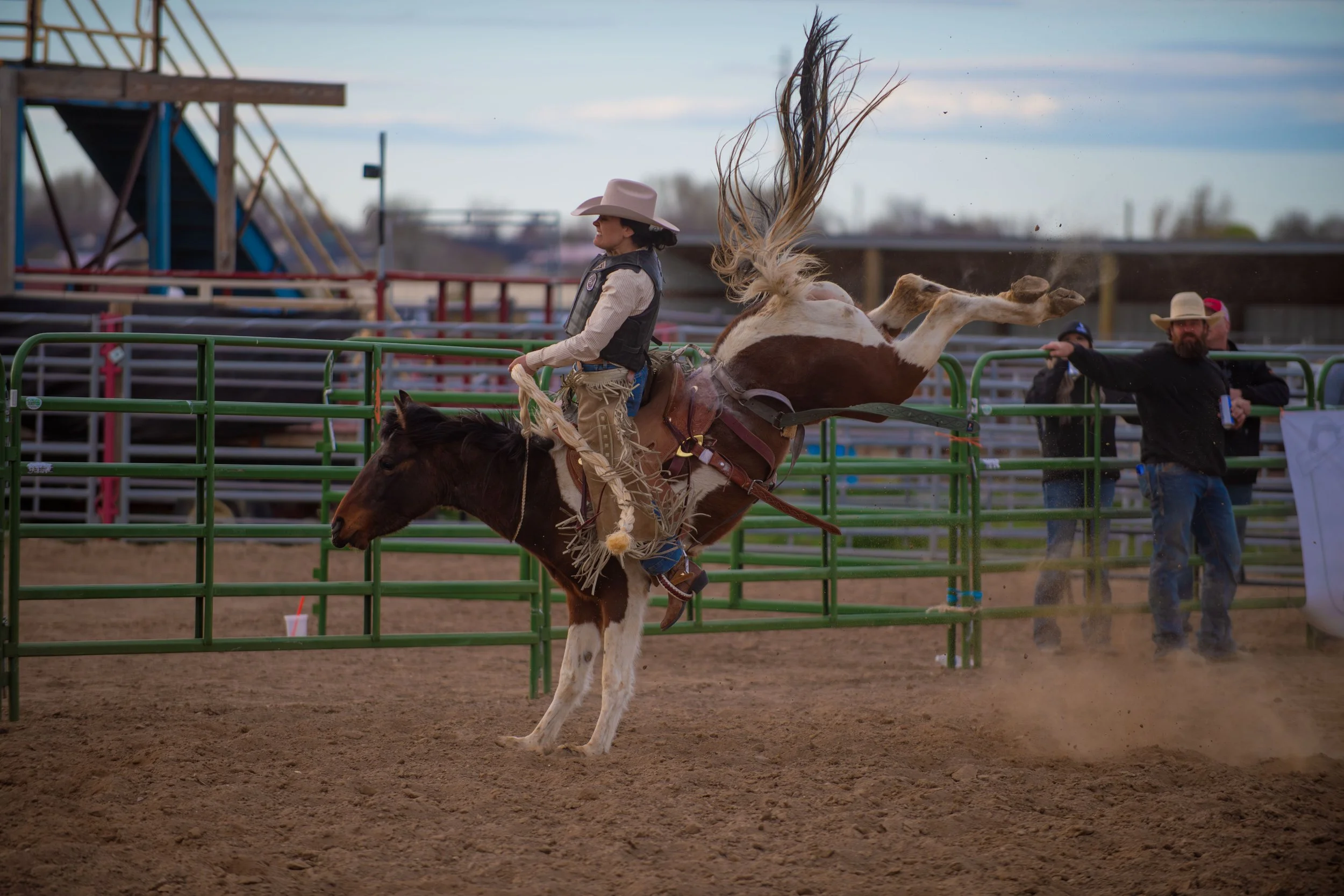
Jessica Schooley, 31, is one of several first-time bronc riders attending Brittany Miller's skill clinic. She is released from the chute and attempts to stay on the energetic bronc. She grasps the rein and tightens her grip to complete the desired eight-second ride.
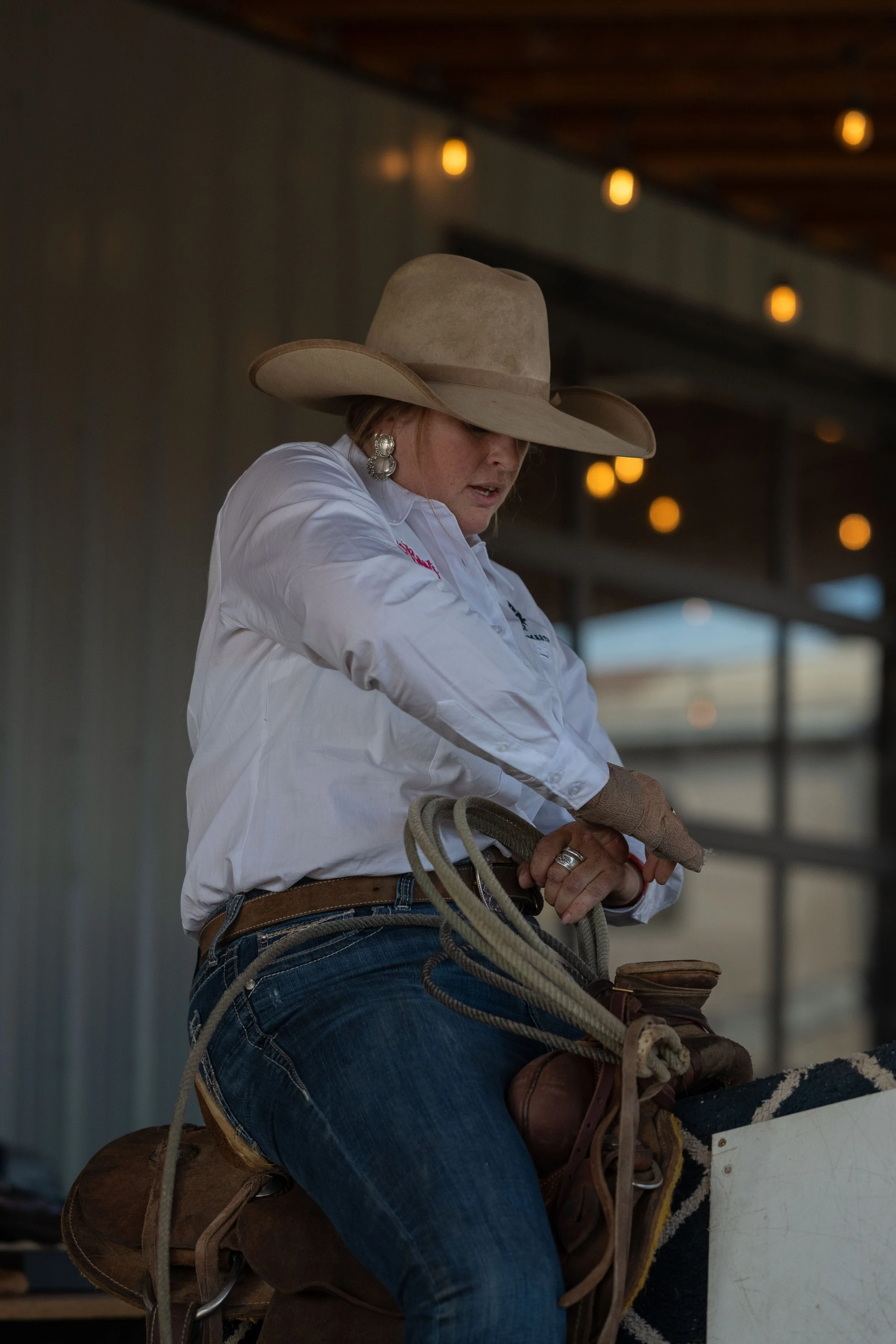
Brittany Miller, 33, ignores her hand injury as she demonstrates positioning for her students. She teaches the women how to sit on the saddle as well as the rein-holding technique specific to bronc riding.
“I just wanted to do the job and do it well and ride like the men. I wanted to be gritty and hit the ground and get back up and walk back,” Miller said. “I didn't want to sit there and lay on the ground and have somebody come help me.”
While the women were walking towards the bucking chutes later in the afternoon, a man walked by. After taking notice of their saddles, he loudly said, “Trade those in for barrel saddles and you’ll be happier.”
Several minutes have passed. Broadhead is still outside the chute, working up the courage to get in the saddle. She needs persuasion from Miller, who pats her on the butt, urging her to get on.
“[She would] just tell me I could do it, but [without] forcing me,” Broadhead said. “It was so gentle, but so strong at the same time that I [ended up] getting on.”
Broadhead is dressed for the part. She dons her chaps and spurs, her hat is fitted on her head, but she’s still nervous. Getting on a bronc for the first time is daunting, even with Miller’s teaching.
Riders are judged on their technique and the horse’s performance. Before the ride, the rider and horse are enclosed in a chute. The rider nods their head when ready, the gate swings open and the horse bursts into the arena.
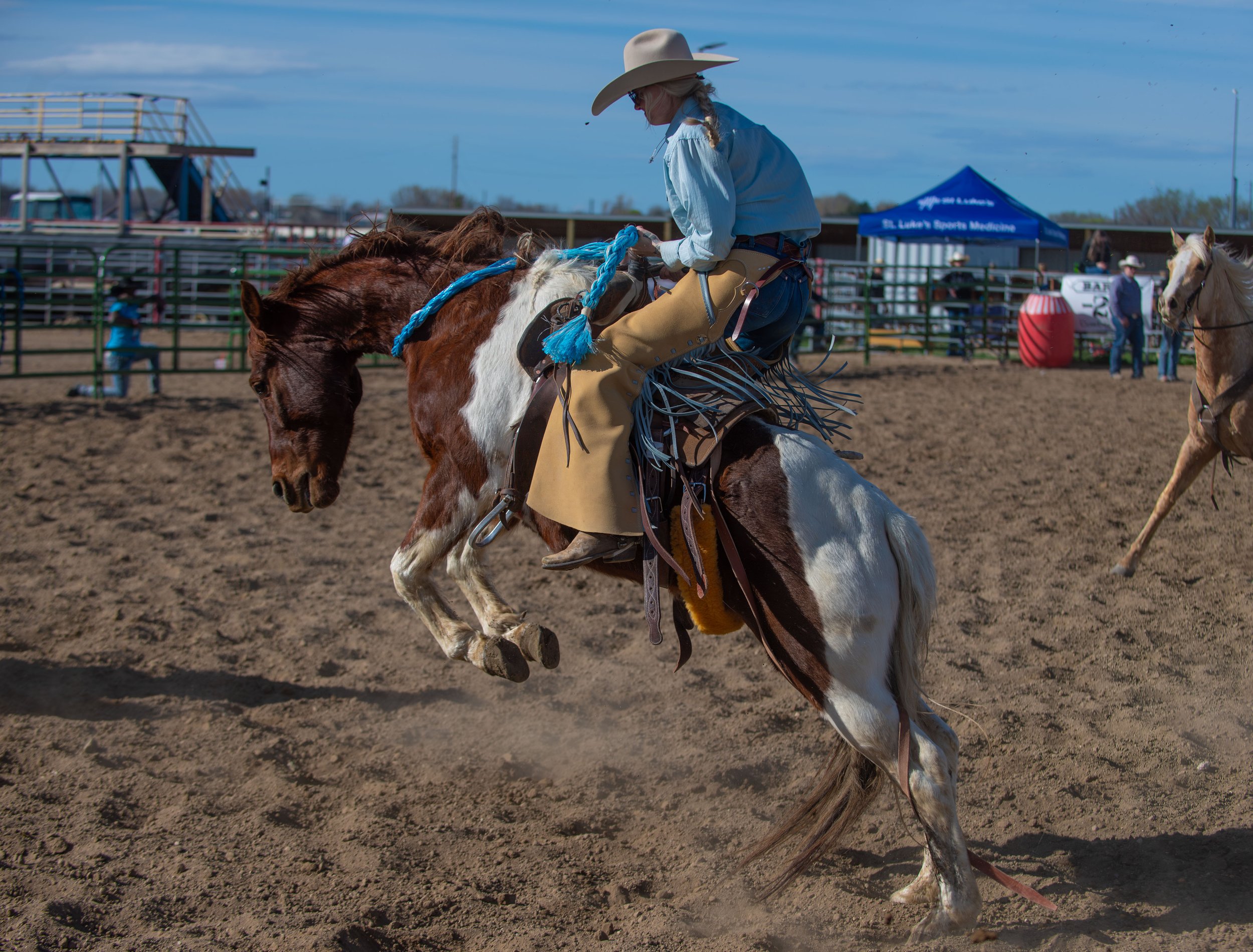
Rilee Emerick, 24, a more experienced bronc rider, jumps right back into riding at the Rodeo Skills Clinic in Kuna, Idaho, after recovering from a back injury. Emerick holds a firm grip on the rein as the horse bucks at high velocity.
The rider must stay on for eight seconds, putting their toes forward, controlling their spur technique and keeping their free hand in the air.
There are two main styles of bronc riding: saddle bronc and ranch bronc, sometimes referred to as bareback. Saddle bronc riders use a specialized saddle without a horn and hold a braided rein attached to the horse’s halter. In ranch riding, riders use only a surcingle — a strap secured around the horse’s body — to grip as the horse bucks.
When Broadhead finally gets in the chute, everything narrows. Her body works on its own, her hips sinking into the saddle and her hand gripping the rein. She doesn’t hear anything besides the few people above her, making sure her saddle is fitted properly for her ride.
“It was the first time in my life where it was me, myself and God… it’s the most in-tune I’ve felt with my body in a long time,” Broadhead said. The last time Broadhead felt this connected to her body was childbirth. She described the feeling as one of those moments in life that “forces you to be calm” even when you don’t feel like you can.
When Broadhead’s son, Joshua, was born, she decided to give him the option of the Western lifestyle. Eventually, Joshua started riding calves in rodeo events. Broadhead had been “begging [her] fiancé” to help her get on broncs, utilizing his connections as a rodeo clown. She later discovered that Miller, who she had been following on TikTok for some time, taught bronc riding for women and decided to sign up for the clinic in Idaho.
While rodeo is centered around community, it can be difficult for new riders to get involved. Rodeo events are often expensive, with entry fees, gear, and animal costs, but it can also be hard if you don’t have the appropriate connections.
Another second passes. Broadhead nods. The gate swings open and instinct takes over.

Barrel racing was created as a separate event for women in rodeo. Saddles used for bronc riding are distinct from barrel racing saddles. Bronc saddles have a thick rein and high cantle — the back of the seat — to support the rider during drastic movement.
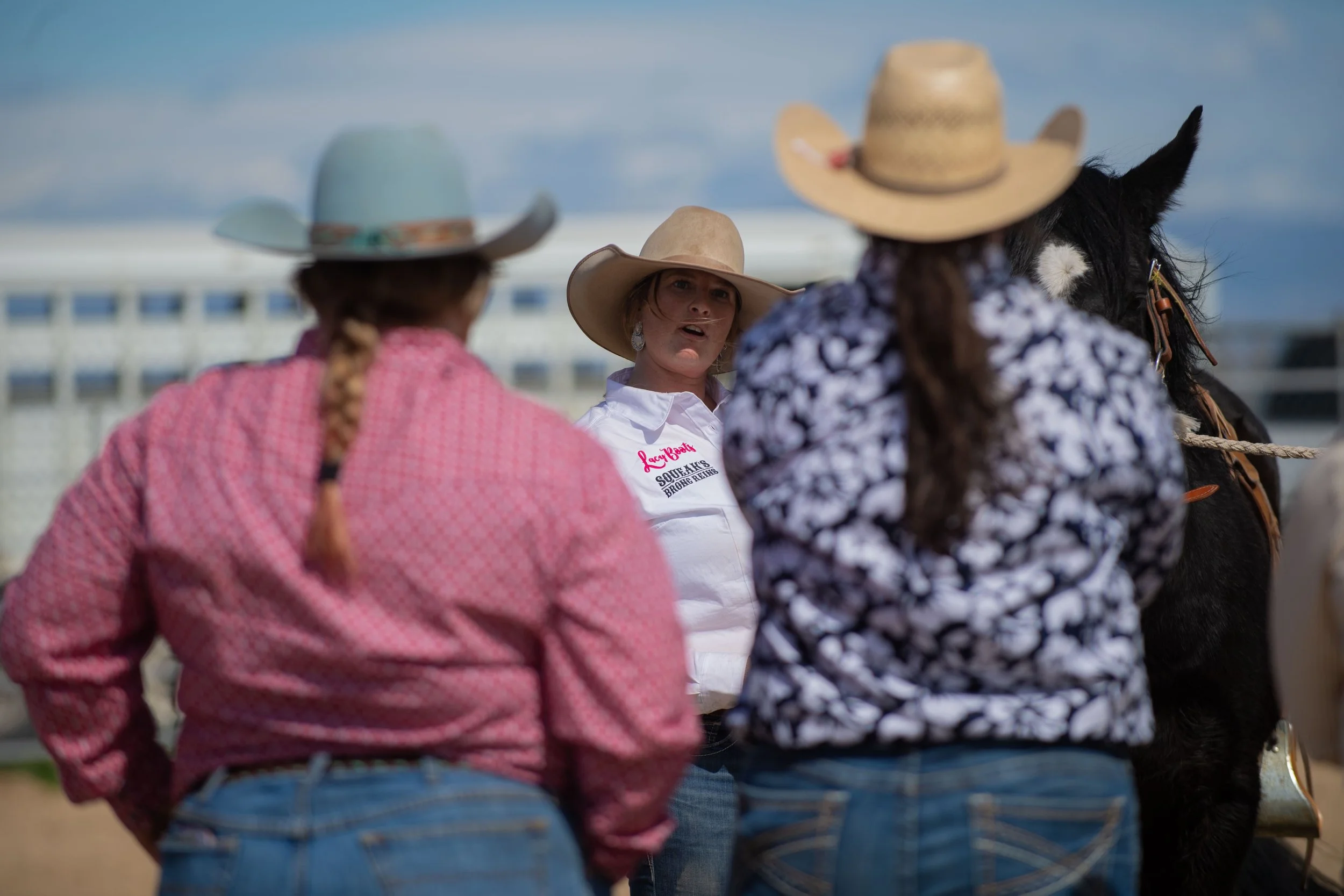
Brittany Miller, 33, points out important details about the equipment to her students, ensuring safe first rides. After 12 years of riding broncs and four years of teaching, Miller has gotten her routine down to a science. Now, sharing that knowledge with other women is second nature.
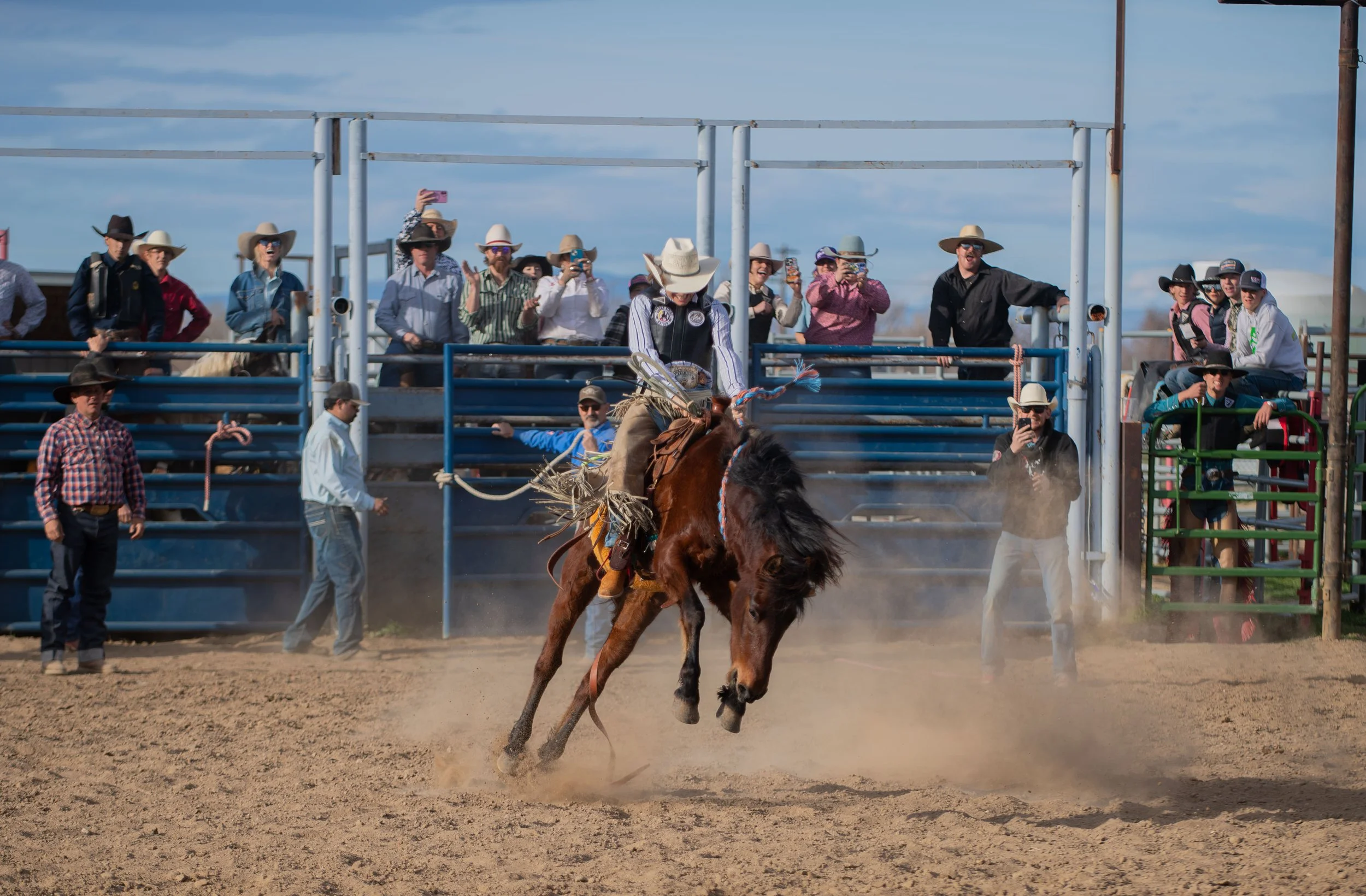
Elizabeth Broadhead, 32, is released from the chute for an intense ride. Her fellow students and instructor Brittany Miller, 33, cheer her on from the stands. She walks away from the ride with a few broken fingernails and a fear that has been conquered.
She feels a rush of energy run through her body, and doesn't know what’s happening until she hits the ground. She’s just ridden a bronc for the first time in her life, staying on for nearly seven seconds and ripping a nail in the process.
“I do know that going through my head was ‘Don’t let go,’” Broadhead said. “As soon as I hit the ground, it was the most prideful feeling I have ever felt.”
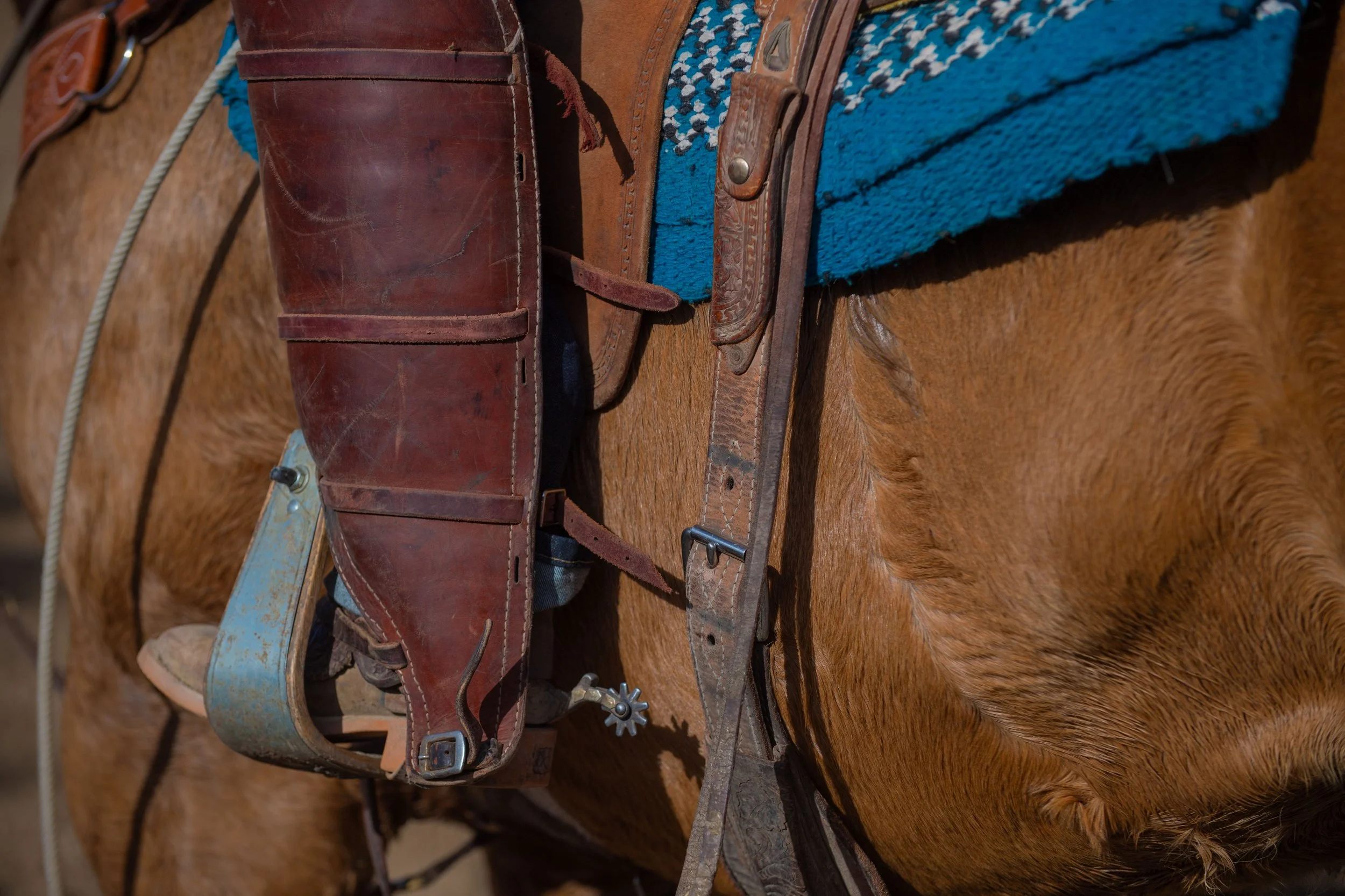
Rolling the spurs against the bucking horse encourages them to start or continue bucking. Bronc riders will use the spurs to get more action out of the ride.
That sense of pride wasn’t just because she rode a bronc, but because she overcame her fear and realized: “Oh God, I did it.”
Broadhead’s first taste of bronc riding pushed her to enter her first rodeo in July. This time, she knows what’s waiting on the other side of the gate.