

All Fed Up
Fishermen and environmentalists dispute solutions to sea lion predation
Writers Sofia Hopkins, Henry Perrine
Photographer Anna Liv Myklebust
Web Designer Alexandra Bondurant
Bill Monroe Jr. backs his 30-foot aluminum guide boat down Astoria’s eastern boat ramp. His name is printed along the sides in large orange letters. Drew, a four-year-old golden retriever and his loyal fishing companion, sits by his side with a wagging tail. The smell of gasoline saturates the air as Monroe throttles away from the launch and out into the open Columbia River.
Another spring season on the water is nothing new for him.
“The outdoors, in general, has a big piece of not just my life, but we’ve got my dad, my grandfather, and his father before him,” Monroe said. “It’s become a way of life.”
Lining each rod and baiting every hook, his time to catch what he needs is ticking faster than ever.
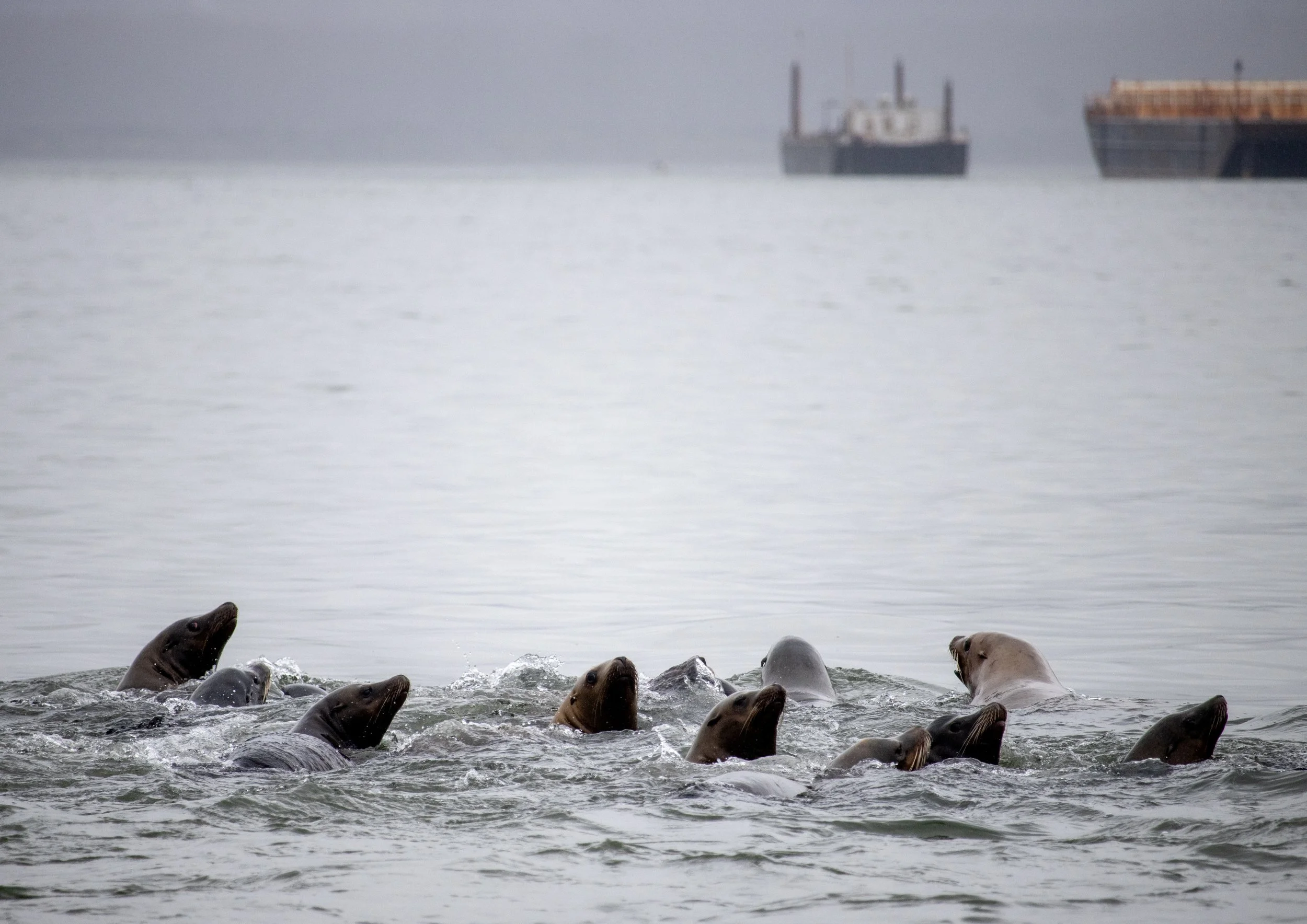
Almost instantly, a Steller sea lion, with a neck the size of a semi-truck tire and the smell of fish tainting its breath, glides to his boat. The animal is in search of the same endangered spring Chinook as Monroe. The sea lion is one of hundreds in his line of sight, swarming and barking, jeopardizing his catch.
Monroe has a decision to make. He can submit a photo of the sea lion to the Oregon Department of Fish and Wildlife, a tedious process aimed at updating management programs of predator whereabouts. Or, he can shoot the mammal with water-soluble paintballs, which would deliver enough of a shock to ward off the sea lion.
The National Oceanic and Atmospheric Association has suggested deterrent methods, but the only thing stopping the sea lions from feasting on roughly half of the 116,000 migrating spring Chinook in the Columbia is lethal removal.
For decades, sea lions have preyed on fish in the Columbia River Basin, creating a cycle of frustration and fear in these fishing communities. Sea lion predation goes much further than Astoria; the behavior can be seen in many places in the Pacific Northwest.
Sea lions have historically lived in the Columbia River Basin, but it wasn’t until the early 2000s that the Columbia saw a dramatic increase in their numbers.
Since 2008, ODFW has poured money and time into research, hazing and deterrent methods. Permits from NOAA authorized six regional tribes to hunt sea lions. These efforts served as a band-aid, and with little success in quelling a rising sea lion population, ODFW’s primary focus is now set on euthanasia.
Fishermen and environmentalists disagree on how to manage this issue. As years pass, rising numbers of sea lions continue to stifle fishing. Sea lions may have been a minor struggle at first, but their predation has become a constant threat.
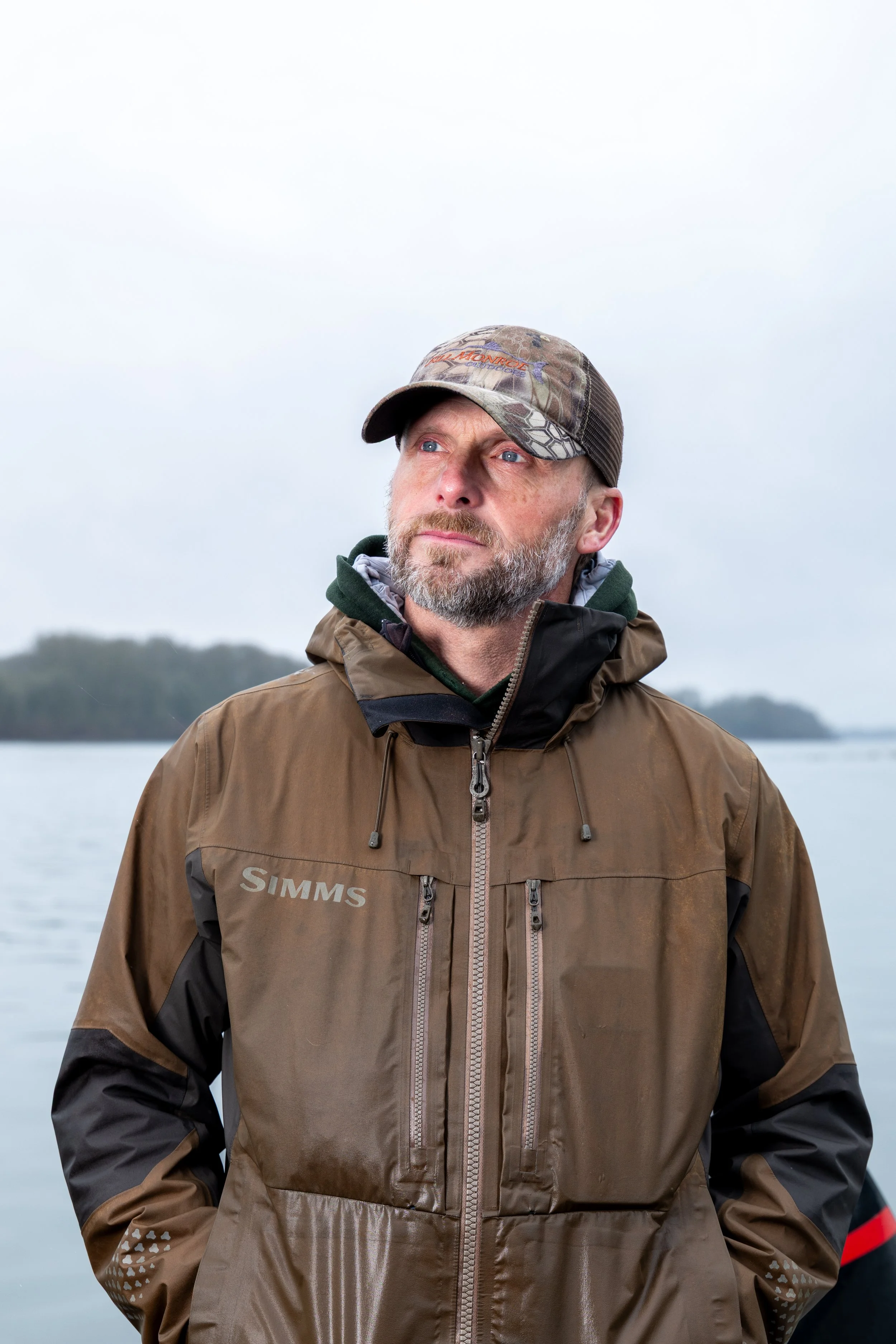
Bill Monroe, 47, a fishing guide who comes from a long line of fishermen, overlooks the Columbia River where sea lions swim about in Rainier, Ore. Monroe is frustrated with the overpopulation of sea lions that gorge on fish throughout the river. California and Steller sea lions pose a significant threat to the fish population in the Columbia River; these sea lions have learned to consume fish at specific hotspots along the river such as Bonneville Dam and Willamette Falls.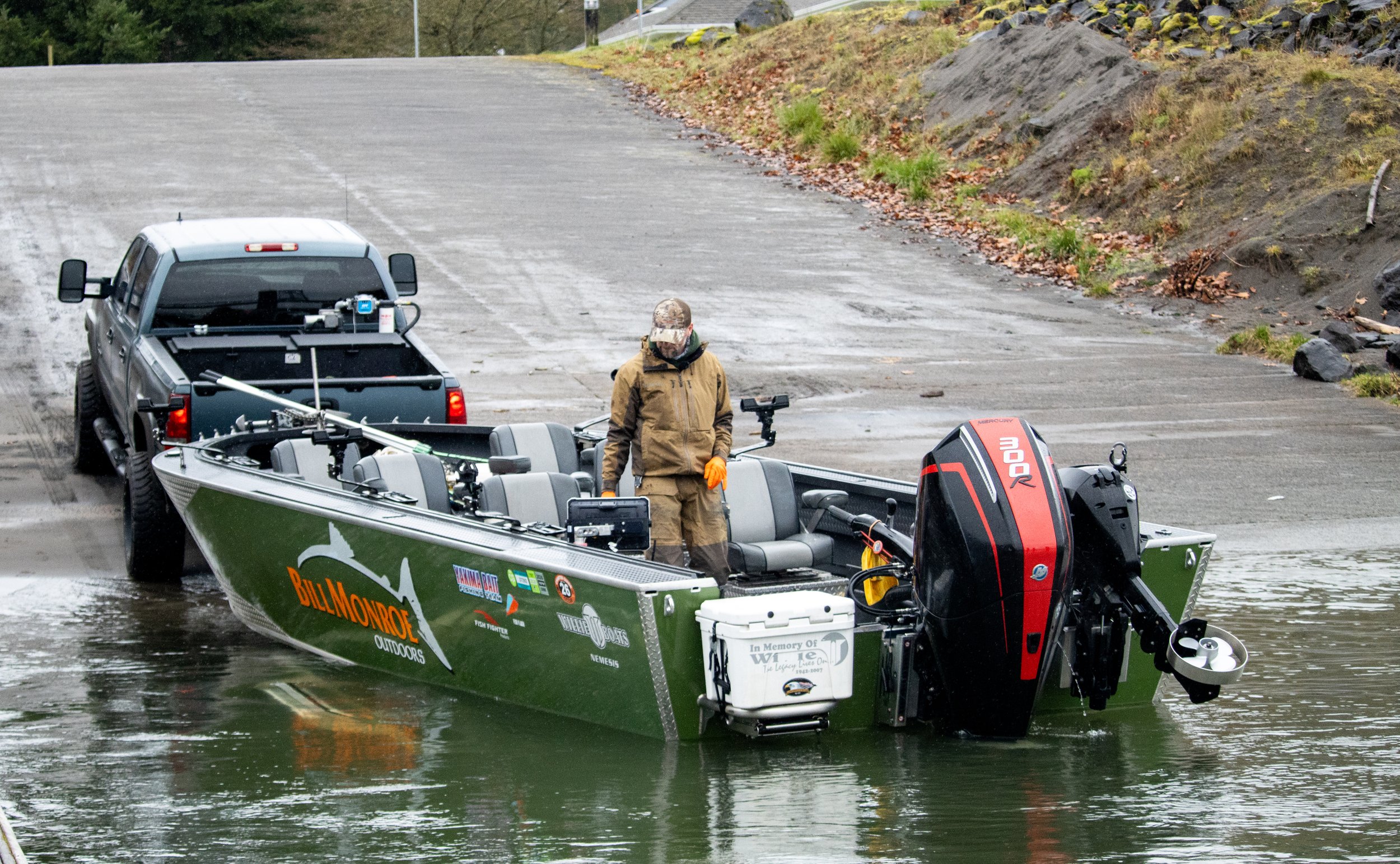
Most mornings you can find Bill Monroe, 47, on the waters of the Columbia River. Monroe is a fourth generation fisherman, and his days as a fishing guide typically start early with him launching his boat onto the river.
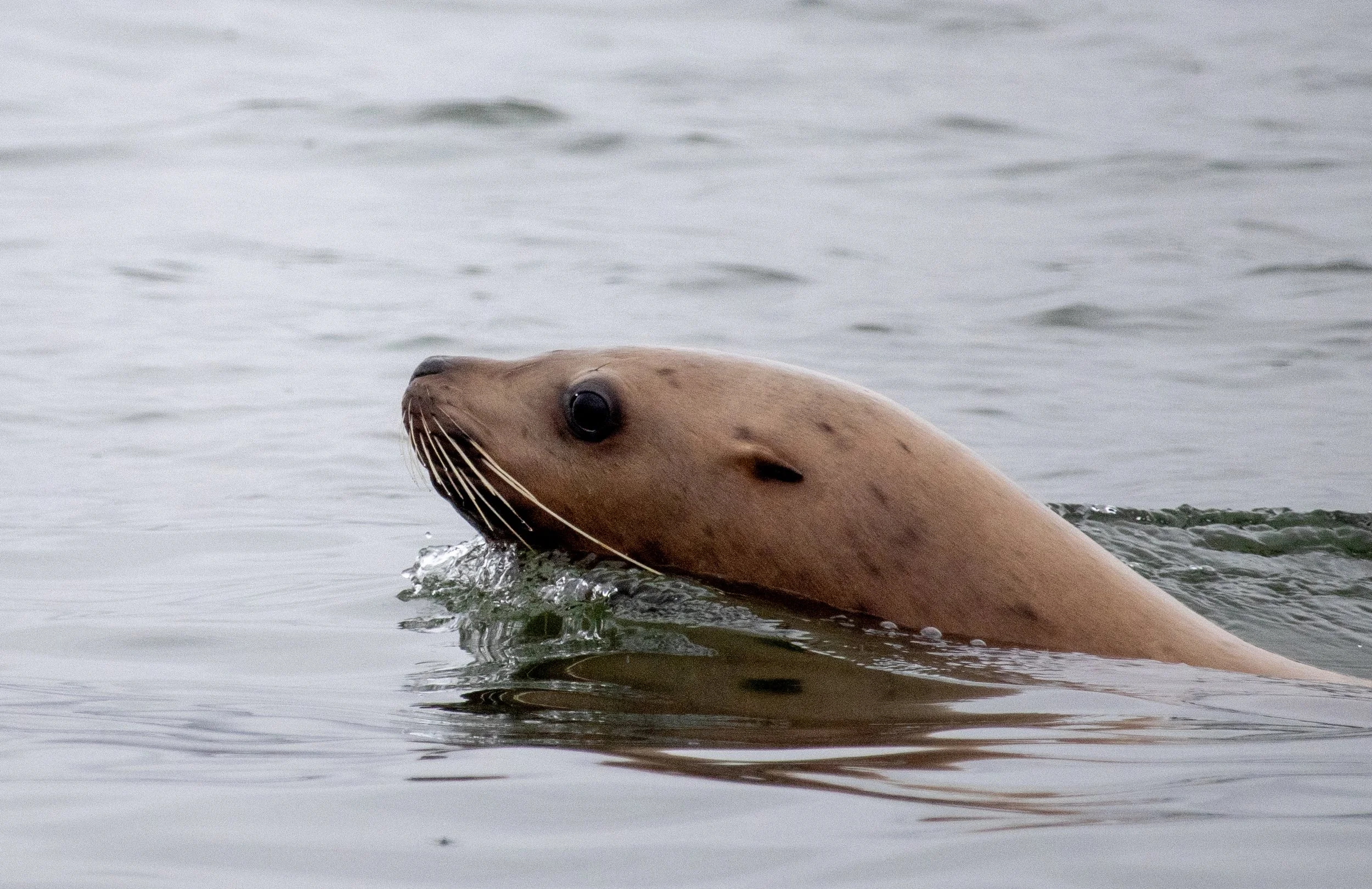
A sea lion glides through the water of the Columbia River in search of salmon and steelhead in Rainier, Ore. Sea lions will pop up from the surface to watch boats pass. They wait until fishermen hook a fish, then yank it off their line.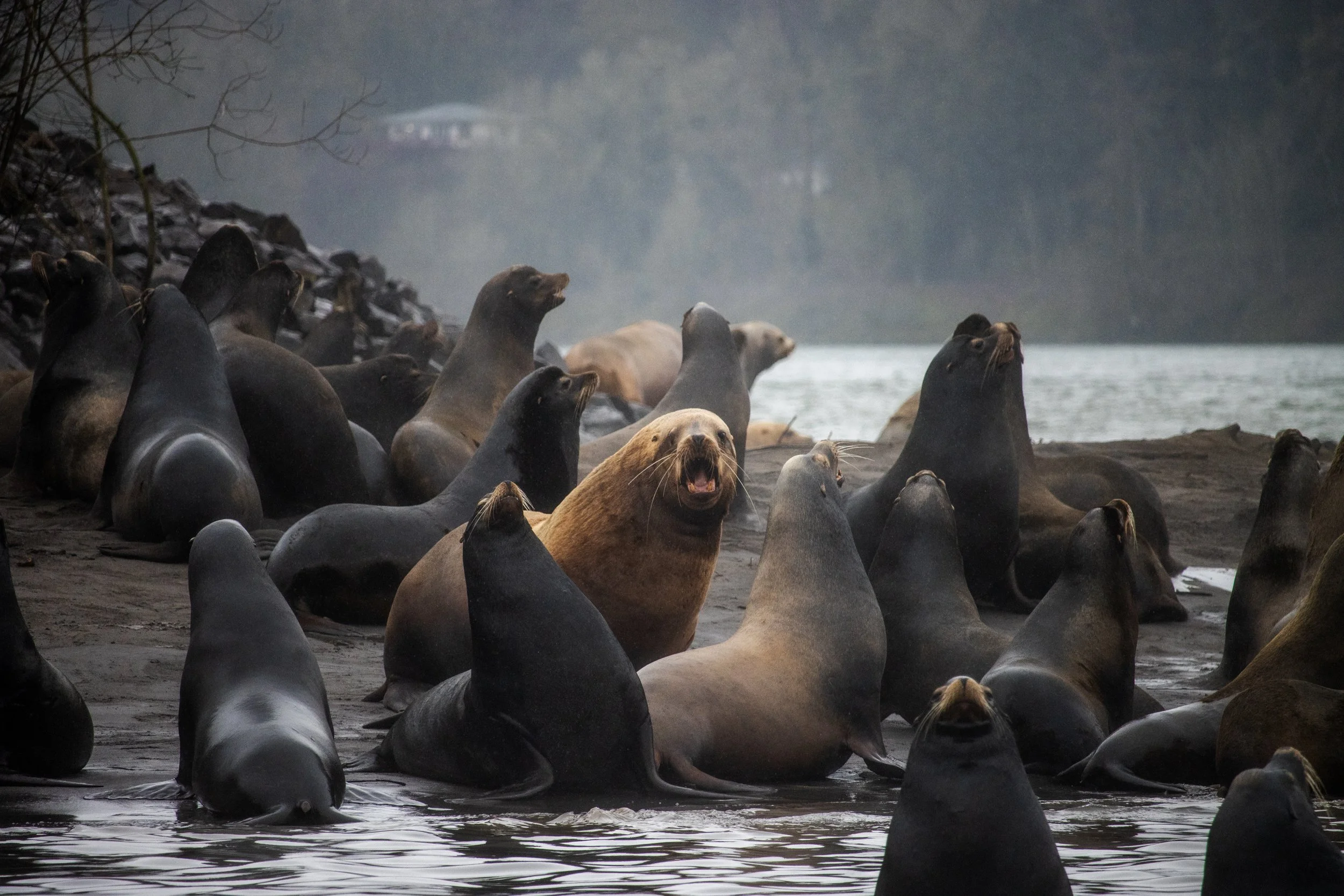
A sea lion barks on the bank of an island in the Columbia River near Rainier, Ore. Sea lions pose a significant threat to fish populations in the Columbia when they gorge on fish throughout the river.
Removing a sea lion from the Columbia River is not straightforward or cheap. According to ODFW, the traps alone cost roughly $70,000 to construct. After a sea lion is trapped, the estimated removal cost is $38,000. Most funding for removal efforts by ODFW and the Washington Department of Fish and Wildlife is provided by NOAA, and ultimately shouldered by taxpayer dollars.
“If you’re talking $38,000 an animal over 17 years, that’s almost $23 million that could have been spent on better solutions,” Casey Mclean, the executive director of SeaLife Response, said. The organization researches and provides care for marine mammals.
According to Mclean, culling, which is the lethal removal of a predator from a population, is never a stable answer and other solutions should be prioritized.
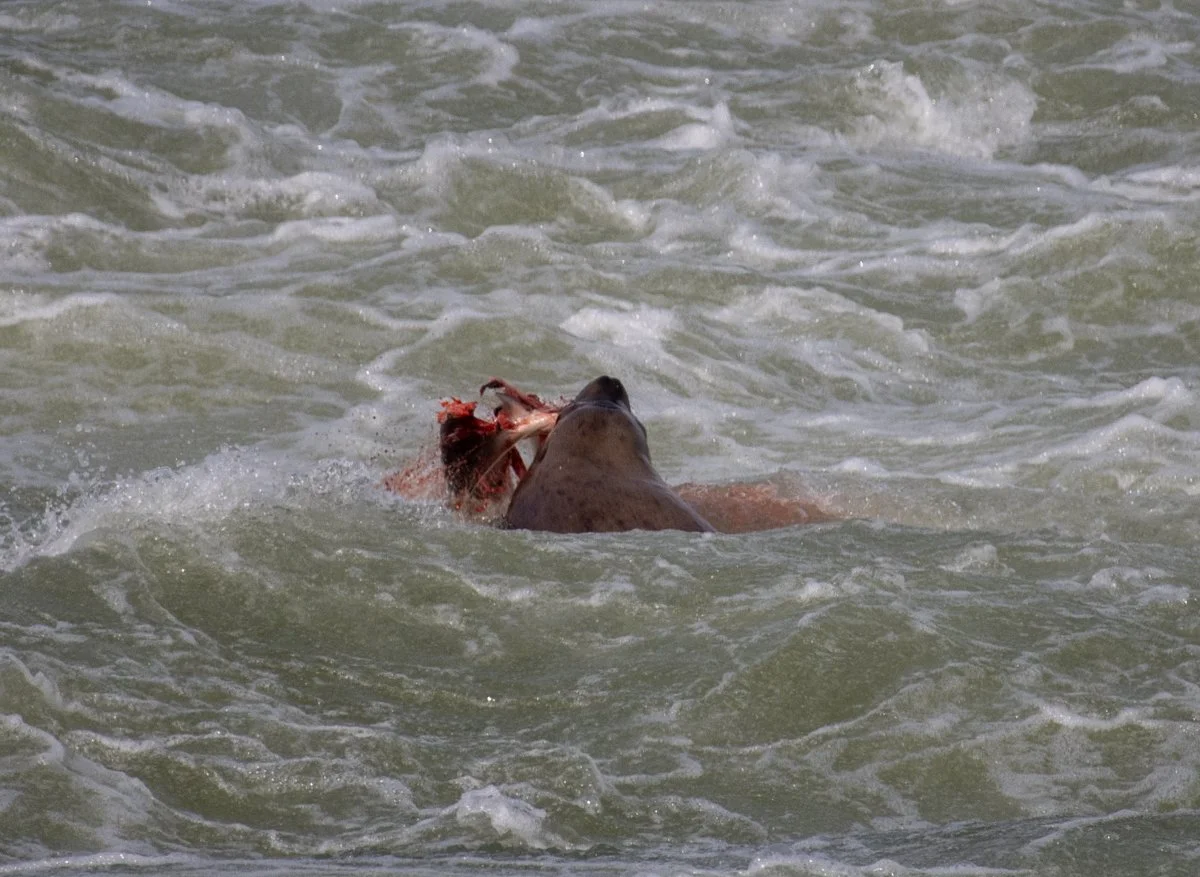
A sea lion eats a fish at the spillway section at Bonneville Dam. Sea lions on the Columbia River will strategically use fish ladders on the dam as a way to prey on migratory fish populations“You will be a serial culler for all of time if you don’t find a better solution,” Mclean said.
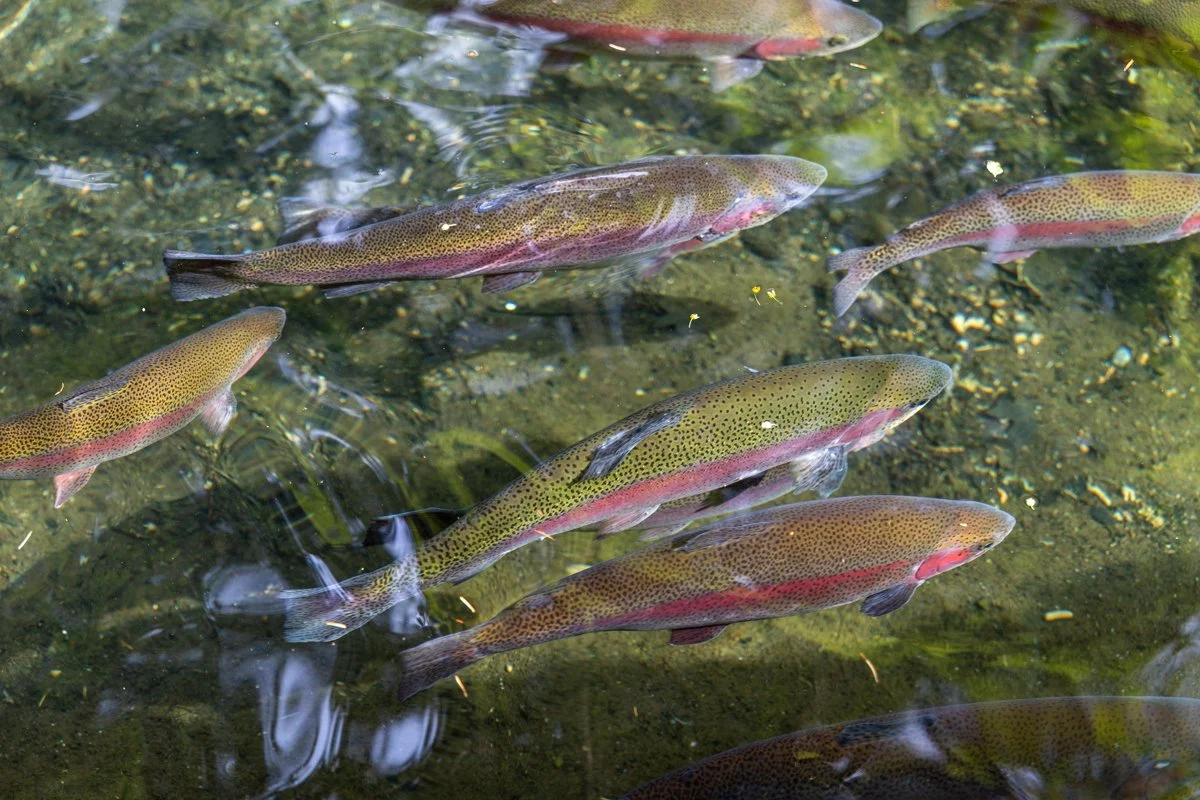
Rainbow trout swim through a trout pond at the Bonneville Hatchery. Visitors at Bonneville Dam can feed these trout for a quarter, and the money goes back to the hatchery. According to ODFW, 39 sea lions from the Columbia River were euthanized in 2025. That represents less than 1% of the 6,000 that use the Columbia River as their feeding grounds.
“[ODFW’s] budgets get eaten up in hours when it should be a whole-year program,” Monroe said.
He has been a guide fisherman in Oregon since 2011. He first picked up a rod and reel as a child. Monroe’s roots in his fishing community run four generations deep; however, he doesn’t see a stable future for the industry.
“My children may not be able to have salmon around for them,” Monroe said.
Monroe feels that in the coming years, many of his friends and colleagues will be forced to find other sources of income.
On the West Coast, sport fishing is an established industry. It provides over 10,000 jobs and has built an identity for these communities.
“The fishing industry alone is huge for the Pacific Northwest,” Monroe said. “Half of that could go away.”
In Astoria, sea lions have caused extensive damage to the docks. Sea lions often steal fish straight off of lines and have sunk small boats in the past.
To combat this, NOAA gives out a list of potential deterrent methods that are not officially approved, but are “examples of methods that are known to have been effective at deterring pinnipeds in the past.” The list is expansive: firecrackers, cattle prods, slingshots, water-soluble paintball guns, rubber bullets and chemical irritants, to name a few.
Monroe chooses to use water-soluble paintball guns if necessary.
“Totally safe. Doesn’t really hurt. That scares them enough,” Monroe said.
Other fishermen choose to shoot sea lions with rubber bullets out of a shotgun. Despite its effectiveness, Monroe doesn’t carry a shotgun.
“The rubber bullet itself causes some damage. It hurts them,” Monroe said, “Nine times out of 10, what most fishermen are aiming for is their head.”
Due to ongoing predation, fishing seasons have become highly regulated. Adjustments are made throughout the season with a focus on protecting wild stock listed under the Endangered Species Act. For those out on the water, numbers mean everything.
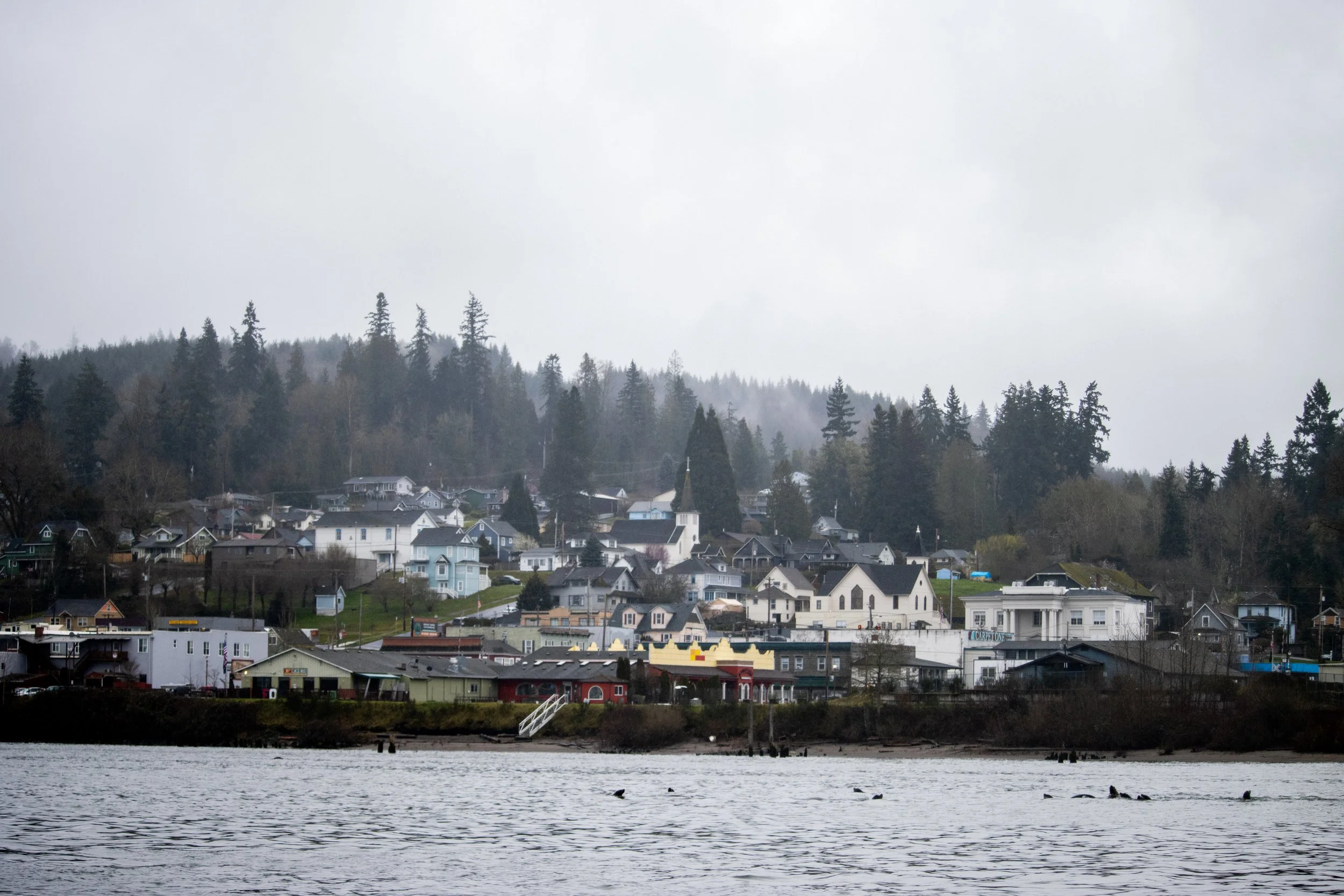
Sea lions swim up through the Columbia River past Rainier, Ore. These sea lions arrive in early spring and feast on salmon and steelhead that migrate through the Columbia to congregate at spawning grounds. 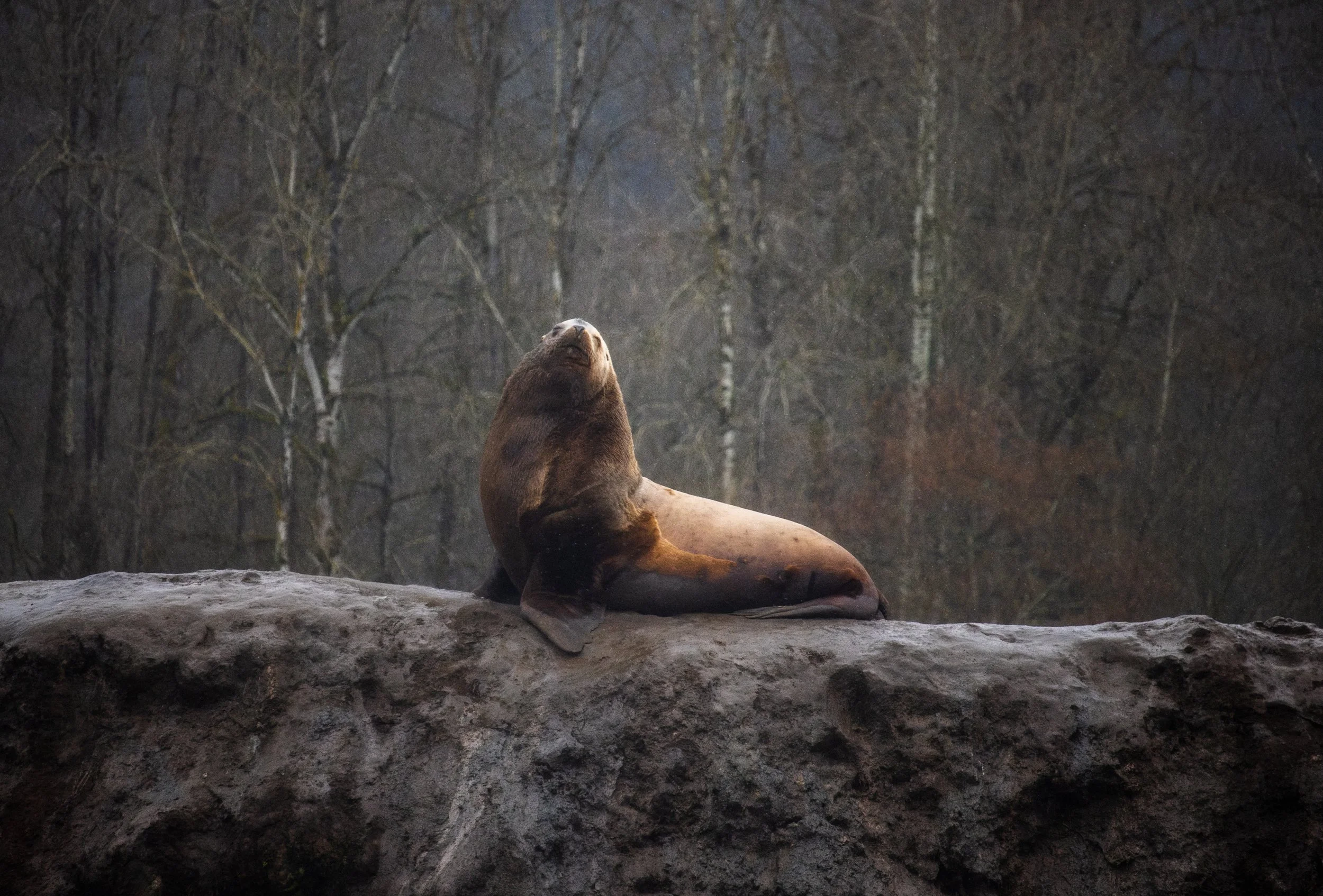
A sea lion rests on top of a rock near the shore of the Columbia River. Sea lions arrive in early spring and feast on migratory fish throughout the Columbia. 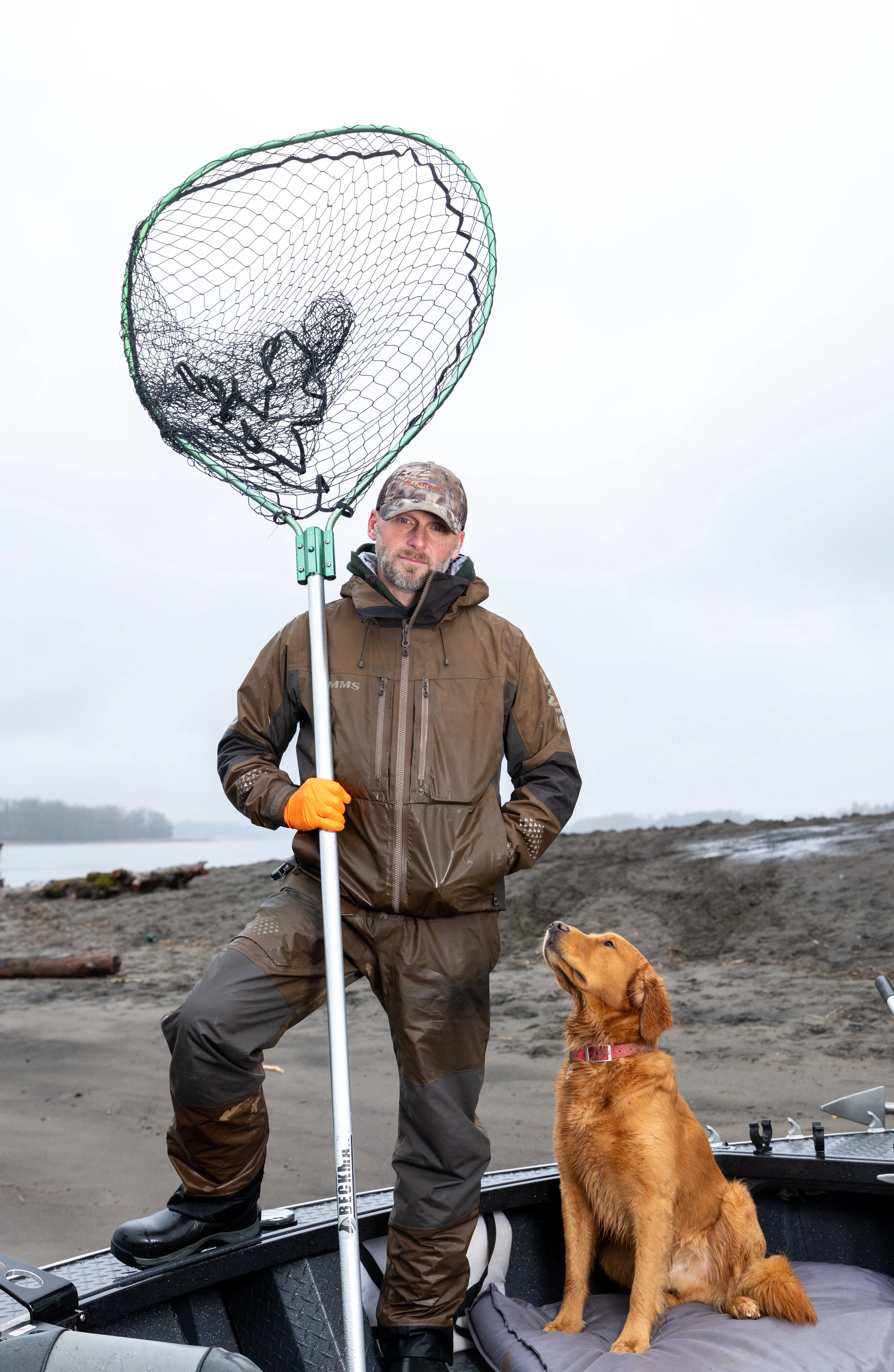
Bill Monroe, 47, and his golden retriever, Drew, stand on their boat in the Columbia River. Monroe is exhausted with the overpopulation of sea lions that gorge on fish throughout the river. 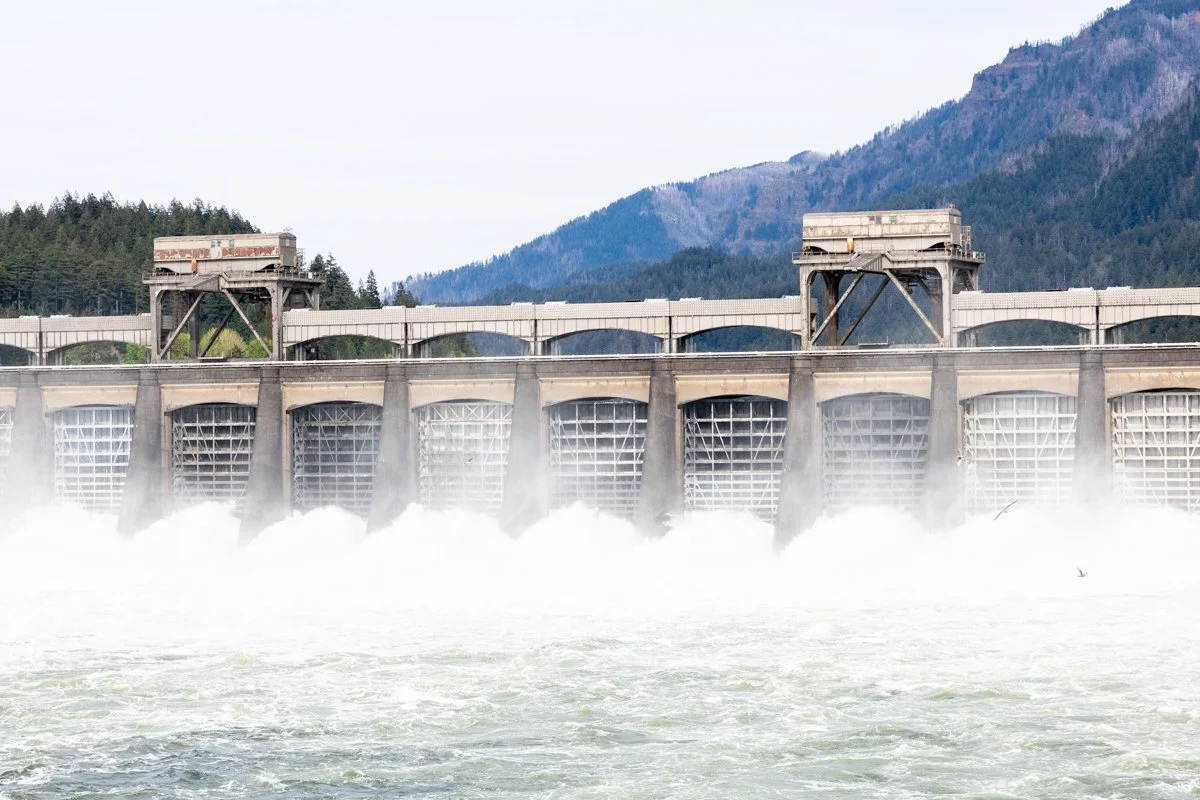
The Bonneville Dam spillway on the Columbia River is a common place for sea lions to hunt fish within the Columbia River Gorge in Ore. Sea lions perch on fish ladders — a structure built around the dam that allows fish to migrate upstream to spawning grounds. During the 1900s, a rise in commercial hunting of sea lions on the West Coast reduced their population to below 75,000 by the early 1970s, prompting their listing as endangered. In 1972, President Richard Nixon passed the Marine Mammal Protection Act.
The legislation aimed to protect marine mammal populations from overhunting on a national level by enforcing stronger protections. California sea lion populations have rebounded since the act was passed. They currently sit above their “optimum sustainable population,” exceeding what NOAA estimated to be 300,000–330,000 on the West Coast. Monroe and other fishermen working on the Columbia feel the MMPA is too restrictive and doesn’t account for modern issues.
“The Marine Mammal Protection Act has worked too well. There is no provision put into it, [like] what if sea lions overpopulate. That was never put into the equation,” Monroe said.
His solution: “Find middle ground in the MMPA and amend it.”
A jump in population isn’t just noticeable on paper; it’s palpable throughout the river during the peak season.
As Monroe boats down the Columbia waters, he must navigate around hundreds of sea lions. Some float in the “loafing” position with their fins held up, a behavior they exhibit when they’ve eaten too much to move. Others chase Monroe’s boat in the hopes they can steal any fish he may catch. In Monroe’s words, “they’re everywhere.”
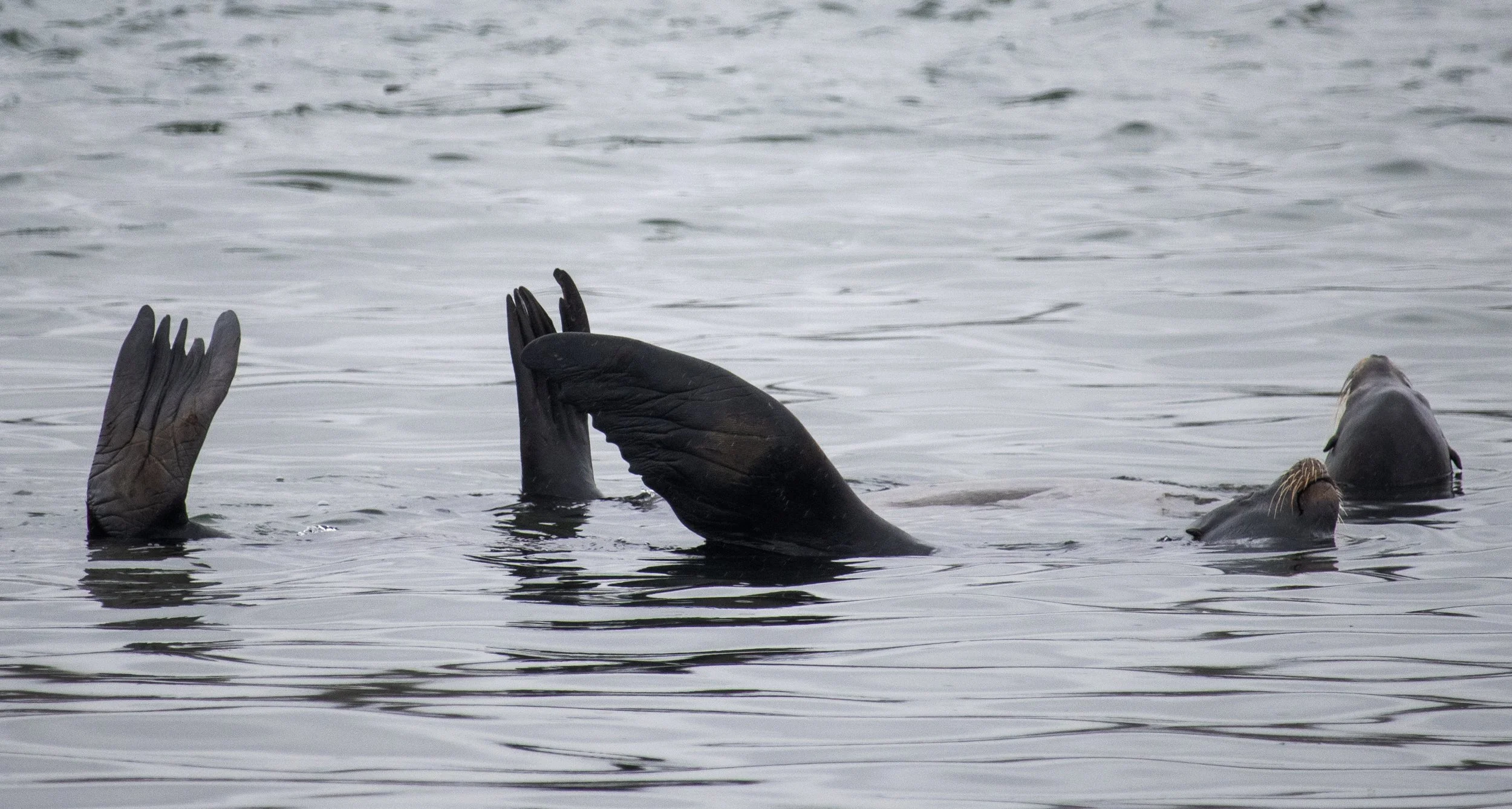
When sea lions are stuffed from fish, they will float on their sides with their fins in the air. This is known as “loafing.” These sea lions arrive in early spring and feast on the salmon and steelhead that migrate through the Columbia.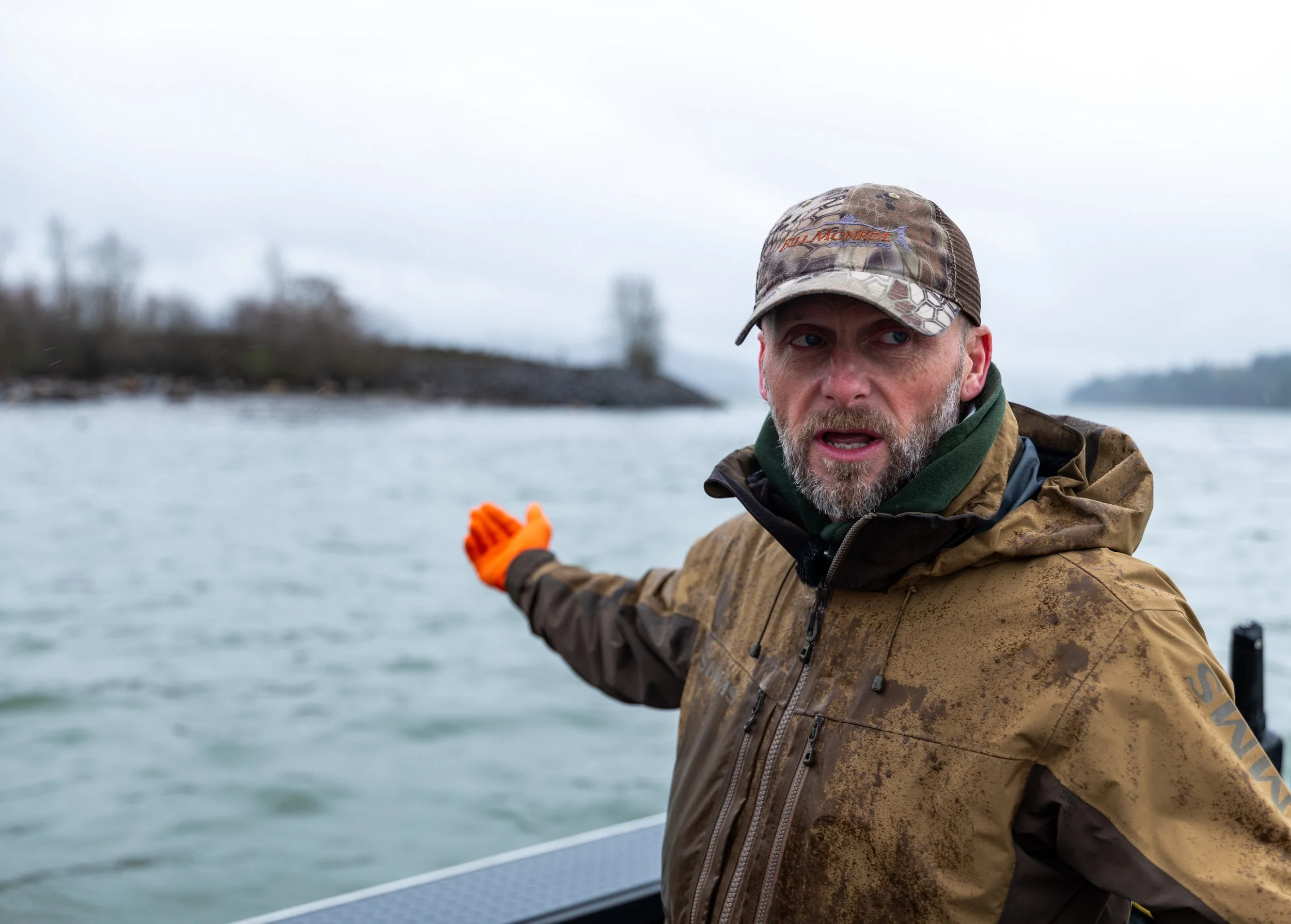
Bill Monroe, 47, overlooks sea lions congregating on the banks of an island in the Columbia River near Rainer, Ore. California and Steller sea lions pose a significant threat to the fish population in the Columbia River; these sea lions have learned to consume fish at specific hotspots along the river such as Bonneville Dam and Willamette Falls.
Steller sea lions are now specifically targeting the Columbia River, with some residing there year-round. In search of easier food, sea lions developed habits of voyaging farther inland, venturing through river systems and gorging themselves on migrating fish.
Deterrents and relocation tactics proved unsuccessful in alleviating the issue. In response, NOAA fisheries authorized the lethal removal of California sea lions in 2008.
The authorization came in the form of the section 120 permit, allowing Oregon, Washington and Idaho state wildlife management organizations and several native tribes to euthanize California sea lions in the Columbia River. The permit was expanded in 2020 to section 120(f), which allowed for the removal of Steller sea lions on a larger scale. The permit will be valid until 2030, at which point they will apply for a new one with fewer restrictions.
During this period, Oregon, Washington and Idaho may not remove more than 424 California sea lions and 62 Steller sea lions.
“We’re maintaining basically a status quo of management of these animals,” Michael Brown, the marine mammal program leader at ODFW, said.
The 120(f) permit authorizes ODFW to remove sea lions on the Columbia in a 180-mile stretch between the Interstate 205 bridge and the Interstate 82 bridge. In that span, there are seven permanent staff members on ODFW’s sea lion management program.
To lethally remove a sea lion, it must be trapped, transported via truck to a confidential location where it can be, as NOAA says, “humanely euthanized” and examined by a veterinarian.
Bonneville Dam is a focal point for sea lion traps. It produces 5 billion kilowatt-hours of electricity annually, supplying power to nearly 500,000 homes. It also acts as an obstacle for migratory fish. In 2025, Bonneville Dam fish counters tallied an estimated 1.4 million migrating salmon passing through.
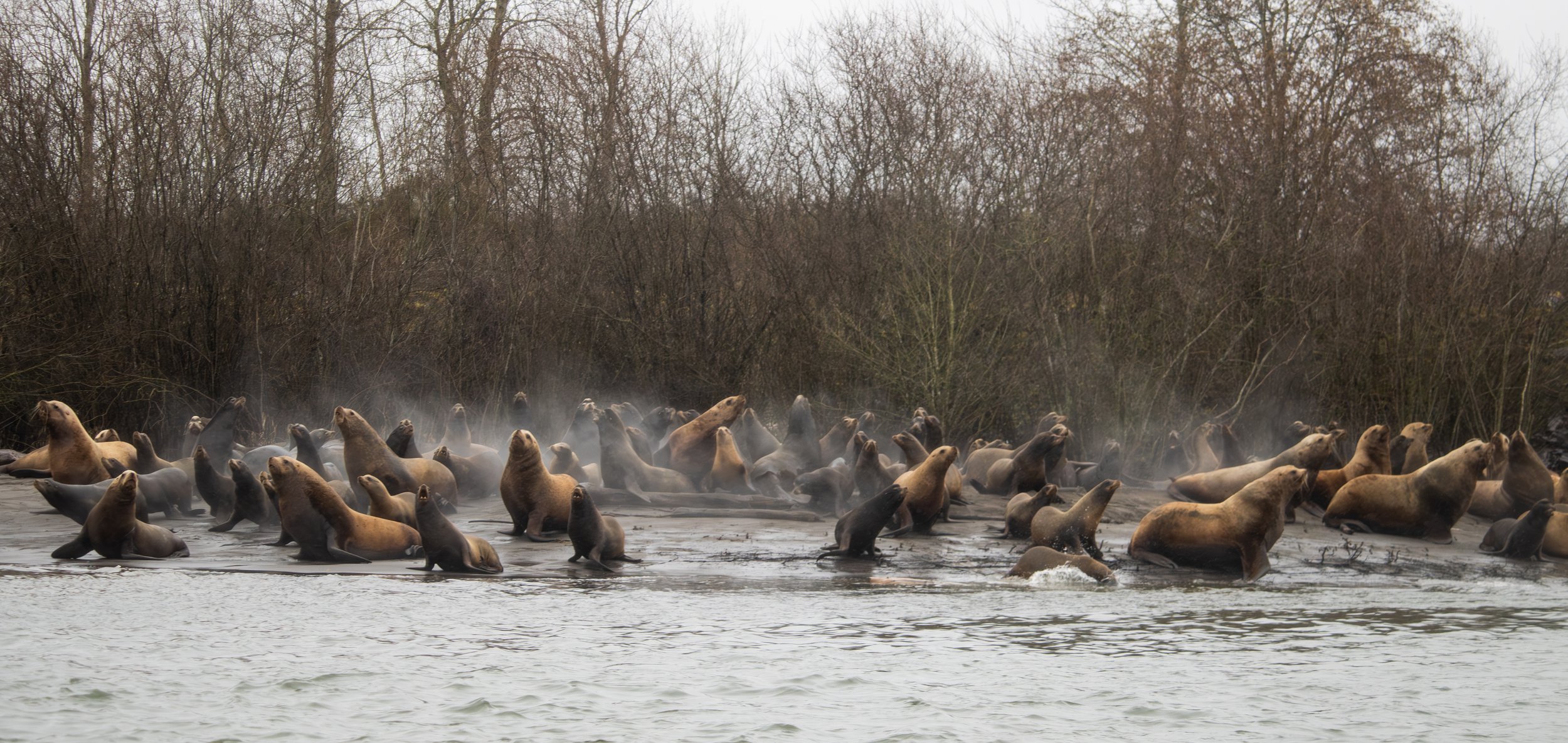
Steller and California sea lions congregate on islands along the Columbia River near Rainier, Ore. They make their way east through the Columbia toward fish ladders where they will gorge on fish migrating to spawning grounds in early spring.The dam forces migrating fish into two designated fish ladders. The ladders constrict the fish into a 40-foot-wide passage.
It’s the perfect choke point for sea lions to sit and wait for their next meal. One sea lion can eat 3–5 salmon per day, amounting to 10,000–20,000 fish annually.
It’s also the reason environmental activists like Mclean believe this is a man-made issue, and the sea lions are not at fault. Their presence in these pinch points has been attributed to the fact that they are social, intelligent animals. This is a learned behavior.
Mclean states that sea lions have been going up the river for many years, but “back in that day, there was no dam. So there was no reason for them to stay and to hang out.”
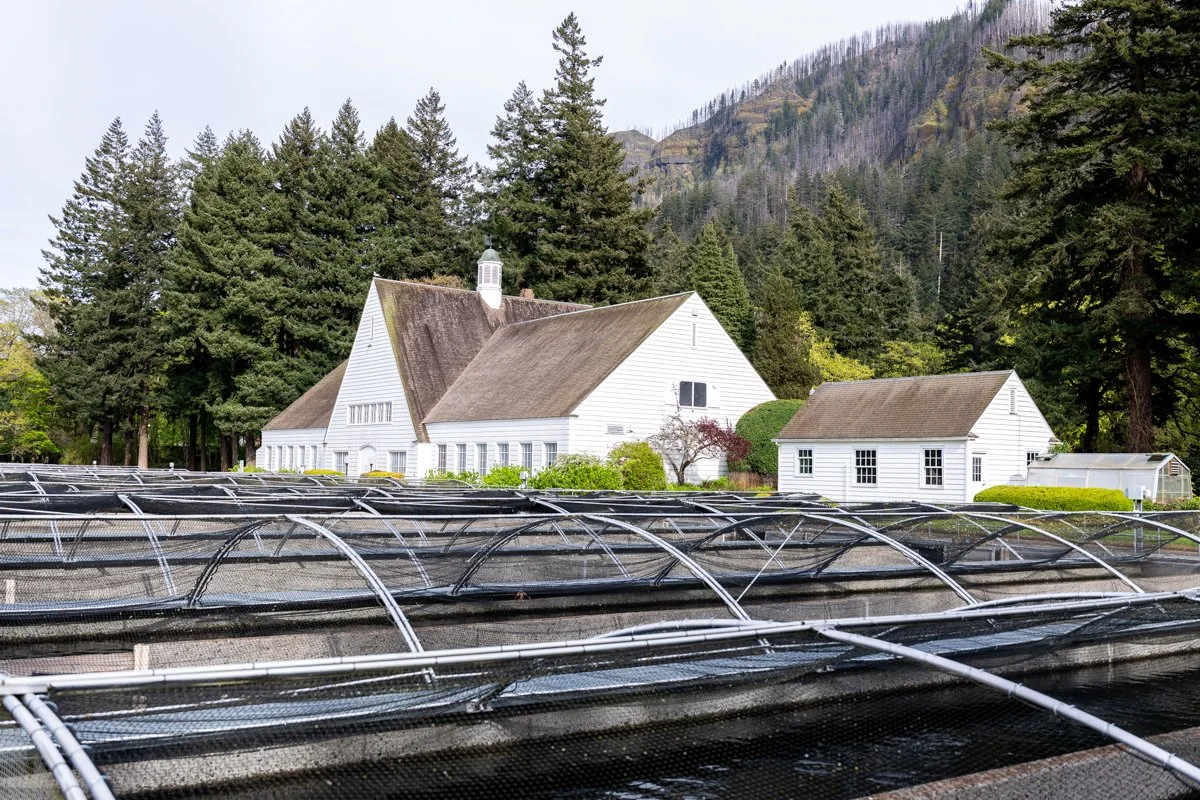
The Bonneville Hatchery, located in the Columbia River Gorge, is designed to improve the declining salmon, steelhead and other fish populations in the Columbia River.Years of back-and-forth from fishermen to tribes to governments caused unrest from all sides. Fishermen, like Monroe, feel that there’s a lack of results, whether that be from removals or conservation.
“It’s not enough. It’s not working. It’s failing,” Monroe said.
Monroe’s boat breaches the water again as he heads downriver back towards Astoria. Barks from the hundreds of sea lions echo the entire ride to the ramp.
Monroe fastens the boat back to the trailer, hauling out of the river. His coolers remain empty of fish. Something that once signified a slow day is now a hallmark sign of the Columbia River’s new normal.
Tomorrow morning, the rods will line up once again, waiting for a fish and preparing for a fight.
“We don’t have time,” Monroe said. “I wish we would all come together and really solve this the right way. Will it happen? Probably not.”